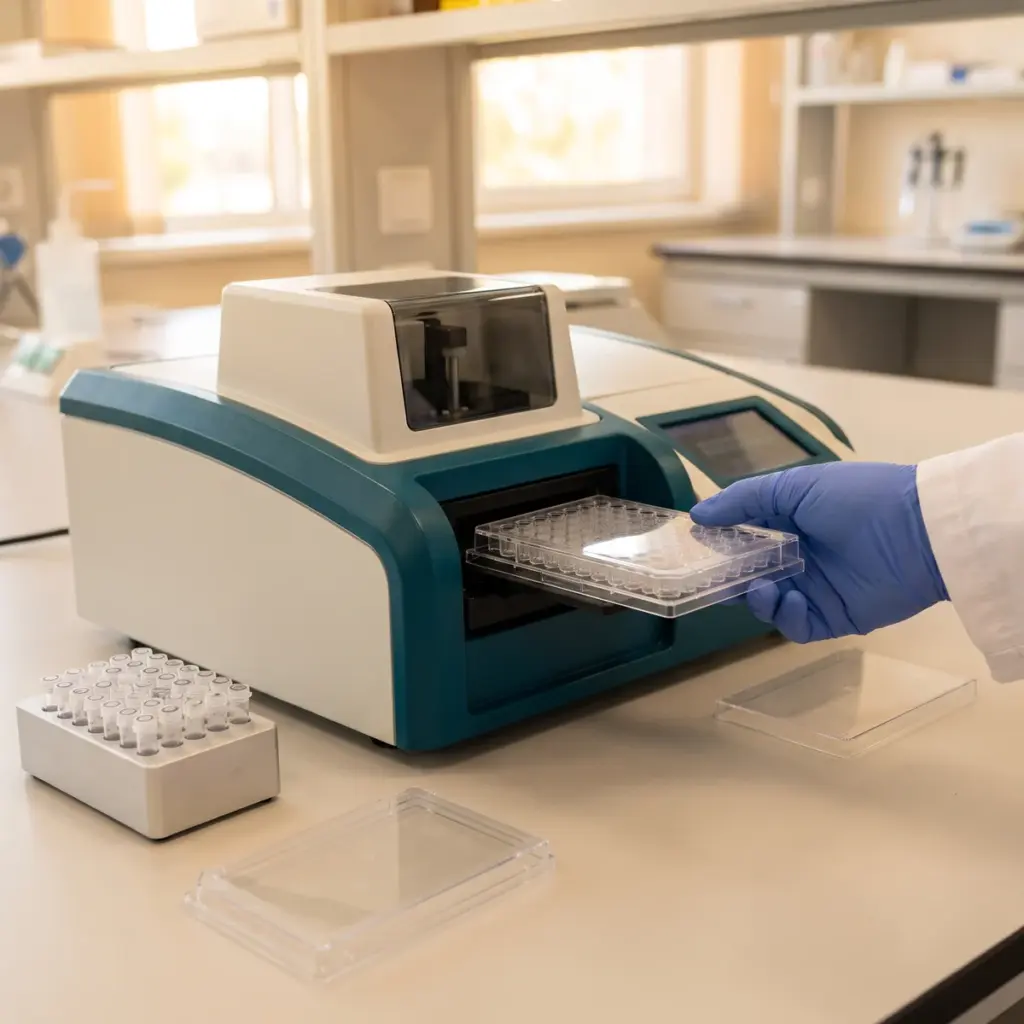
Skin immunity efficacy testing overview
Do you provide Skin immunity efficacy testing?
Skin immunity efficacy testing: the endpoints in a defence panel
The epidermis is an active immune organ. Keratinocytes sense microbes and damage through pattern-recognition receptors, produce their own antimicrobial peptides and release cytokines that recruit and instruct immune cells. Langerhans cells and other dendritic cells sample what crosses the barrier. A skin immunity study picks the parts of this system that match the ingredient’s proposed action and measures them side by side.
Receptor signalling
Reporter cell lines expressing a single human Toll-like receptor show whether an ingredient triggers or blocks that receptor. Keratinocytes are then used to confirm the response in a skin cell. TLR modulation testing covers this part of the panel in detail.
Antimicrobial peptides
Human β-defensins, cathelicidin LL-37 and psoriasin are measured by qPCR for gene expression and by ELISA for the secreted peptide. AMP production studies focus on this group.
Cytokines and immune cells
Multiplex bead assays quantify IL-1α, IL-1β, IL-6, IL-8, TNF-α and other mediators from a single culture supernatant. Dendritic cell assays add activation markers such as CD86 and CD54, measured by flow cytometry. Combining keratinocyte and immune-cell readouts shows whether the ingredient acts on the skin cells, on the immune cells or on the signals passing between them.
Immune marker dose-response and activity profile
- Endpoint-by-endpoint results against vehicle and positive controls
- Dose-response data for each marker
- Viability data for every condition
- A summary of the activity profile with statistical analysis
Building a claim file with skin immunity testing
Most skin immunity panels are commissioned by ingredient suppliers at the dossier stage. The brands that buy the ingredient then cite the same data in their own claim files.
Starting from the ingredient claim
Write down what the ingredient is meant to do before choosing endpoints. A bacterial lysate presented as training skin defences calls for TLR2 signalling and defensin output. A calming polysaccharide calls for reduced cytokine release after a challenge with a TLR agonist such as Pam3CSK4 or poly(I:C). Each claim gives a different panel, and a focused panel produces clearer data than a broad screen.
Combining with barrier and microbiome studies
Skin defence claims often sit next to barrier claims. Results from an immunity panel pair well with tight-junction protein and filaggrin measurements in the same reconstructed epidermis, and with microbiome sampling in a later volunteer study. Planning these together lets the laboratory reuse the same tissues and treatment schedule.
Ingredient form, endotoxin content and target claims
Provide the ingredient in its commercial form along with its carrier, the recommended use level and any known microbial origin. For lysates and fermentation products, give the endotoxin content if you have it, because lipopolysaccharide activates TLR4 and the laboratory will need to account for it. A short list of claims you hope to make helps them propose the endpoints, including cytokine profile modulation if you want a wider readout of mediator patterns.
More in Inflammation & Skin Immunity
Inflammation & Skin Immunity studies measure how an ingredient changes cytokine, neurogenic and innate defence responses in skin cells and tissue models.