Cytokine profile modulation overview
Do you provide Cytokine profile modulation?
What cytokine profile modulation covers
Cytokine profile modulation looks at a group of signalling mediators at once, so you read the shape of an inflammatory response and not one isolated marker. Skin-cell cultures or reconstructed tissue are exposed to a defined challenge with and without your test material, and the released mediators are measured as a panel.
Mediators and models
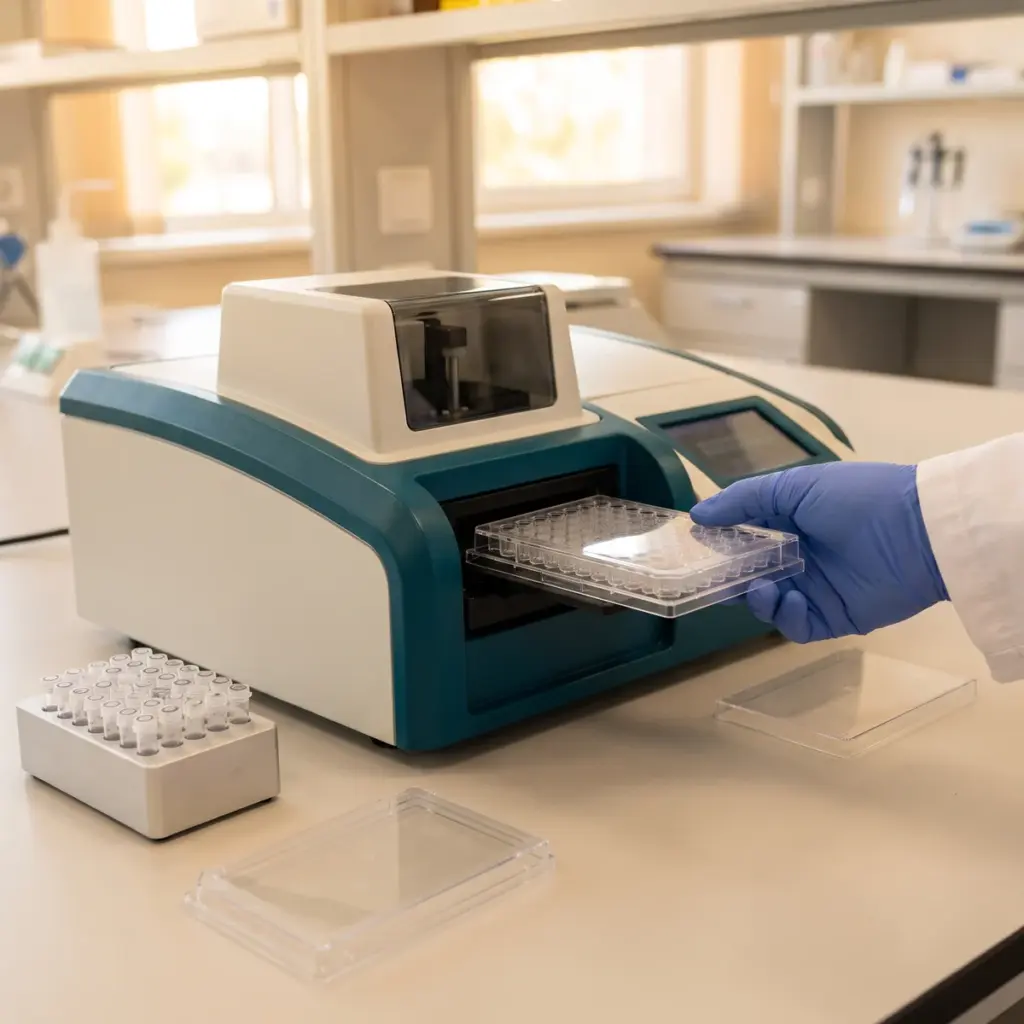
A laboratory measures selected cytokines such as IL-1β, TNF-α and IL-6 in keratinocyte cultures or tissue systems. The panel matches the cells present and the question you are asking. Concentration-response and time-course points show whether an effect scales with dose and when it appears. A challenge such as an irritant, a microbial component or UV gives the model a reproducible inflammatory baseline to work against.
- Pro-inflammatory cytokine levels
- Regulatory mediators where the model produces them
- Concentration and time dependence
- Viability and assay-interference checks
From panel to interpretation
Secreted protein and transcript levels are reported in separate tables, since gene expression and protein release can peak at different times. Multiplex bead or ELISA platforms read the proteins, and qPCR reads the transcripts from the same treated wells. Viability controls separate a real drop in signalling from simple cell loss. Questions about allergens or T-cell activation need a model that holds the relevant immune components, which is the ground covered by dendritic cell function studies. You receive the panel data, the controls, the statistical treatment and a written interpretation that links the pattern to your soothing or barrier-support programme.
Putting cytokine profile modulation to work
A cytokine profile is most useful at the stage where you have several soothing candidates and need evidence to choose between them. It also gives an ingredient supplier a clear mechanistic chapter for a technical file.
Shortlisting actives by ELISA and qPCR cytokine profile
A profile tells you which formulations calm the model response and which leave it unchanged, so you can shortlist actives before committing to formulation. Measure protein with ELISA or a multiplex panel, and use qPCR when you want transcript detail. Keep the two readouts distinct, and tie the marker set to the cells you are studying.
Combining cytokine patterns with NF-κB pathway data
A cytokine pattern sits well alongside pathway work such as NF-κB pathway inhibition, which can show where in the signalling chain an active acts. Before you request a quote, decide the challenge, the model and the mediators that matter for your claim. A lower cytokine level can also follow from fewer viable cells, so viability data turns the numbers into a result you can defend.
More in Inflammation & Skin Immunity
Inflammation & Skin Immunity studies measure how an ingredient changes cytokine, neurogenic and innate defence responses in skin cells and tissue models.