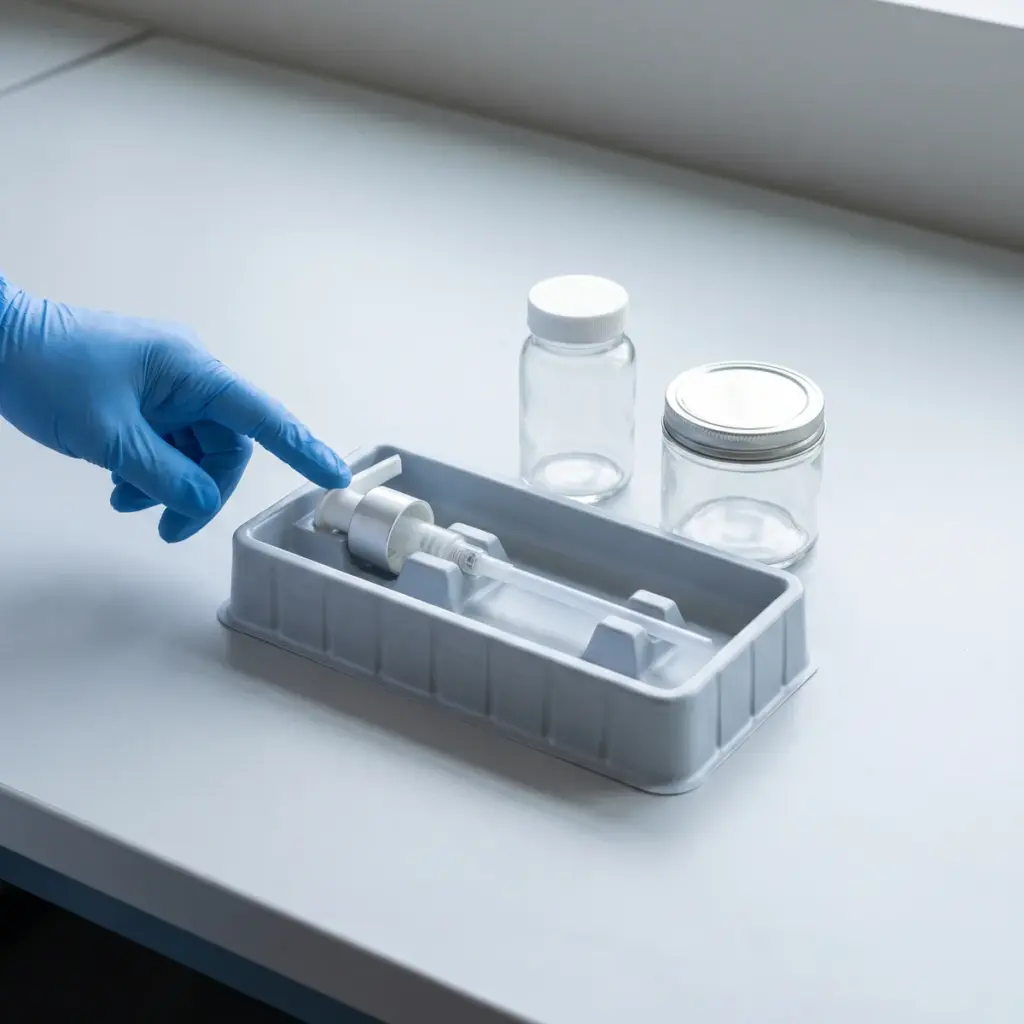
Custom cosmetic formula and prototype development services



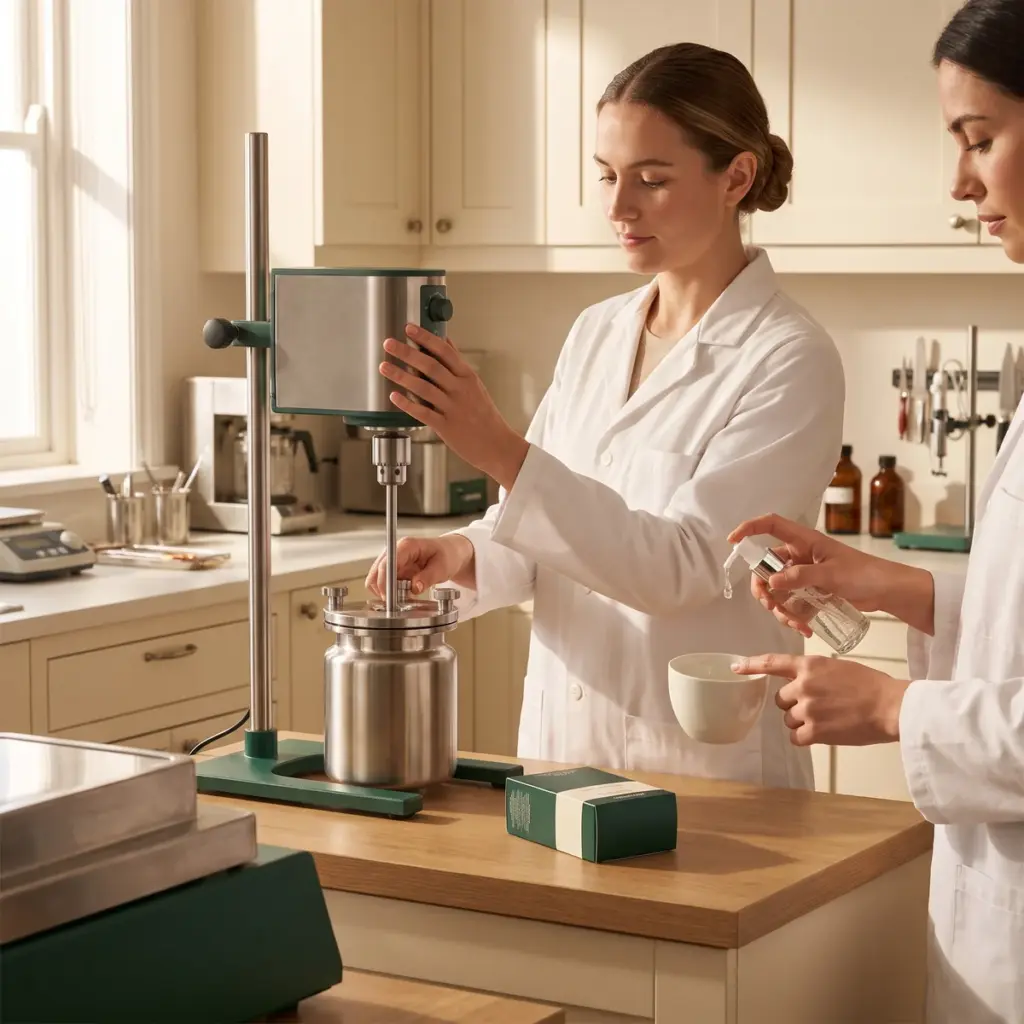
New Formula Development overview
Who provides New Formula Development
Companies providing New Formula Development


Three routes into custom cosmetic formulation
New formula work splits into three services. Most projects use two of them, and many use all three in sequence.
Benchmarking a reference product
Product benchmarking and reverse engineering starts from a product already on the market. The laboratory measures properties such as pH, viscosity, texture and appearance, reads the declared ingredient list and runs targeted chemical analysis. The result is a technical profile of the reference and a set of targets that a new, independently developed formula can be built against.
Writing the formula from your brief
Custom formula creation is the core formulation step. A chemist selects ingredients and grades, sets their percentages and works out the processing sequence, phase temperatures and mixing conditions. You receive a composition with documented reasoning for each choice and a draft manufacturing method.
Making and refining trial samples
Cosmetic prototype development turns a formula into small batches you can handle and apply. Variants are made to compare textures, fragrance levels or colour payoff, and each round of feedback is translated into a documented revision until one version is selected.
How to choose the starting point
Begin with benchmarking when the brief is defined by a reference product. Go straight to formula creation when you can describe the product in words and constraints. Ask for prototyping alone when you already hold a formula and need samples refined for a panel, a buyer or an investor. Formulation laboratories often quote the three together as one development programme, with review points between stages.
Services in New Formula Development
Custom Formula Creation
Cosmetic Prototype Development
Planning a custom cosmetic formula and prototype project
Most delays in new formula work trace back to an incomplete brief or an unclear sign-off process.
Content of a good development brief
Describe the product format, the skin or hair type and area of use, and the target user. List ingredients you want, ingredients you exclude and any certification or retailer standard the product will be sold under. Give the sensory target in plain words, for example a light gel-cream that absorbs within a minute of application, and name a reference product if one exists. State the intended pack, since a pump, jar or tube changes the viscosity window the formulator can work in.
Agreeing deliverables before work starts
Fix the number of prototype rounds, the sample size per round and the criteria each round will be judged against. Agree what you receive at the end: the full quantitative formula, raw material specifications, a manufacturing method and retained samples. Settle formula ownership and the right to move production to any manufacturer in the contract.
Next steps after the selected sample
The chosen prototype moves into stability, preservation and safety work before production. The formula production readiness services cover early stability screening and the specifications a manufacturer needs for transfer.
More in Cosmetic Formulation
Cosmetic formulation services create new formulas, improve existing ones and prepare them for manufacture, from brief and prototypes to handover.