Sensitive skin and skin comfort efficacy testing overview
Do you provide Sensitive skin and skin comfort efficacy testing?
How sensitive skin and skin comfort efficacy testing works
Reactive skin responds to triggers that most people tolerate: a warm room, a low-pH toner, a fragrance or a change in weather. Much of that reaction starts in the free nerve endings of the epidermis. Ion channels on these nerves open, the nerve fires, and it releases neuropeptides that widen blood vessels and recruit inflammatory signals in the surrounding cells. A sensitive skin study reproduces this sequence in the laboratory and measures how far a test material reduces it.
Receptor-level assays
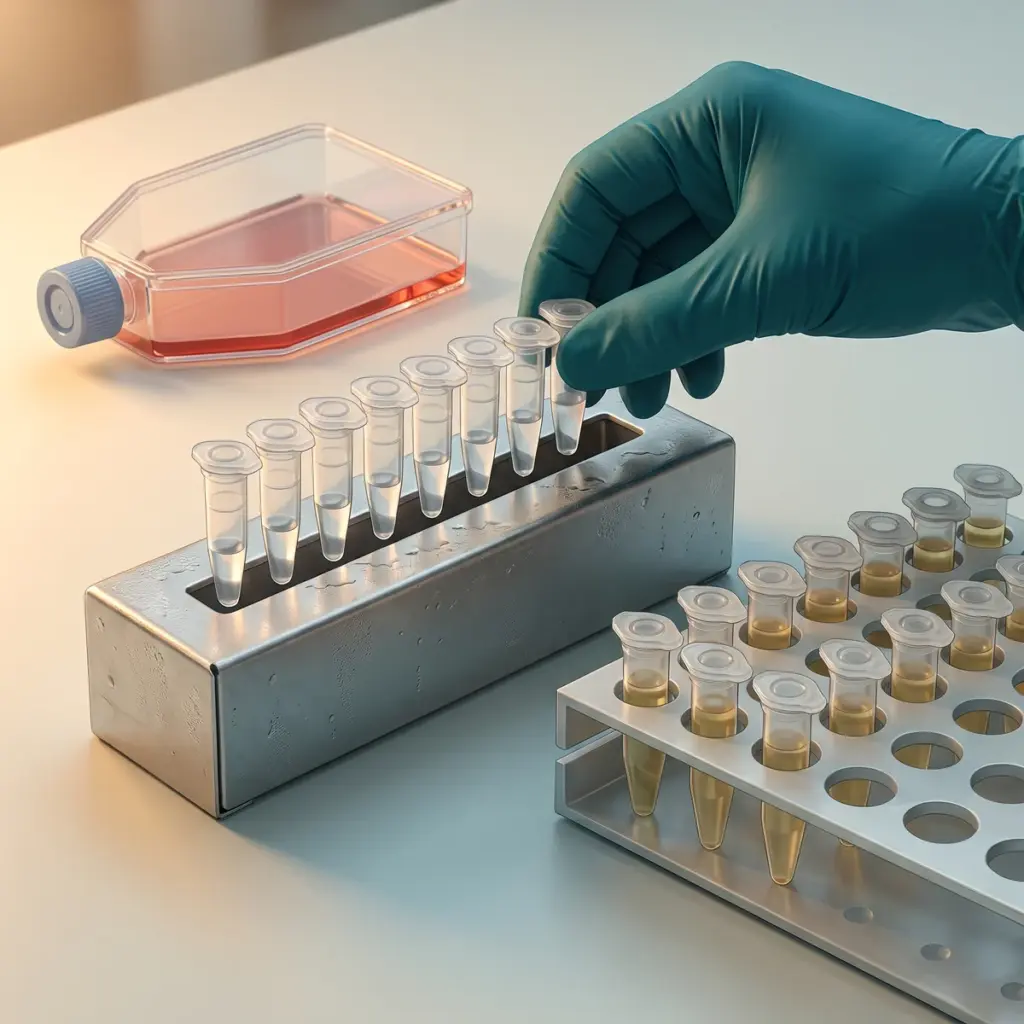
The first point of action is the channel itself. TRPV receptor modulation assays stimulate cells expressing TRPV1, TRPV3 or TRPV4 with capsaicin, heat, acid or an osmotic shift, and record calcium influx with and without the active.
Neuropeptide release
Once a sensory neuron is activated, it releases substance P and CGRP. Substance P regulation studies quantify that release by immunoassay in neuron cultures, or measure how skin cells respond when the peptide is added.
The full neurogenic response
Co-cultures of sensory neurons with keratinocytes or reconstructed epidermis capture the whole chain, from nerve activation to cytokine output in the skin cells. This design suits actives claimed to calm both the sensation and the redness that follows.
Soothing results against challenge and reference compound
You receive a study report describing the model, the trigger, the concentrations tested and the exposure times. Results are expressed against the untreated challenge and a reference soothing compound, with cell viability data and statistical analysis for each concentration.
Using sensitive skin comfort test data in product development
Run comfort testing early, while you can still change the active or its dose. Most programmes run two or three in-vitro assays first and finish with a short volunteer study on the chosen formula.
Match the assay to the claim
A cooling or anti-stinging positioning points to channel data, because the sensation begins at TRPV1 and related receptors. A claim about calming visible flushing after a trigger needs neuropeptide and cytokine endpoints as well. Decide on the wording you want to support before the study design is fixed, and the laboratory can choose the stimulus and readouts that fit it.
Screening before a volunteer study
In-vitro comfort assays are fast and use small quantities of material, so they work well for ranking several candidate actives or concentrations. The best performer then goes into a human study, such as a lactic acid sting test on self-declared sensitive volunteers, where stinging and comfort are scored on the finished formula. Mechanism data from the laboratory and perception data from the panel together give a stronger claim file than either alone.
INCI, carrier and consumer trigger details to send
Send the INCI composition or ingredient description, the solvent or carrier it dissolves in, and the use concentration in the final product. Say whether you want to test a raw material or a finished formula, since emulsions and surfactant systems may need dilution or a tissue model that tolerates topical application. If you already know the trigger your consumers report, such as heat, acids or wind, share it so the challenge can mirror it.
More in Inflammation & Skin Immunity
Inflammation & Skin Immunity studies measure how an ingredient changes cytokine, neurogenic and innate defence responses in skin cells and tissue models.