Physicochemical Testing overview
Do you provide Physicochemical Testing?
Physicochemical testing methods for cosmetic formulas
Six services sit in this group. Pick by the property you need to measure, or combine several when a batch problem has more than one possible cause. Every method needs a defined sample preparation and temperature, so results from different time points and batches line up.
Active content and molecular identity
Active ingredient quantification measures the concentration of a named compound, usually by HPLC or GC with a method validated for your matrix. Repeated on stored samples, it shows how fast an active such as retinol or vitamin C is lost. Spectroscopic characterisation uses FTIR, UV-visible or Raman spectroscopy to fingerprint raw materials and finished products and to spot chemical change.
Flow, acidity and dispersed phases
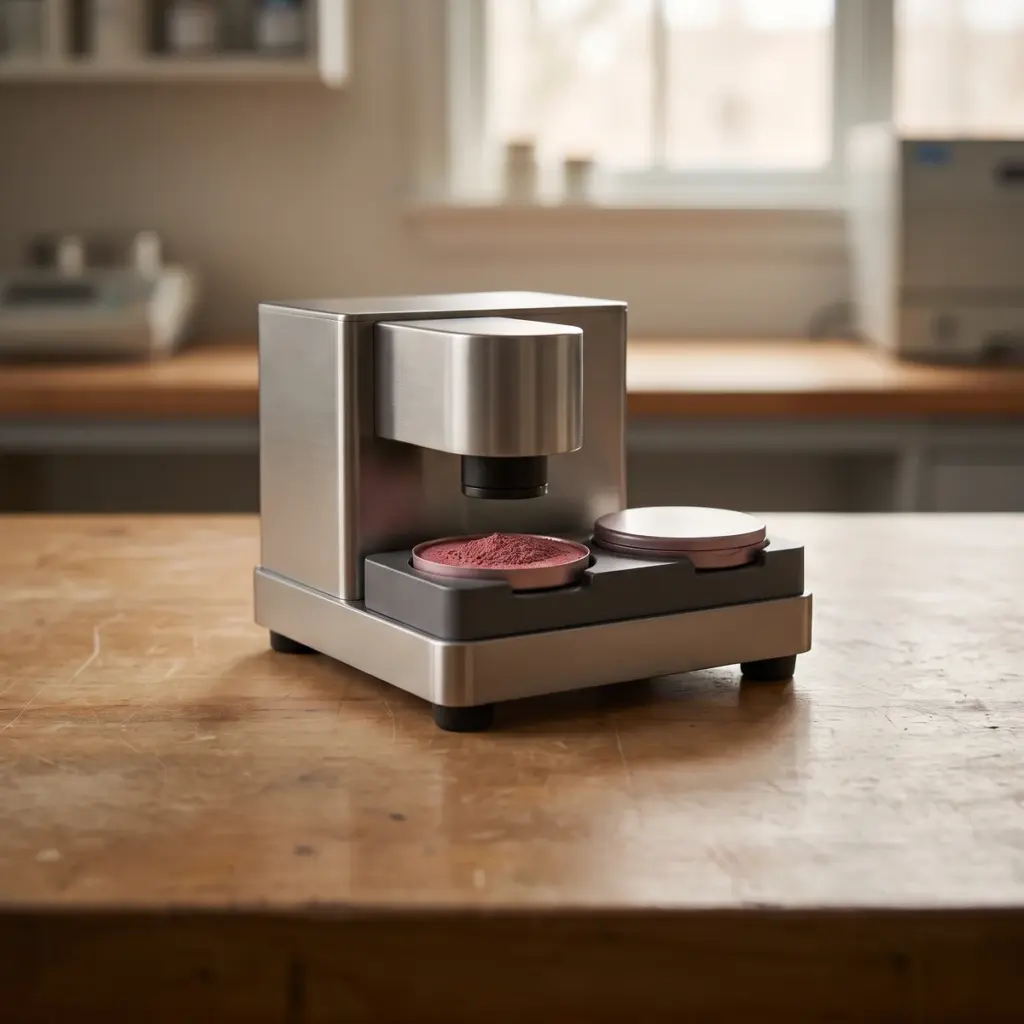
pH and viscosity profiling records acidity and rheology at a set temperature, from a single-point viscosity on a rotational viscometer to a full flow curve on a rheometer that shows shear thinning and yield stress. Particle size distribution uses laser diffraction or dynamic light scattering to size droplets, pigments and mineral filters, reported as a distribution curve with median and span values.
Microstructure
Analytical microscopy images emulsion droplets, crystals and pigment dispersion, with polarised light to reveal liquid-crystal structures or crystallisation.
Combined property workups
Cosmetic physicochemical testing bundles several bulk measurements, such as appearance, pH, viscosity, density and conductivity, into one panel for a product or batch.
Services in Physicochemical Testing
Choosing physicochemical tests for your cosmetic
Start from the decision you face. Each situation calls for a different short list.
Setting a specification
A launch specification usually needs appearance, pH, viscosity and density at minimum, plus active content when a percentage is claimed on pack. Measure three or more batches so the acceptance range reflects real batch variation.
Investigating a failed or changed batch
When a cream thins or separates, pair viscosity with microscopy and droplet sizing. Growing droplets point to an emulsifier problem, crystals point to a solubility problem. A colour shift calls for spectroscopy and active quantification on the retained and the faulty batch side by side.
Assay validation and viscosity settings to agree
For active assays, ask whether the method has been validated for your type of formula, since emulsions, oils and pigmented products each interfere differently. For viscosity, agree the spindle or geometry, speed and temperature in writing so results stay comparable across years of batches. The same measurements track change in accelerated stability testing.
More in Cosmetic Quality Testing
Cosmetic quality testing measures composition, texture, preservation, stability and pack fit so each batch matches the product you approved.