Xenobiotic & Cellular Clearance Studies overview
Do you provide Xenobiotic & Cellular Clearance Studies?
Endpoints measured in Xenobiotic & Cellular Clearance Studies
The family has two halves. One follows the response to a defined pollutant or model compound. The other looks at the clearance systems that keep cells in working order under that stress.
Pollutant exposure and biotransformation
Pollutant protection / skin detoxification testing exposes keratinocytes or reconstructed epidermis to a characterised challenge, such as urban particulate matter, benzo[a]pyrene or ozone, with and without the test active. AHR pathway modulation reads the aryl hydrocarbon receptor through reporter assays, nuclear localisation and target genes. Phase I/II enzyme induction measures CYP1A1 and CYP1B1 alongside conjugating enzymes such as GST and UGT, and Phase-I/II biotransformation adds metabolite profiling of the pollutant itself.
Metal chelation
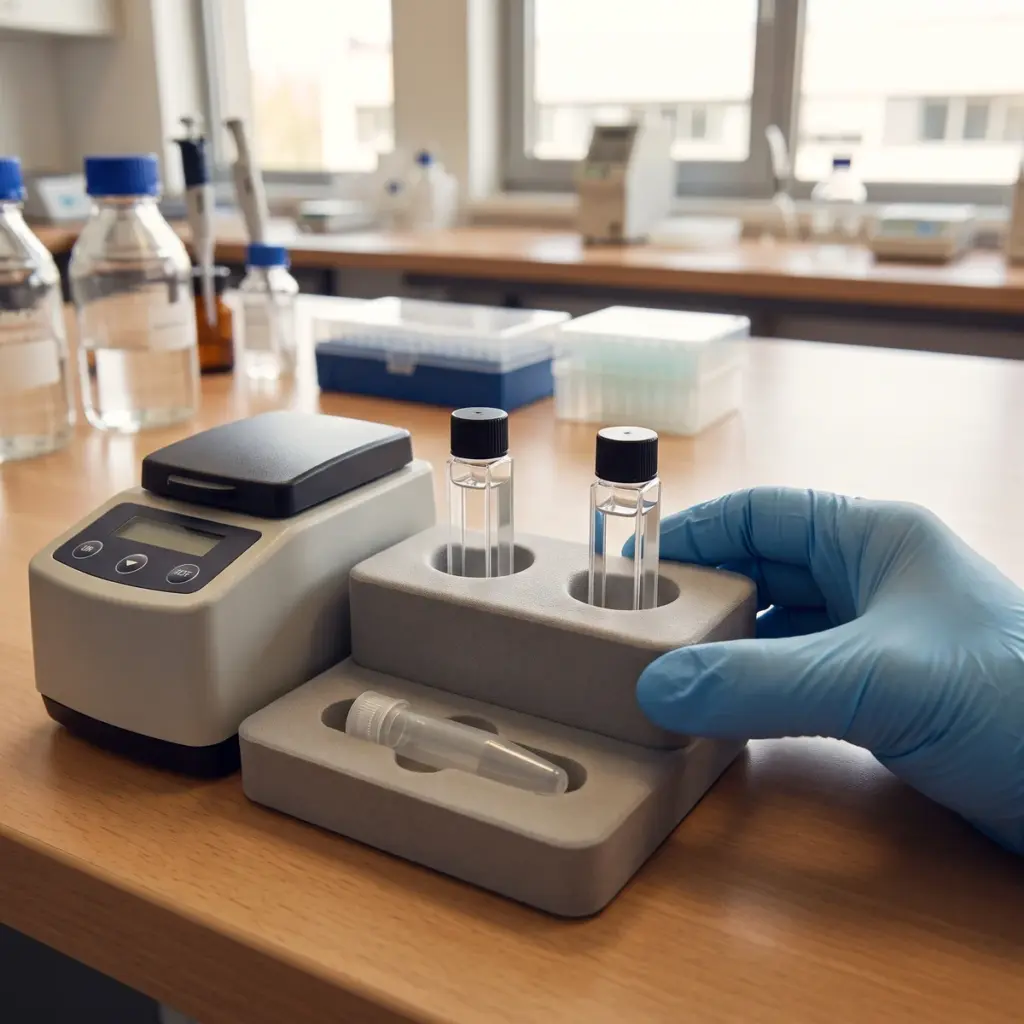
Metal chelation assays measure how much iron, copper, lead or cadmium an ingredient binds under set pH and concentration, usually by colorimetric or spectroscopic methods.
Cellular clearance and repair
- Cellular autophagy, measured as flux with LC3 turnover and lysosomal inhibitors
- Proteasome activity, read with fluorogenic peptide substrates
- Stress response proteins such as heat shock proteins and Nrf2 targets
- DNA protection mechanisms by comet assay or γH2AX staining
- Barrier function reinforcement through tight junction and differentiation markers
Gene expression, enzyme and DNA damage results reported
The report describes the pollutant or model compound, its dose and exposure route, and the timing of the active. Results come as gene expression fold changes, enzyme activities, imaging, chelation capacity or DNA damage scores, with viability data and statistics.
Services in Xenobiotic & Cellular Clearance Studies
Choosing Xenobiotic & Cellular Clearance Studies for an anti-pollution product
Anti-pollution is a crowded positioning, and a defined pollutant model with clear endpoints is what sets one active apart from the next.
Start from the exposure your consumer faces
City dwellers meet traffic particles and ozone, smokers and their households meet tobacco smoke, and some markets have high heavy-metal dust. Choose the challenge that matches the consumer you write for, then pick endpoints that follow it. Particulate and hydrocarbon exposure leads naturally to AHR and CYP1A1 readouts. Metal-rich dust points to chelation and oxidative damage. Ozone pairs well with lipid oxidation from antioxidant and redox studies.
Combining mechanism and function
Pathway data gain weight when a functional readout sits beside them. A study that shows an active calming AHR activation and, in the same model, reduced DNA damage or preserved barrier proteins gives complete mechanism evidence. Autophagy and proteasome work suits products positioned on cellular renewal and long-term skin quality.
Pollutant sourcing and autophagic flux methods to check
Ask how the provider sources and characterises its pollutant, because particle size and composition change the result. Check that it measures autophagic flux with an inhibitor, and that it runs reconstructed skin models as well as monolayers when your product is a finished cream that needs to be applied topically.
More in Cosmetic Efficacy Testing
Cosmetic efficacy testing measures what a product or ingredient does for skin, hair, lips or nails, in volunteers or laboratory models, to back claims.