Ingredient Development


Ingredient Development overview
Who provides Ingredient Development
Companies providing Ingredient Development


The three routes of cosmetic ingredient development
Most ingredient projects pass through some or all of three stages. Each one is offered as its own service, and providers often specialise in a single stage.
Finding active candidates
Ingredient candidate screening tests many materials against a defined goal and ranks them. Laboratory programmes run enzyme, cell and biochemical assays in plate format on extracts, peptides or synthetic molecules. Computational routes such as in silico screening, molecular modelling, structure-activity predictions and machine learning rank candidates before any sample is made, so the laboratory tests only the most promising.
Making the material
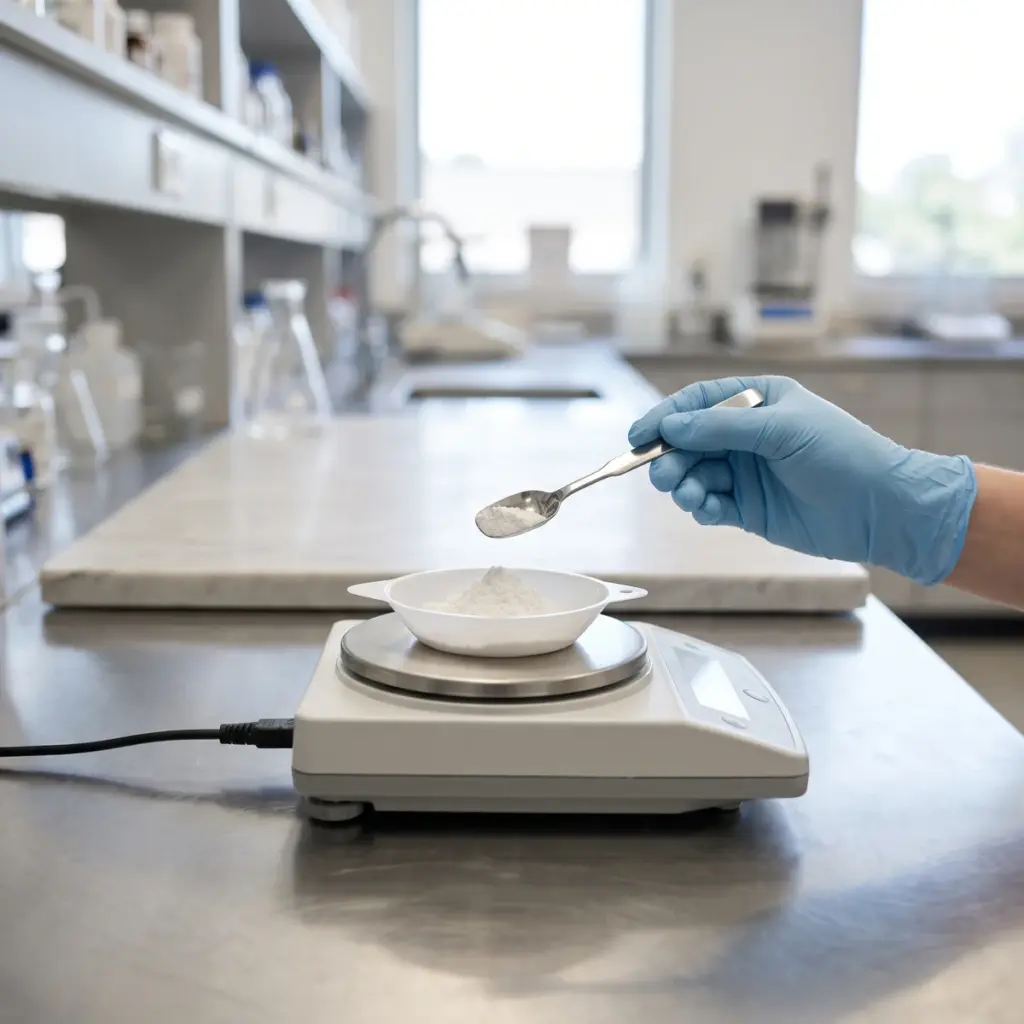
Ingredient production processes work out how to produce the chosen candidate at a consistent quality. Options include fermentation with bacteria, yeasts or microalgae, plant cell culture, extraction from biomass and chemical or enzymatic synthesis. Green chemistry assessments compare routes on solvents, energy, waste and renewable inputs. The project defines the identity, purity and yield of the material.
Explaining how it works
Mechanism investigation shows which molecular targets and pathways an active acts on. Receptor binding assays, gene and protein expression analysis and pathway studies in skin cells link the ingredient to responses such as collagen synthesis or melanin production.
Typical deliverables
A ranked candidate list with assay or prediction data, samples and a production protocol, a characterisation file covering identity and purity, and a mechanism report suitable for technical data sheets and supplier dossiers.
Services in Ingredient Development
Ingredient Production Processes
Ingredient Candidate Screening
Commissioning ingredient development work
Ingredient projects run for months, so it pays to enter at the right stage and plan how the data will be used.
Pick the stage that matches your question
If you have a target and no candidate, start with screening. If you already have an active material but struggle to make it consistently or sustainably, go to production-process development. If you have a result in a cell assay or a clinical study and want to know why it happens, commission a mechanism study. Many projects loop between stages, for example screening a set of fermentation variants once a production route is working.
Using the data downstream
Mechanism and activity data become the core of an ingredient’s technical file and give formulators a reason to choose it. Once samples exist, the active goes into prototypes through cosmetic formulation, and later into safety assessment and human efficacy studies that measure the benefit on volunteers.
What to look for in a research partner
For biotech production, check that the provider has fermenters or bioreactors at the scale you need for samples and can describe how they would hand over to a larger producer. For screening, ask which assays they run in-house and how they confirm hits. Agree the ownership of strains, processes and data in the contract, especially with academic groups, whose institutions often claim inventions made in their laboratories.
More in Development
Cosmetic development services cover ingredient research and formulation, taking a new active or product brief through to tested prototypes.