Microbiological Testing overview
Do you provide Microbiological Testing?
Cosmetic microbiology services and test methods
Four services cover this area. They differ in whether you test a batch as it is, deliberately contaminate it, or follow it over time.
Contamination screening
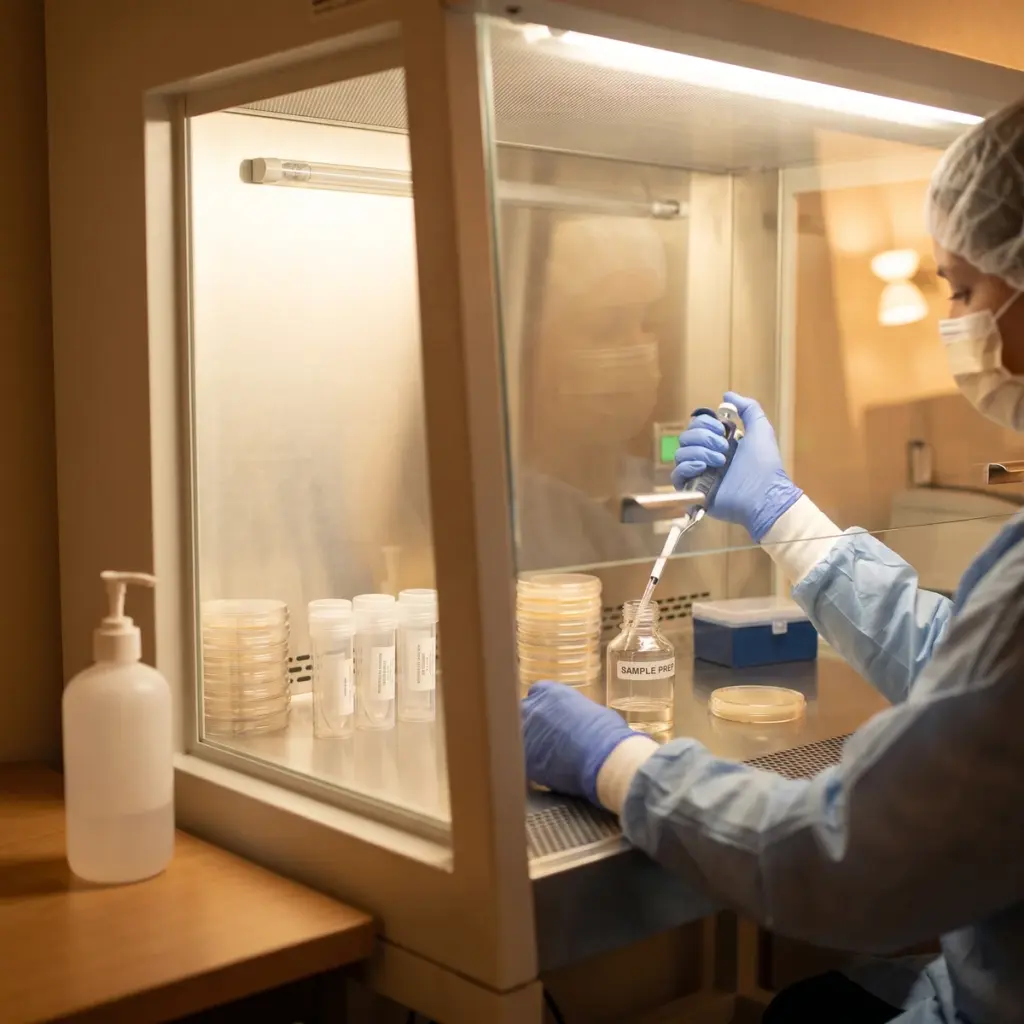
Microbial contamination screening counts total aerobic mesophilic bacteria, yeast and mould in a sample and checks for specified organisms such as Pseudomonas aeruginosa, Staphylococcus aureus, Escherichia coli and Candida albicans. Results come as colony-forming units per gram, read against release limits.
Preservative challenge testing
Preservative challenge testing (PET) inoculates the product with set strains of bacteria, yeast and mould and counts survivors at set intervals over several weeks. ISO 11930 is the method most laboratories use, with criteria A and B for the log reduction required. The report gives the count for each organism at each interval and a pass or fail against the chosen criterion.
Microbiological stability over shelf life
Microbiological stability during storage repeats counts, and often the challenge test, on samples aged in their pack. It shows whether the preservative is lost to packaging, degraded or bound up in the formula as the product ages.
Preservation system assessment
Preservation system efficacy assessment brings the challenge data together with water activity, pH, packaging and use conditions to judge the whole system. It is the route for low-water products such as anhydrous balms, powders and oils, where a microbial risk assessment can document that the format itself is hostile to growth.
Services in Microbiological Testing
Planning microbiological testing for launch and production
Microbiology sits at two points in a product’s life, and the laboratory you pick matters for both.
Pre-launch challenge testing
Run the challenge test on the final formula in its intended pack, once stability screening has confirmed the composition. A failure means reformulating the preservative system, so leave time for a second test. Products in airless pumps, single-dose units or anhydrous formats may justify a lighter approach, which the preservation system assessment documents.
During production
Each batch needs a contamination screen before release, against limits set by product category. Eye-area and children’s products carry tighter limits than general products. Water systems and raw materials such as botanical extracts and clays are common sources of contamination, so many manufacturers test those too.
What to check in a laboratory
Look for ISO 17025 accreditation covering ISO 11930 and the enumeration methods, and ask how the lab validates neutralisation of your preservative. Without that step, preservative carried onto the plate can suppress growth and make counts look lower than they are. Pair the work with stability and packaging compatibility testing, since both use aged samples from the same pack.
More in Cosmetic Quality Testing
Cosmetic quality testing measures composition, texture, preservation, stability and pack fit so each batch matches the product you approved.