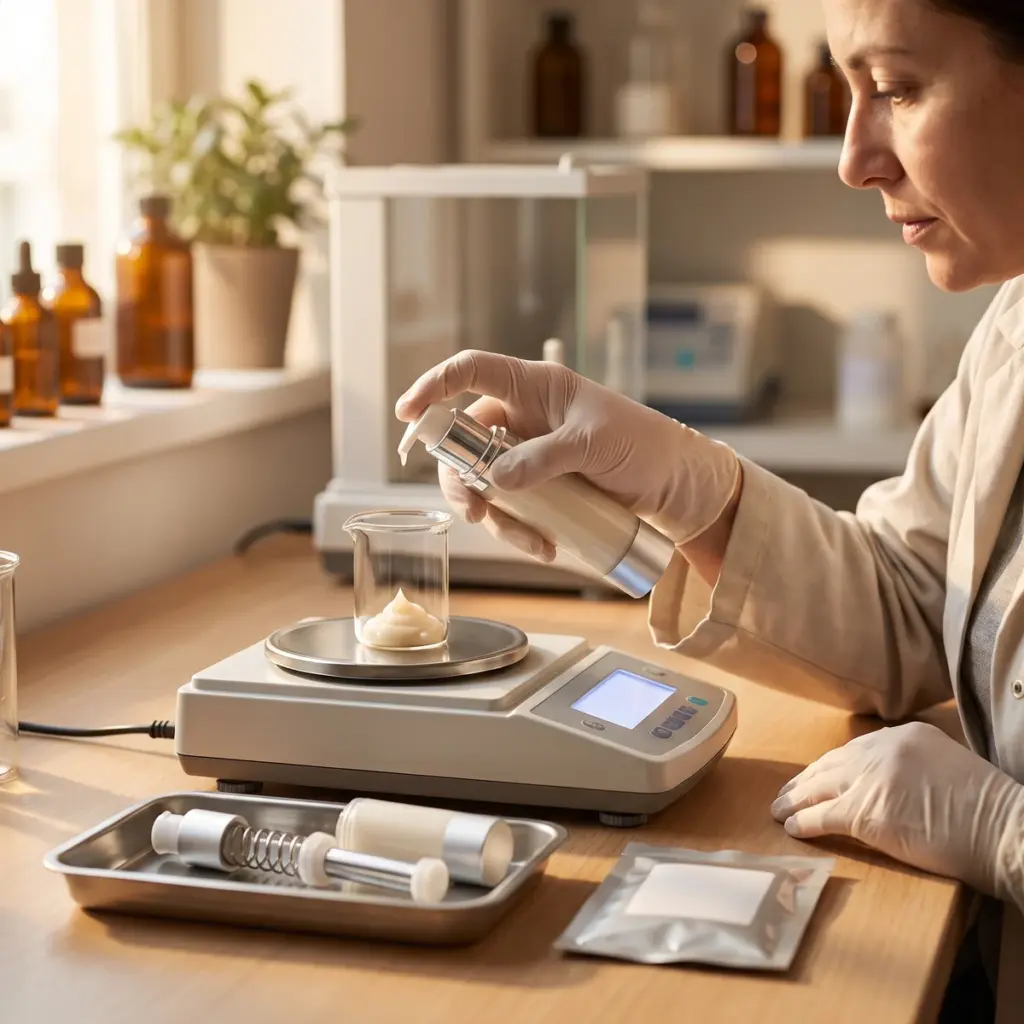
Cosmetic safety and human tolerance testing


Cosmetic Safety Testing overview
Who provides Cosmetic Safety Testing
Companies providing Cosmetic Safety Testing
Cosmetic safety and human tolerance testing in four parts
Safety evidence is built in layers. Each child service answers a different question about the same product.
Laboratory hazard screening
In vitro and in chemico safety testing uses reconstructed human epidermis, cell lines and peptide-reactivity assays to test ingredients or formulas for skin irritation, eye irritation, sensitisation and phototoxicity. These methods replace animal testing, which the EU bans for cosmetics.
Exposure-based assessment
Toxicological safety assessment is desk work by a qualified safety assessor. It combines ingredient toxicology with the amount applied, the area of skin, how often the product is used and whether it is rinsed off, and calculates a margin of safety for each ingredient. Its conclusion forms the core of the EU cosmetic product safety report.
Tolerance on volunteers
Human tolerance testing applies the finished product to volunteers under supervision. Patch tests, including repeat insult patch testing, look for irritation and sensitisation under occlusion. In-use studies follow normal application over several weeks, with a dermatologist or trained grader scoring redness, dryness and other skin reactions.
Claim-specific evidence
Hypoallergenic claim assessment reviews the formula for known allergens, including fragrance allergens and preservatives with a recognised sensitisation profile. The reviewer combines that screen with sensitisation data and tolerance results and states whether the evidence supports a hypoallergenic statement on pack. The output is a written evaluation you can file alongside the safety report.
Services in Cosmetic Safety Testing
In Vitro & In Chemico Safety Testing
Planning cosmetic safety testing for a new product
Safety work runs in a fixed logic: hazard data first, then the assessment, then volunteers. Volunteer studies only start once the assessor is satisfied the product is fit for human testing.
What the assessor needs from you
Prepare the full quantitative formula, raw-material safety data sheets and specifications, stability and microbiological results, the product type and how it will be used. Rinse-off or leave-on, face or body, adult or children’s use all change the exposure figures. Missing raw-material data is the most common cause of delay.
Matching studies to your claims
Decide your tolerance wording before the volunteer study is designed, because the panel and protocol follow from it. A claim for sensitive skin calls for a panel with self-declared sensitive skin. An eye-area product needs ophthalmological assessment. A hypoallergenic claim needs both formula review and sensitisation data.
Stability and preservation results feed directly into the assessment, so line up cosmetic quality testing early enough for its reports to be ready when the assessor starts.
More in Quality & Safety
Quality and safety services test a cosmetic’s stability, microbiology and composition, and assess its safety for consumers before market release.