Texture Colour Testing overview
Do you provide Texture Colour Testing?
How instrumental texture and colour measurement works
Four services sit in this group, each with its own instrument and output.
Texture analysis with a probe
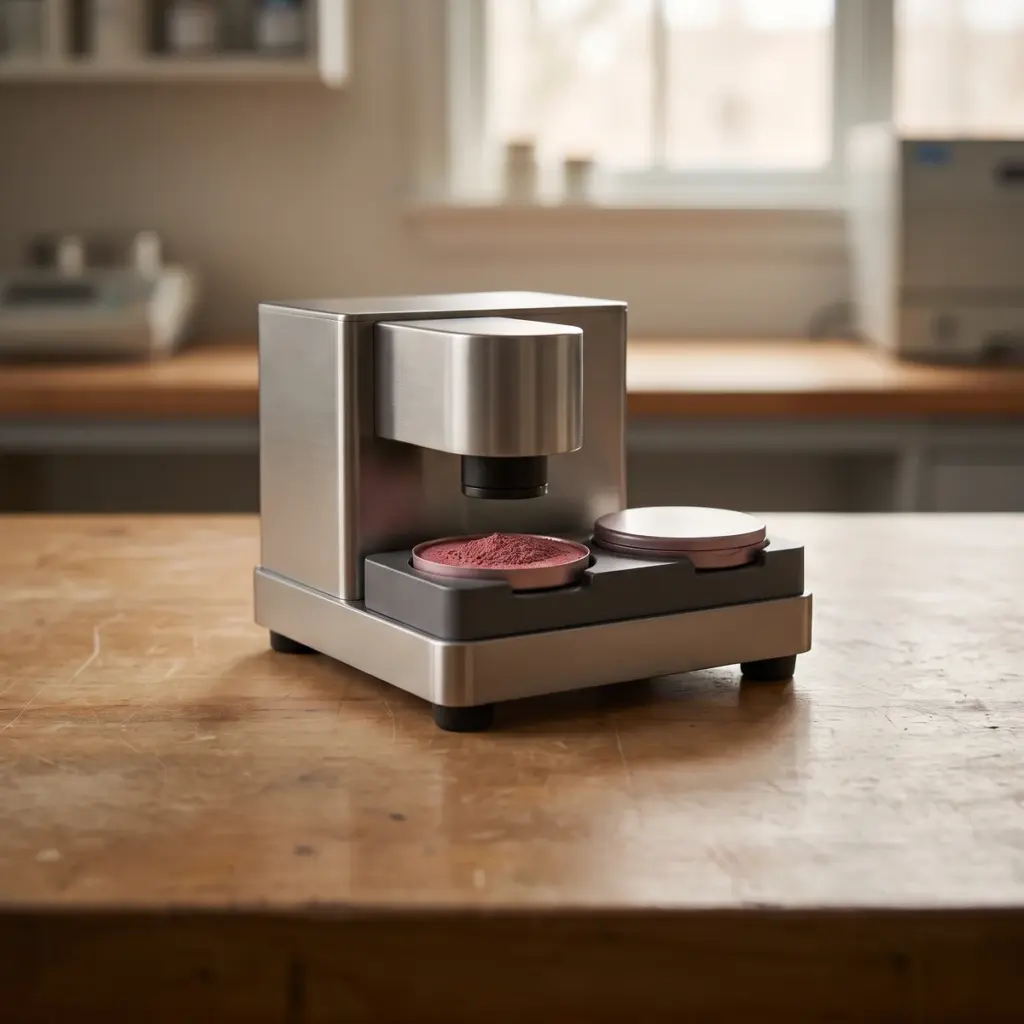
Instrumental texture testing drives a probe into or out of the sample at a set speed and records force against distance. The curve gives firmness, adhesiveness, cohesiveness and work of penetration. Stick products are tested for break strength, and creams and gels for the force needed to dip in and pull out.
Spreading and flow under load
Spreadability testing presses or shears a fixed amount of product between plates or across a substrate and measures the spread area or the force needed to move it. It puts a figure on the difference between a cream that glides and one that drags.
Applicator transfer
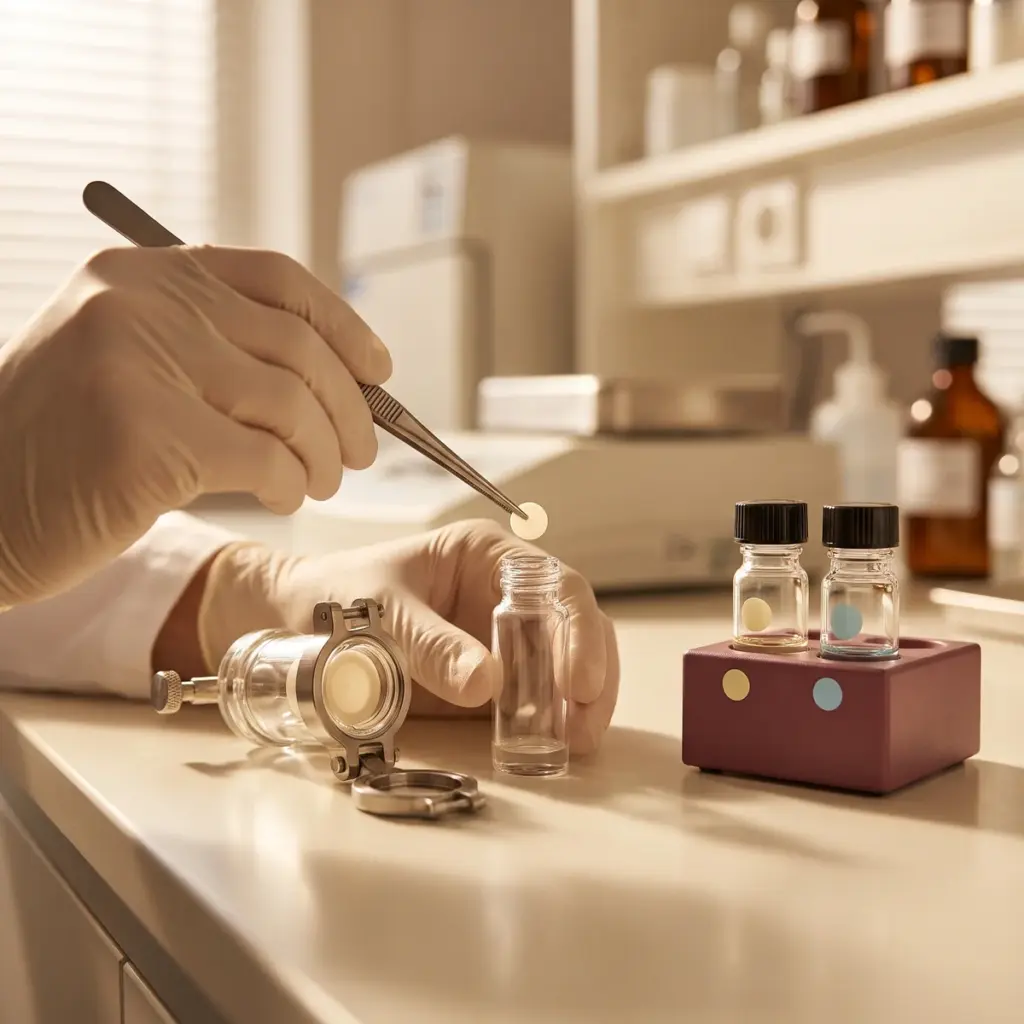
Applicator pick-up and pay-off testing weighs how much powder, lipstick, mascara or liquid an applicator loads and how much it lays down per stroke on a standard substrate. It is the test behind shade intensity per swipe and how long a compact lasts.
Colour coordinates
Instrumental colour measurement uses a spectrophotometer or colorimeter under a defined illuminant and geometry to record CIELAB values. The colour difference, delta E, between a batch and its master shade is the usual pass or fail figure.
You receive force curves, spread values, transfer weights or colour coordinates with photographs, set out against your reference sample.
Services in Texture Colour Testing
Where texture and colour testing fits in product work
Three uses account for most texture and colour work.
Writing shade and texture limits
Colour cosmetics need a master shade and a delta E tolerance for every batch. Sticks and balms benefit from a firmness range, because a stick that is too soft breaks in use and one that is too hard deposits too little product. Measure the approved standard first, then agree limits from several good batches.
Checking scale-up and storage
A texture curve from the lab batch and one from the first production batch show at once whether higher shear or slower cooling changed the structure. The same measurements on stored samples show softening or shade drift, which is why they are often added to accelerated stability testing pull points.
Probes, temperature control and colour geometry to check
Ask which probes, plates and substrates the lab holds for your format, and whether it controls sample temperature, since lipsticks and butters change firmness with a few degrees. For colour, check that the lab measures in the same geometry and illuminant your supplier uses, so the two sets of numbers line up.
More in Cosmetic Quality Testing
Cosmetic quality testing measures composition, texture, preservation, stability and pack fit so each batch matches the product you approved.