Stability & Packaging Compatibility

Stability & Packaging Compatibility overview
Who provides Stability & Packaging Compatibility
Companies providing Stability & Packaging Compatibility

Storage stress and packaging compatibility tests explained
Five services sit in this group. Three stress the product, two examine the pack. Each pull point compares stressed samples with controls from the same batch, so any change can be traced to the condition that caused it.
Storage and climate stress
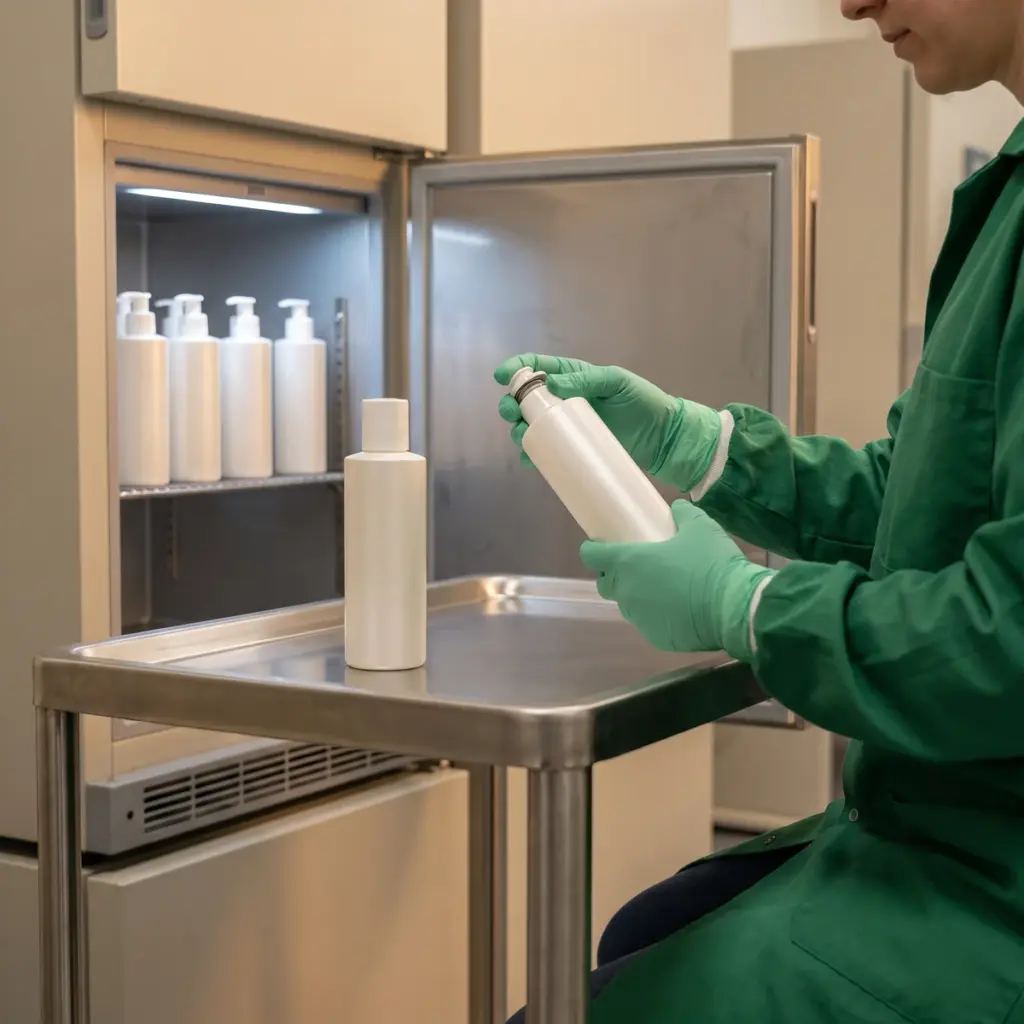
Accelerated stability testing holds samples at constant elevated temperatures, often 40 or 45 °C, with room-temperature and refrigerated controls, and checks them at set intervals over several months. Temperature cycling and freeze-thaw testing moves samples repeatedly between cold and warm to mimic shipping and seasonal swings, which exposes emulsion breakdown and crystallisation. Product photostability testing exposes product in clear or translucent packs to controlled light and compares it with dark-stored controls for fading and odour change.
Pack and formula interaction
Product-packaging interaction testing looks at exchange between formula and container: weight loss through the wall, absorption of fragrance or preservative into plastic, and migration of substances from the pack into the product, measured with GC-MS or HPLC. Packaging material compatibility testing checks the components themselves for swelling, cracking, discolouration, delamination and pump or valve function after contact with the product.
You receive a protocol, results at each time point for product and pack, photographs, weight-loss data and a conclusion on shelf life and pack suitability. Most laboratories also issue interim reports at each pull point, so a failing condition is visible weeks before the study ends.
Services in Stability & Packaging Compatibility
Packaging Material Compatibility Testing
Running a stability and compatibility programme
Test the final formula in the final pack, including closure, liner, pump and decoration. A change to any of these later can invalidate the data.
Sequencing the studies
Start accelerated storage and freeze-thaw together, as soon as the formula is fixed and pack samples exist. Add photostability only for clear or translucent packs. Run a parallel real-time study at room temperature for the full claimed shelf life, since it confirms what the accelerated data predicted. If the accelerated samples fail early, the pull-point data usually shows whether the formula or the pack is at fault, which tells you whether to reformulate or re-source the component.
Formula, pack specification and shelf-life target to send
Send the formula, the pack specification with material grades, the target shelf life, the markets and any known sensitivities such as an oxidation-prone active. Supply enough filled units for every condition and pull point, plus spares. Ask for microbiological stability during storage on the same aged samples, so physical and microbial results cover one product history.
More in Cosmetic Quality Testing
Cosmetic quality testing measures composition, texture, preservation, stability and pack fit so each batch matches the product you approved.