Be the first company on this service page

No published company profiles are linked to Adipocyte & Vascular Studies or its more specific services yet. Explore the service categories or add an explicitly supported capability to your company profile.

Definition

Body contouring and vascular mechanisms

This preclinical category studies biological processes sometimes explored in body-care development. A cellular response must be distinguished from delivery to the relevant tissue and from a measurable change in body appearance or circulation in people.

Adipocyte studies

  • Lipid accumulation measured by appropriate staining or biochemical methods
  • Glycerol and free-fatty-acid release as lipolysis-related readouts
  • Adipogenesis markers such as PPARγ and C/EBPα
  • Lipase activity and other lipid-metabolism measurements
  • Thermogenesis-associated markers such as UCP1 or PRDM16 in suitable models

Reduced lipid staining can reflect toxicity or altered cell number, so viability and normalisation are important. Thermogenic gene expression does not by itself demonstrate increased heat production or fat loss.

Vascular and lymphatic research

Endothelial or tissue models can examine selected vessel-related responses. Lymphatic-cell findings do not establish fluid drainage or intact-vessel contractility unless those functions are actually measured. Clinical methods such as laser Doppler assess different, human-level endpoints and are not interchangeable with cell assays.

Limits of consumer interpretation

Cellulite appearance involves tissue structure and several other factors. Lipolysis does not map directly to slimming, and vascular markers do not directly prove improved circulation or reduced oedema. Such statements may also raise product-classification issues. Laboratory findings should guide further research, with claims supported by evidence appropriate to the finished product and intended outcome.

11 subcategories of Adipocyte & Vascular Studies services

Cellulite efficacy testing Investigate laboratory mechanisms associated with cellulite appearance. Emilie SCHOL
Slimming and adipocytes efficacy testing Investigate adipocyte mechanisms relevant to body-contouring research. Emilie SCHOL
Adipocyte lipid metabolism Characterise lipid metabolism in adipocyte models. Emilie SCHOL
Adipocyte metabolism Investigate ingredient effects on adipocyte metabolism. Emilie SCHOL
Glucose uptake regulation Measure glucose uptake responses in adipocyte models. Emilie SCHOL
Fat storage reduction Measure changes in lipid storage in adipocyte models. Emilie SCHOL
Adipogenesis inhibition Assess adipogenesis inhibition in laboratory models. Emilie SCHOL
Lipolysis activation Test whether ingredients increase lipolysis in cultured adipocytes. Emilie SCHOL
Thermogenesis activation Investigate thermogenic responses in suitable adipocyte models. Emilie SCHOL
Microcirculation Assessment Investigate effects on microcirculation using appropriate models or human measurements. Emilie SCHOL
Lymphatic drainage Investigate lymphatic function and tissue fluid balance in suitable models. Emilie SCHOL
Applications

Separating body-care mechanisms from human outcomes

Lipolysis and adipogenesis studies investigate triglyceride handling and adipocyte development. Thermogenesis requires evidence of energy dissipation in a suitable model rather than marker expression alone. Candidate ranking should stay within the endpoint and concentration conditions tested.

Endothelial or other vascular models can investigate selected responses, while human perfusion studies measure vascular outcomes more directly where offered. Lymphatic-cell measurements do not automatically show intact-vessel contractility or reduced oedema.

Choose additional evidence around the actual product claim rather than a fixed number of assays. A collection of laboratory mechanism assays is not by itself a substantiation package for human cellulite or slimming outcomes. Human appearance, mechanical properties and body composition require appropriately distinct assessments.

Exploration
Learn more about Cosmetic Efficacy Testing

Cosmetic efficacy testing measures biological endpoints in cell, tissue or ex-vivo models to investigate mechanisms behind proposed benefits. Explore another Cosmetic Efficacy Testing page on cosmetic-labs.com.

Hydration Barrier Testing

Explore human skin hydration and barrier testing, including water-loss assessments, alongside laboratory studies of epidermal lipids and water handling.

Skin Comfort Testing

Find skin soothing and comfort studies for human redness and perceived comfort, plus laboratory investigations of inflammatory and innate immune responses.

Instrumental & Biophysical

Measure cosmetic performance in human participants through instrumental endpoints for skin, hair, scalp, nails or makeup under a defined study protocol.

Pigmentation Radiance Testing

Explore dark-spot, skin-tone and radiance testing, with human appearance assessments kept distinct from laboratory studies of pigmentation mechanisms.

Skin Ageing Testing

Find wrinkle, firmness and skin texture studies, alongside laboratory work on collagen, elastin and other ageing mechanisms, with clear limits on claims.

Sebum Control Testing

Explore oil-control and shine testing in users, alongside laboratory studies of sebocyte activity, with evidence scoped to the intended cosmetic claim.

Hair Scalp Testing

Find hair performance and scalp-care studies, plus laboratory investigations of follicle biology and fibre protection, with evidence matched to each claim.

Photoprotection Testing

Explore SPF and UV-protection testing alongside laboratory UV-response studies, with UVA protection and water-resistance scope specified for each enquiry.

Under-Eye Efficacy Testing

Assess under-eye dark circles, puffiness, fine lines or hydration in human studies using measurements matched to the specific product benefit.

Lip Care Efficacy Testing

Assess lip condition, hydration and comfort in human product studies, selecting endpoints and comparison conditions suited to the intended benefit.

Nail Care Performance Testing

Assess nail condition and cosmetic product performance in human-use studies, with nail-specific endpoints and defined comparison conditions.

Makeup Wear & Performance Testing

Assess makeup wear, coverage, colour retention and transfer resistance in human-use studies, with test conditions matched to the intended claim.

Microbiome Interaction Studies

Investigate cosmetic interactions with skin microbes through growth, inhibition and pH-response assays, with conclusions scoped to the organisms tested.

Antimicrobial Activity Testing

Measure inhibition or killing of microorganisms in defined assays, keeping ingredient activity distinct from finished-product preservation testing.

Antioxidant & Redox Studies

Investigate antioxidant and redox responses through chemical scavenging, cellular defence and oxidative-damage assays with model-specific interpretation.

Xenobiotic & Cellular Clearance Studies

Investigate xenobiotic responses and cellular clearance through metabolism, autophagy and protein turnover studies with endpoint-specific interpretation.

Skin-Cell Energy & Metabolism Studies

Investigate skin-cell energy and metabolism through ATP content, respiration, glucose use and redox measurements interpreted as complementary endpoints.

Skin Circadian Rhythm Studies

Investigate skin-cell circadian biology through clock-gene expression, synchronisation and timed stress or repair responses in suitable laboratory models.

Adipocyte & Vascular Studies
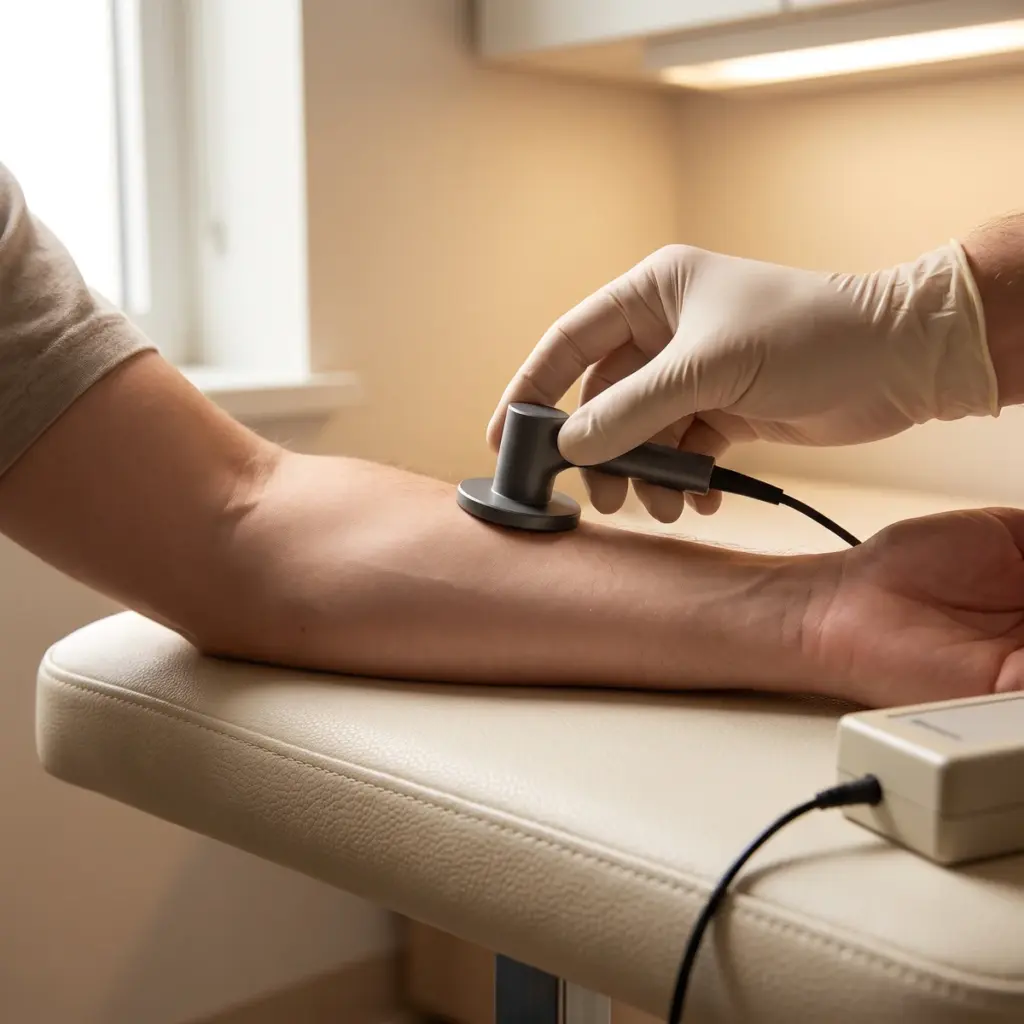
Investigate adipocyte metabolism, matrix responses and vascular mechanisms in suitable models, separately from human body-contouring efficacy outcomes.

Continue with

What does “Verified” mean?

Verified means the claimant’s company affiliation was checked.

Something not right?

Let us know if any information on this page is incorrect or if you have concerns about who manages it.