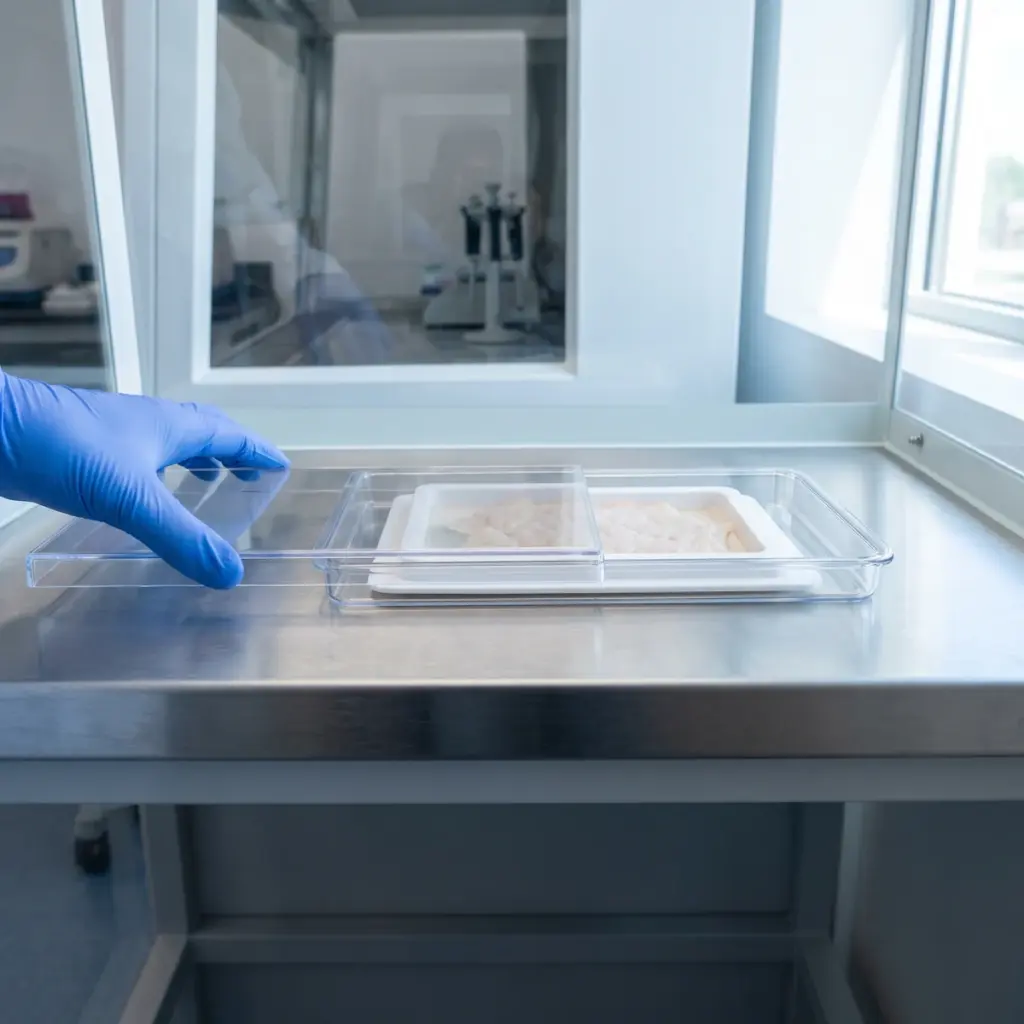
Hypoallergenic Claim Assessment overview
Do you provide Hypoallergenic Claim Assessment?
What a hypoallergenic claim assessment examines
The claim refers to allergy, so the review centres on skin sensitisation. The question is whether the formula has been built to avoid known sensitisers and whether the evidence on the finished product backs that up. The European guidance on cosmetic claims expects a hypoallergenic product to be designed to minimise its allergenic potential, with evidence to support it.
Formula and ingredient screening
The assessor works through the full quantitative formula. Each ingredient is checked against lists of established contact allergens, including the fragrance allergens that EU rules require to be named on the label above set levels, and against preservatives with a known sensitisation record. Impurities in raw materials, such as residual monomers or nickel traces in pigments, are reviewed with supplier data.
Sensitisation evidence
Laboratory data come from methods that cover separate steps of the sensitisation pathway. The direct peptide reactivity assay (DPRA) measures how strongly a substance binds to synthetic peptides. KeratinoSens reads activation of a stress-response pathway in keratinocytes. The h-CLAT measures activation markers on a dendritic-cell-like line. For the finished product, a human repeat-insult patch test on volunteers records whether repeated contact induces sensitisation.
Irritation data
Stinging and redness are often reported by users as allergy, so irritation data from reconstructed epidermis tests and supervised use studies complete the picture. The assessor keeps irritation and sensitisation findings separate in the conclusion.
Your deliverable
You receive a written assessment listing the evidence reviewed, the allergen screening results, any ingredients flagged for replacement, and the claim wording the evidence supports for the tested formula and user group.
Getting a hypoallergenic claim assessment right
Hypoallergenic claims are best supported when the assessor is involved from the first draft formula through to label approval.
Plan the claim at the formulation stage
A hypoallergenic claim is far easier to support when the formula is designed for it. Ask the assessor to review the draft formula before stability testing starts. Swapping a fragrance with labelled allergens for a fragrance-free version, or replacing a preservative with a high sensitisation record, costs little at that point and a great deal after launch.
Prepare the right file
Send the full formula with INCI names and percentages, raw material specifications and allergen declarations from your fragrance supplier, the intended user group and the exact wording you plan to use. Existing data, such as skin sensitisation assessment results for new ingredients or an HRIPT on a similar formula, speed up the review. Where the finished product has no human data, the assessor can specify a study through human tolerance testing.
Keep the claim current
The conclusion applies to the reviewed formula. A new fragrance, preservative or raw material supplier triggers a fresh review of the claim, so build that check into your change-control process.
More in Cosmetic Safety Testing
Cosmetic safety testing gathers the hazard, exposure and human tolerance evidence needed to sign off a cosmetic as safe for its intended use.