NMF production overview
Do you provide NMF production?
Measuring NMF production in epidermal models
Most NMF comes from filaggrin. In the upper granular layer, profilaggrin is processed into filaggrin, which binds keratin as cells flatten into corneocytes. Higher in the stratum corneum, filaggrin is broken down into free amino acids, which are converted in part to PCA and urocanic acid. Lactate, urea and some salts complete the mixture. An NMF study measures how your ingredient changes the amount of these compounds formed in the tissue.
Reconstructed epidermis dosing for NMF formation
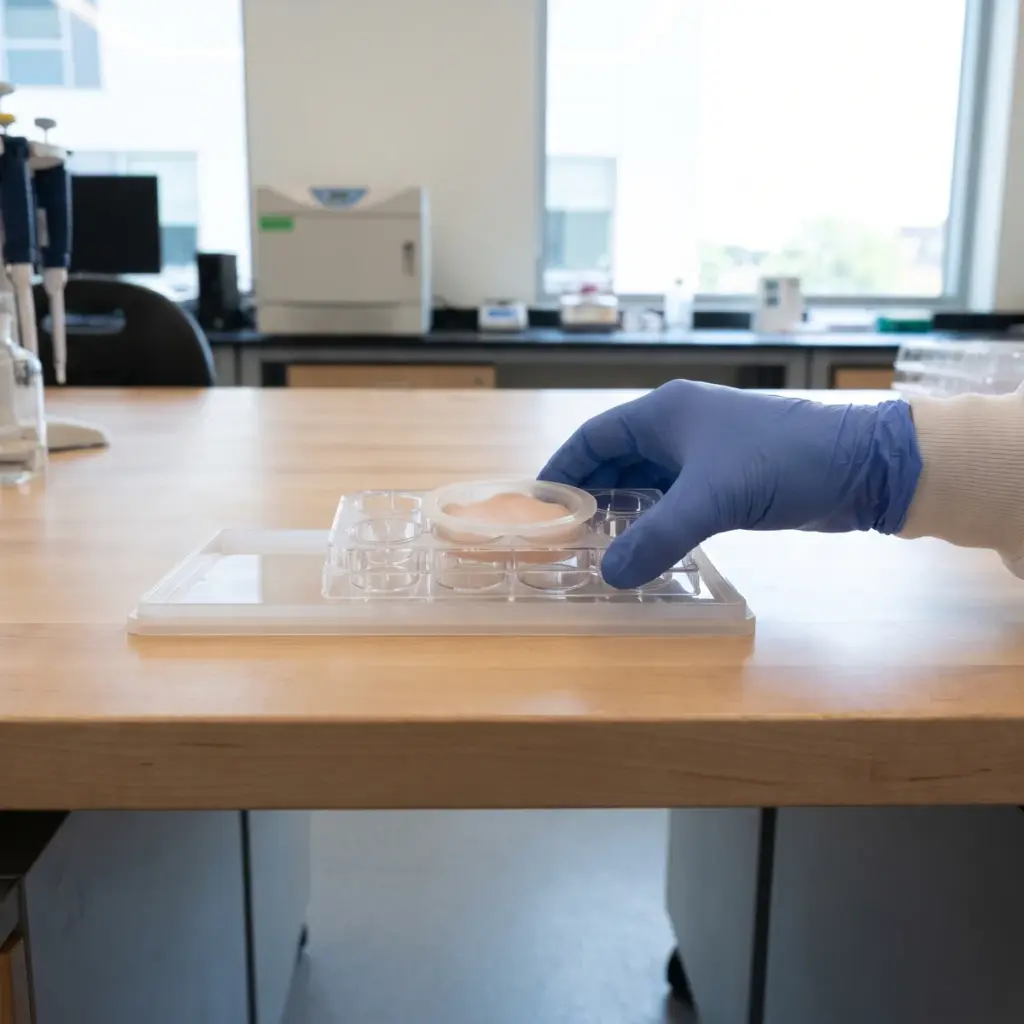
Reconstructed human epidermis with a well-formed stratum corneum is the usual model, since NMF forms only in differentiated tissue. The test material is applied topically or added to the medium over several days. Untreated and vehicle controls run in parallel.
HPLC and LC-MS analysis of NMF compounds
The stratum corneum or whole tissue is extracted, and the extracts are analysed by HPLC or LC-MS. Results are normalised to protein content or tissue area so treatment groups can be compared.
- Total and individual free amino acids
- Pyrrolidone carboxylic acid
- Urocanic acid
- Lactate and urea on request
- Filaggrin gene and protein expression
Separating production from deposition
Many moisturisers contain amino acids, PCA salts, lactate or urea. The laboratory measures the test material itself and can run extra controls so newly formed NMF is reported separately from compounds the product supplied. For ingredients acting on the filaggrin step, filaggrin production testing gives deeper data on that stage.
NMF results package
You receive NMF profiles by treatment, filaggrin results, chromatograms, statistics against controls and a method description.
NMF production studies in hydration product development
NMF analysis links an active to the humectant chemistry of the stratum corneum, the layer that a corneometer reads in clinical studies.
When brands commission NMF analysis
NMF data suit products positioned on the skin’s own moisturising system: replenishing body care, formulas for dry or rough skin and actives sold as NMF boosters. The study is most useful at the ingredient selection stage, when several candidates or concentrations can be compared in one model before a clinical moisturisation study.
Claims supported by the results
A rise in endogenous amino acids and PCA, with matching filaggrin data, supports mechanism wording such as “boosts the skin’s natural moisturising factor”. The consumer-facing hydration result, for example improved skin moisture after a set period of use, comes from a corneometer study on volunteers. Brands often present both together, with the NMF data explaining the clinical effect.
Preparing the study
List all humectants in your formula, especially amino acids, sodium PCA, lactic acid and urea, since they decide the control design. Choose whether you want the full NMF profile or a focused set of compounds. If your positioning combines NMF with water transport, the same tissues can also go to aquaporin expression analysis.
More in Barrier & Hydration Mechanisms
Barrier & Hydration Mechanisms studies show how an ingredient acts on epidermal lipids, barrier proteins and water-handling pathways in skin models.