Lamellar lipid reinforcement overview
Do you provide Lamellar lipid reinforcement?
How lamellar lipid reinforcement is measured
The intercellular lipids of the stratum corneum stack into repeating lamellae, and their lateral packing governs how well the barrier holds water. A reinforcement study treats a skin model with your ingredient or formula, then compares the lipid structure with untreated and vehicle-treated tissue. Where the claim concerns recovery, the protocol adds a controlled barrier disruption, for example with a solvent or surfactant, before treatment starts.
Skin models for lipid structure work
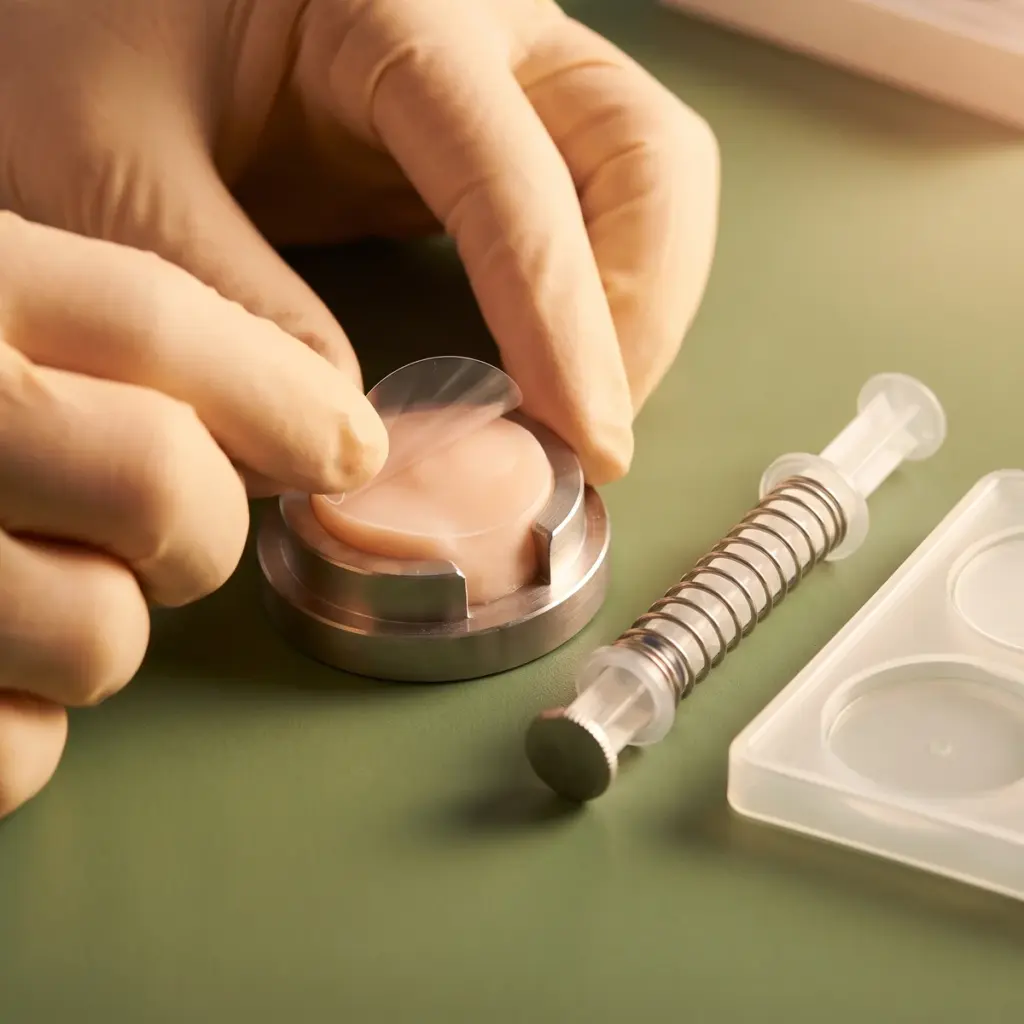
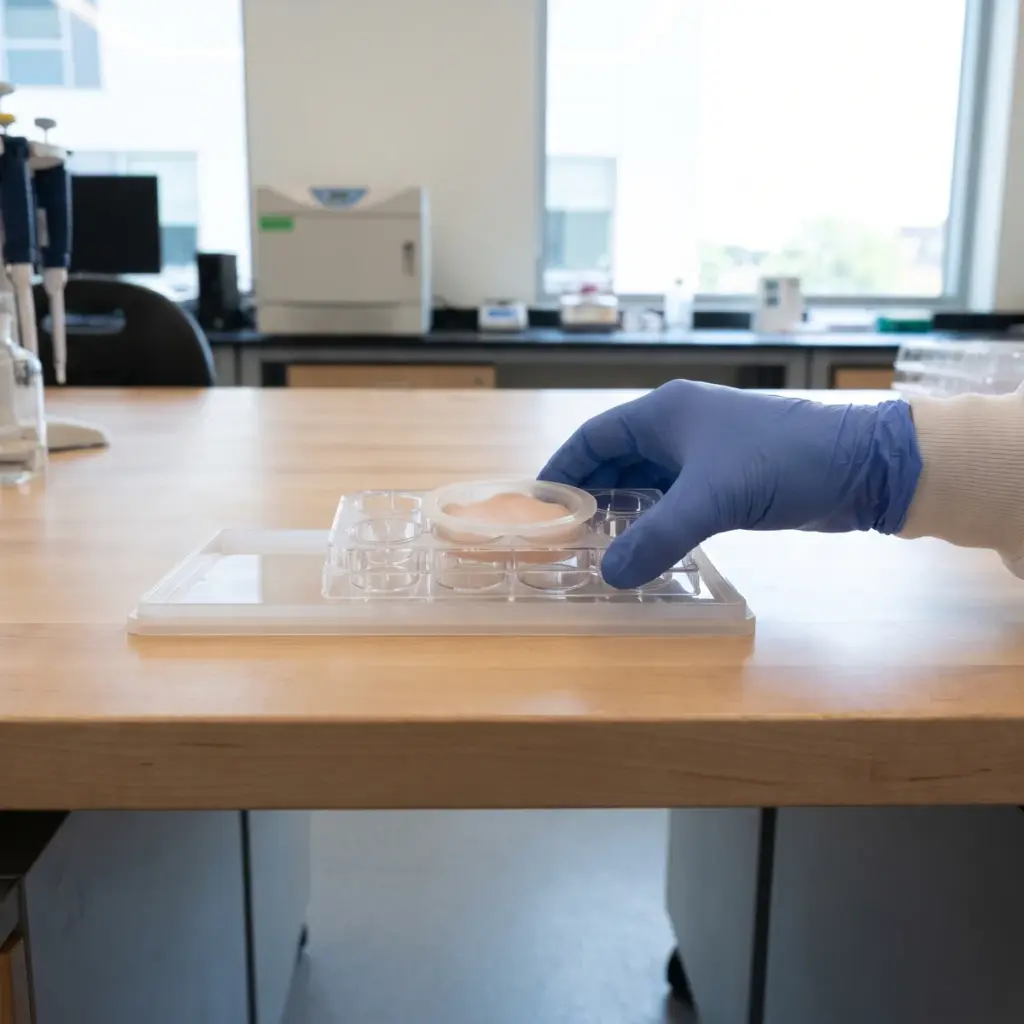
Ex vivo human skin and isolated stratum corneum sheets carry native lamellar organisation and suit structural measurements. Reconstructed human epidermis allows repeat dosing and larger side-by-side comparisons between candidates. The laboratory picks the model according to the method and the number of test materials.
X-ray scattering and infrared spectroscopy
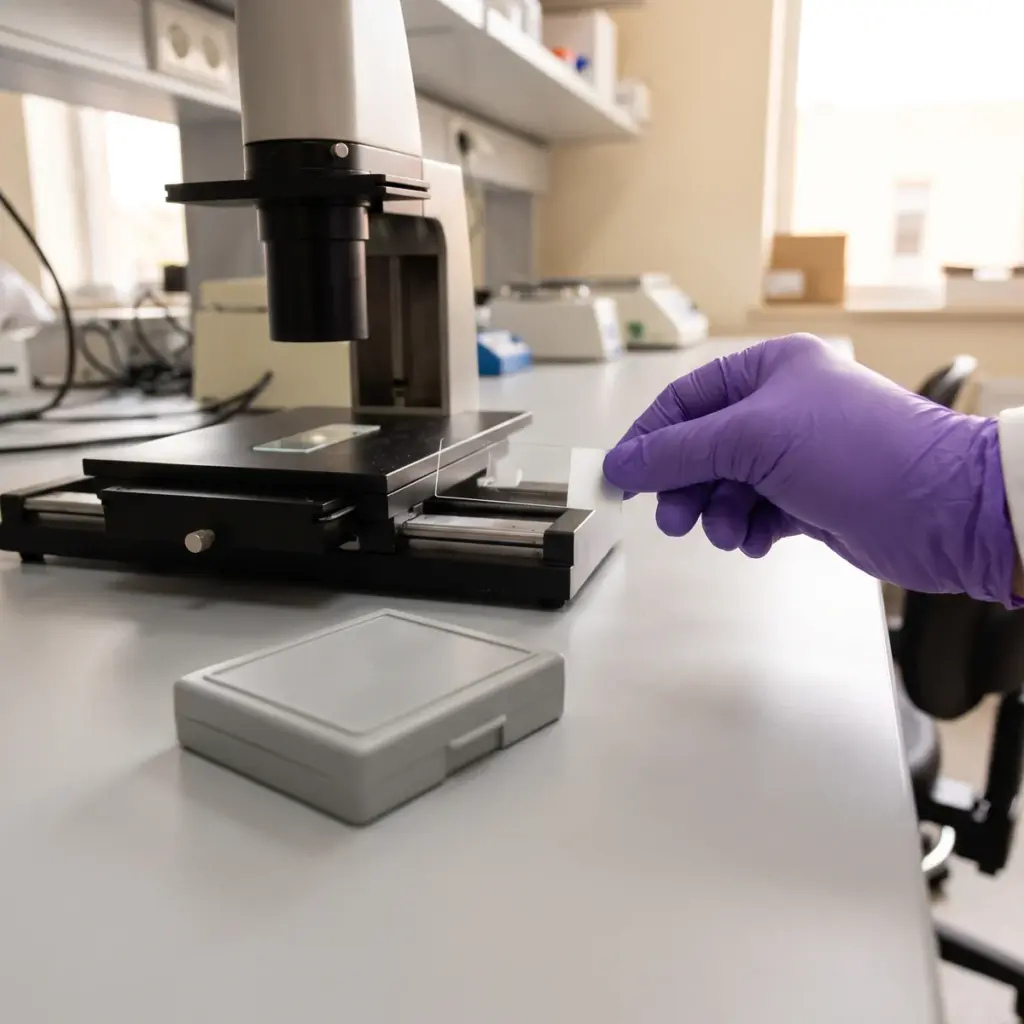
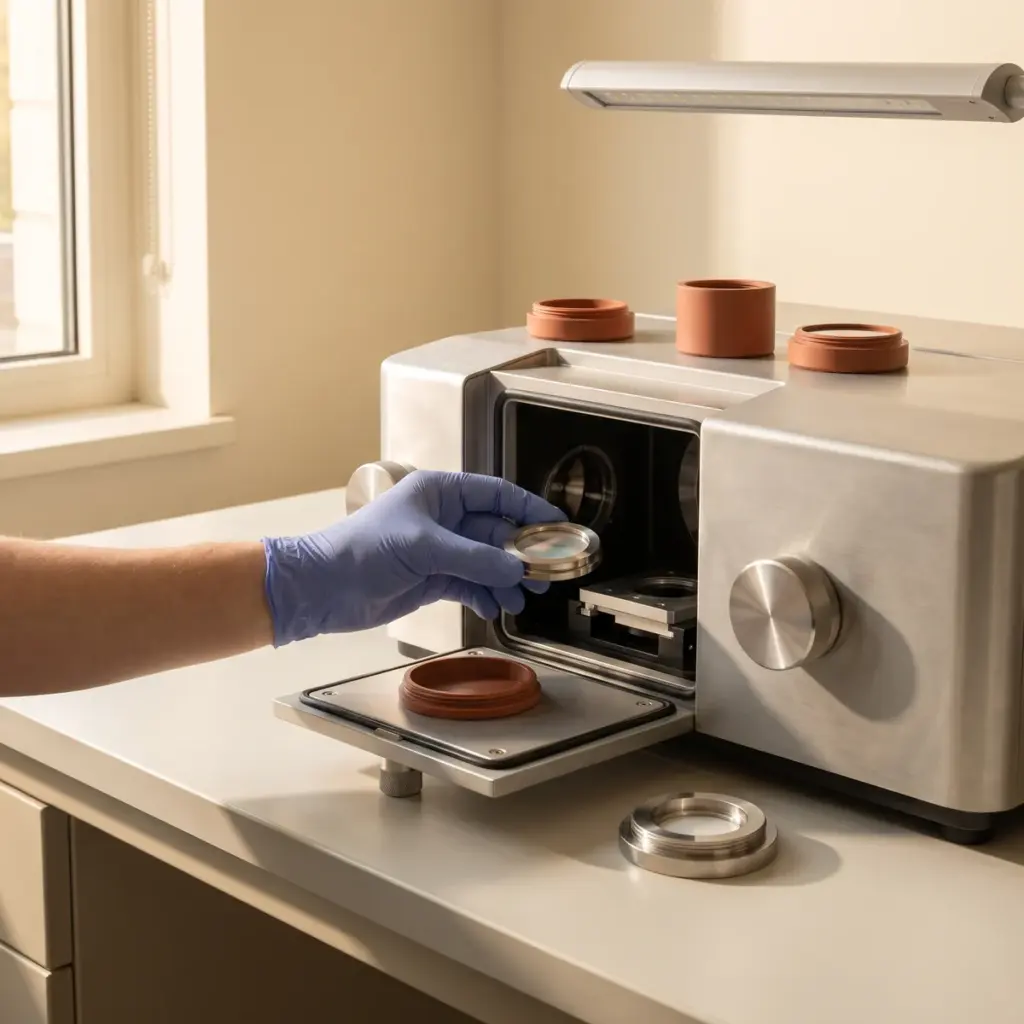
Small-angle X-ray diffraction reads the repeat distance of the lamellar phases. Wide-angle scattering and Fourier-transform infrared spectroscopy describe lateral packing, separating the dense orthorhombic arrangement from the looser hexagonal one. In FTIR, the position of the CH2 stretching bands also reports on the conformational order of the lipid chains.
Composition and barrier function alongside structure
Lipid extraction followed by HPTLC or LC-MS quantifies ceramide classes, cholesterol and free fatty acids, and the ratio between them. Water-loss or marker-permeation measurements on the same tissue link the structural readout to barrier performance. If your ingredient acts upstream on lipid production, ceramide synthesis in epidermal models covers that step.
Lamellar spacing, packing and lipid ratio data
- Lamellar spacing and phase data by treatment group
- Lateral packing and chain order indices
- Lipid class profile and molar ratios
- Barrier function results where included
- Report with protocol, statistics and raw spectra
Using lamellar lipid reinforcement data in product development
Lipid structure data are most useful early, while the lipid ratio, emulsifier system and concentration of a barrier formula can still change.
Claims this evidence supports
Structural data give a mechanism behind wording such as “reinforces the skin’s lipid barrier” or “restores lipid organisation” in ingredient dossiers and technical marketing. For a ceramide, fatty acid or cholesterol blend, the study shows whether the supplied lipids integrate into ordered lamellae. Suppliers also use it to set a lipid complex apart from simple occlusive emollients, which sit on the surface without joining the lamellar structure.
Where it sits in a barrier programme
A common sequence starts with this structural study on two or three prototypes, then takes the best performer to skin barrier function efficacy testing and a volunteer study with TEWL and corneometer readings. Running the model study first means only the formula with measurable lipid ordering goes to the more expensive clinical phase.
Lipid composition and vehicle details to provide
Tell the laboratory the lipid composition of your test material, the concentration range and whether you want a native-structure comparison or a recovery-after-disruption design. Send the vehicle as well, so it can run as a control. Ask which structural method the provider operates in house, since X-ray scattering often depends on a dedicated SAXS instrument or synchrotron beam time, and that affects scheduling.
More in Barrier & Hydration Mechanisms
Barrier & Hydration Mechanisms studies show how an ingredient acts on epidermal lipids, barrier proteins and water-handling pathways in skin models.