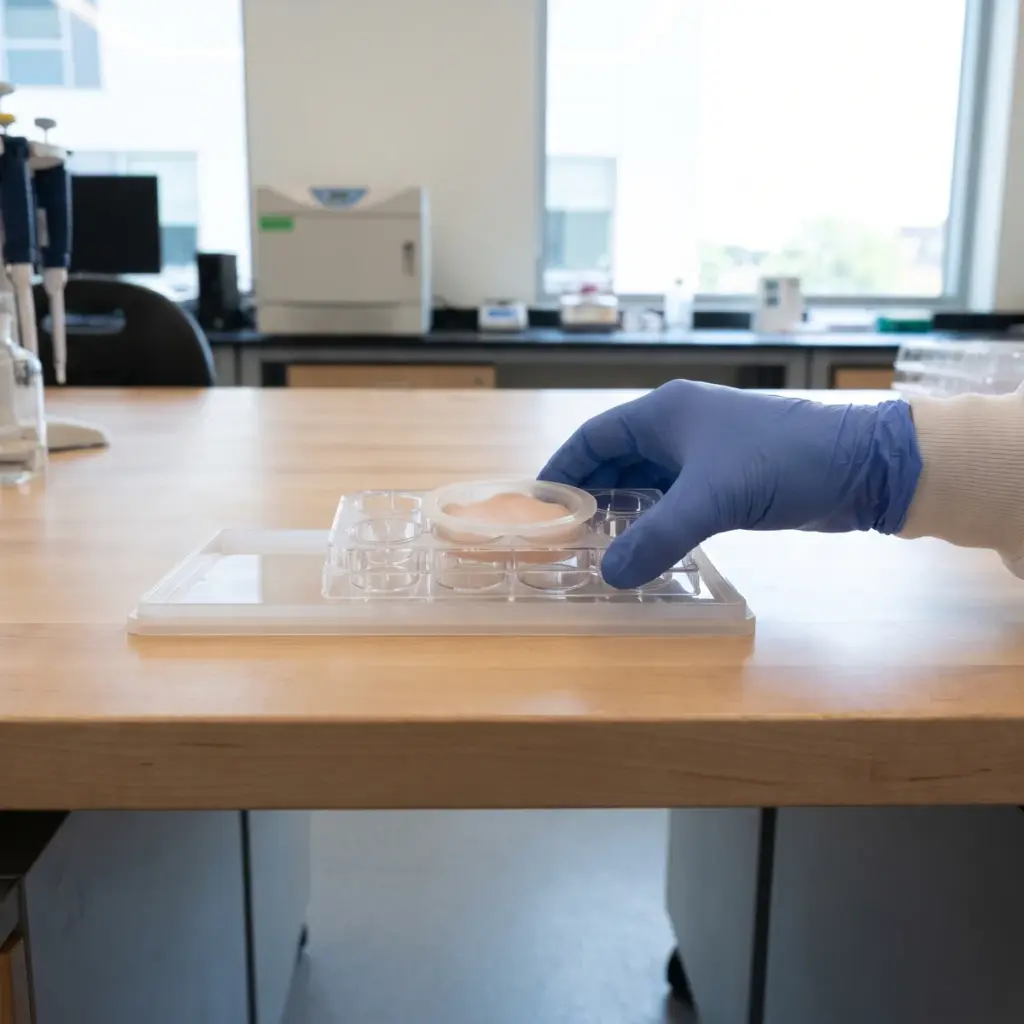
Hyaluronic acid synthesis overview
Do you provide Hyaluronic acid synthesis?
How hyaluronic acid synthesis is measured in skin cells
Hyaluronic acid is a glycosaminoglycan that binds large amounts of water in the dermis and between epidermal cells. Three membrane enzymes, HAS1, HAS2 and HAS3, build it, and hyaluronidases break it down. A synthesis study measures how your ingredient shifts that turnover towards more HA in the tissue.
Fibroblasts, keratinocytes and reconstructed epidermis
Normal human dermal fibroblasts suit dermal HA questions and anti-ageing positioning. Keratinocytes and reconstructed epidermis address epidermal HA and hydration. Cells are dosed over a concentration range below the cytotoxic threshold, which a preliminary viability test sets.
Quantifying hyaluronic acid
HA released into the culture medium and retained in the cell layer is measured with an assay based on hyaluronan-binding protein, an ELISA-like format specific to HA. Results are normalised to cell number or total protein. Because many test materials contain HA, the laboratory runs the sample without cells to subtract what the product itself brings.
- HA concentration in medium and cell fraction
- HAS1, HAS2 and HAS3 expression by RT-qPCR
- Hyaluronidase expression where degradation is relevant
- Viability and normalisation data
Molecular weight analysis
Size-exclusion chromatography or gel electrophoresis can add the molecular weight distribution of newly made HA when you need it. This is quoted as an extra method alongside the total-content assay.
HA synthesis study report
The final report gives HA levels and gene expression per concentration against vehicle and positive controls, statistics and method details. A reference stimulant such as a growth factor is often included to show the model responds.
Using hyaluronic acid synthesis data for claims and selection
HA synthesis is one of the most requested mechanism studies for moisturising and anti-ageing actives, and its data feed both ingredient choice and claim wording.
Ranking extracts and peptides by HA output
Suppliers often screen several extracts or peptide sequences in fibroblasts, compare HA output against a positive control and take the best one forward. Running all candidates in one study keeps the conditions identical, so the ranking is fair.
Claim wording the data supports
A rise in cellular HA production with matching HAS2 expression supports mechanism wording such as “stimulates the skin’s own hyaluronic acid” in ingredient literature and finished-product communication. Visible effects such as plumper-looking skin or reduced fine lines come from a separate clinical study with instrumental and image endpoints on volunteers.
Combining it with other hydration studies
HA synthesis covers the water-binding side of moisture. Pair it with aquaporin expression for water transport, or with NMF production for the stratum corneum humectants, when your active is positioned as a full hydration ingredient. Tell the laboratory whether your test material contains hyaluronic acid or sodium hyaluronate before it designs the controls.
More in Barrier & Hydration Mechanisms
Barrier & Hydration Mechanisms studies show how an ingredient acts on epidermal lipids, barrier proteins and water-handling pathways in skin models.