Intercellular lipid order overview
Do you provide Intercellular lipid order?
Measuring intercellular lipid order in the stratum corneum
Between corneocytes, barrier lipids stack in lamellae with a short and a long periodicity phase. Within each layer, the lipid chains pack laterally in an orthorhombic, hexagonal or liquid arrangement. Dense orthorhombic packing gives the lowest permeability. Lipid order testing measures these features and how treatment shifts them.
Samples and lipid models
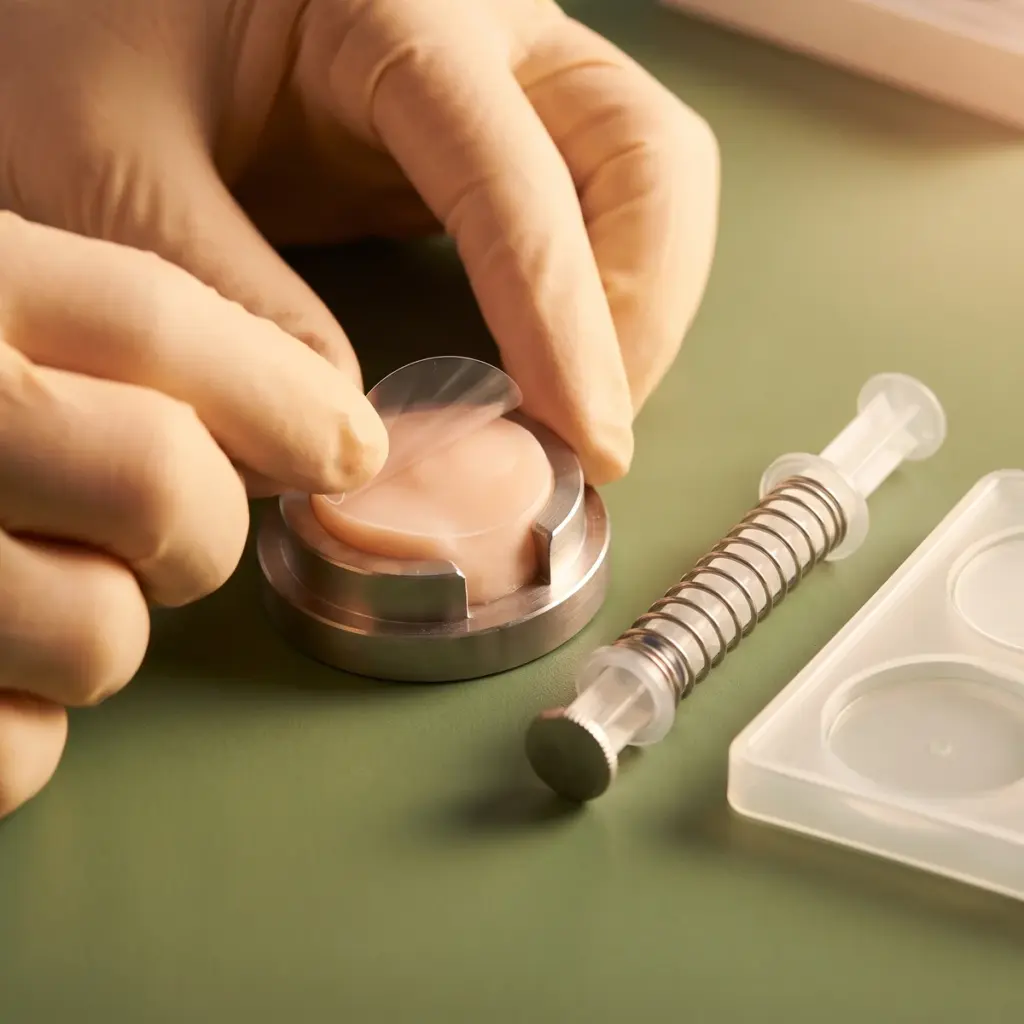
Studies use isolated human or porcine stratum corneum, reconstructed epidermis, or model membranes made from synthetic ceramides, cholesterol and fatty acids. Model membranes isolate the interaction between a test material and defined lipids. Stratum corneum sheets and reconstructed tissue show the effect in a native matrix and can be treated with finished formulas.
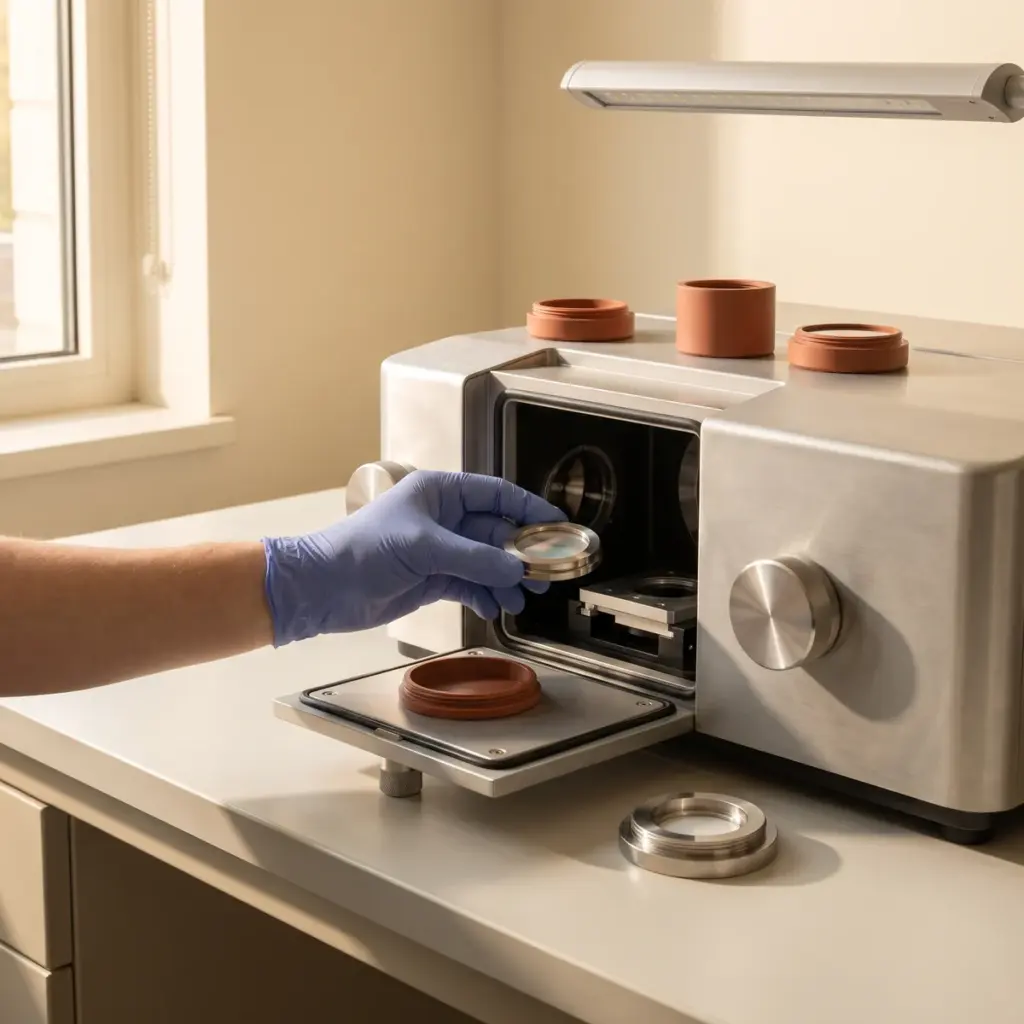
Structural and spectroscopic methods
- Small-angle X-ray diffraction for lamellar periodicity
- Wide-angle X-ray diffraction for lateral packing
- FTIR for CH2 stretching and scissoring bands
- Confocal Raman for chain order across depth
- Differential scanning calorimetry for phase transitions
A shift of the FTIR CH2 stretching band to higher wavenumbers indicates more disordered chains. Splitting of the scissoring band indicates orthorhombic packing. Lipid composition by LC-MS is often added so that changes in order can be related to changes in ceramide or fatty acid content.
Diffraction profiles, spectra and lamellar spacing
You receive diffraction profiles, spectra and calorimetry traces for treated and control samples, with derived parameters such as lamellar spacing, packing type and transition temperatures, plus a written interpretation.
Uses of intercellular lipid order studies in product development
Lipid order data help at both ends of formulation work, from rejecting a harsh base to backing a replenishing claim.
Screening cleansers and penetration enhancers
Surfactants and solvents can extract or fluidise barrier lipids. Running candidate cleansing bases or enhancer systems on stratum corneum and comparing chain order and packing gives formulators an objective ranking of mildness to the lipid barrier. It is faster than a volunteer study and suits early formula selection.
Supporting lipid replenishment claims
Creams built on ceramide, cholesterol and fatty acid blends aim to restore ordered packing. A rise in orthorhombic packing or restored lamellar spacing after treatment of disrupted stratum corneum supports claims about reinforcing the skin’s lipid barrier. Lamellar lipid reinforcement testing extends this to the stacked lamellar structure.
X-ray diffraction access and stratum corneum source
Access to X-ray diffraction is the main differentiator, as small-angle measurements on stratum corneum often need synchrotron beam time or a high-intensity laboratory source. Ask which methods are in-house, what stratum corneum source is used and whether the lab can run your finished product or only raw materials. FTIR and Raman are more widely available and give a quicker first read on chain order.
More in Barrier & Hydration Mechanisms
Barrier & Hydration Mechanisms studies show how an ingredient acts on epidermal lipids, barrier proteins and water-handling pathways in skin models.