Epidermal cohesion overview
Do you provide Epidermal cohesion?
Epidermal cohesion testing methods and outputs
Cohesion results from corneodesmosome junctions, intercellular lipids and corneocyte structure acting together. A cohesion study measures that combined property directly, which makes it the functional counterpart to protein- or lipid-specific assays.
Tape stripping protocol
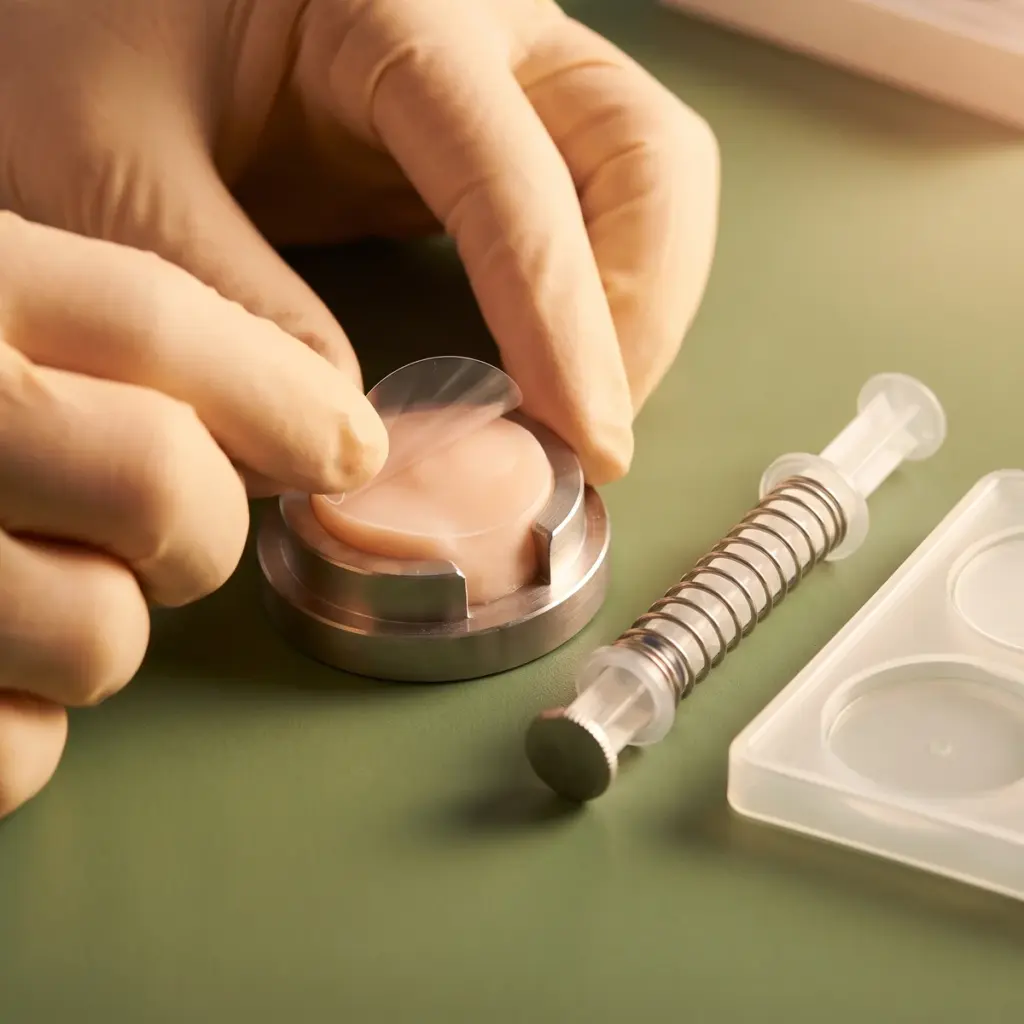
Adhesive discs are pressed onto treated and control tissue with a fixed load and contact time, then removed in a set sequence. The laboratory quantifies the material on each disc by protein assay or by optical absorbance of the tape. Plotting removed material against strip number gives a cohesion profile through the depth of the stratum corneum.
Tissue structure and adhesion proteins
Histological sections show stratum corneum thickness, compaction and any separation between layers. Immunostaining for corneodesmosin or desmoglein-1 adds protein data when the mechanism matters to your claim. A viability assay on the same tissue shows whether the living layers below were affected by the test material.
Functional barrier readouts
Many studies add water-loss measurement on the tissue or permeation of a marker molecule. These link a change in cohesion to barrier performance. For a dedicated barrier dataset, skin barrier function efficacy testing extends this part of the study.
Cohesion study deliverables for your file
- Removed protein or tape absorbance per strip, with cumulative curves
- Histology images and morphology scoring
- Adhesion protein results where requested
- Viability data and statistical comparison with controls
When epidermal cohesion data pays off
Cohesion results answer a different question for an exfoliant than for a barrier cream, and the study design follows from that.
Checking formulas with active exfoliants
High levels of hydroxy acids, proteolytic enzymes or retinoid-type ingredients loosen the surface layers. A cohesion profile shows how far a candidate formula goes and lets you compare concentrations or pH options before a tolerance study. Formulators use it to pick the version that releases surface cells while the deeper stratum corneum keeps its cohesion.
Supporting barrier and resilience positioning
For barrier creams the comparison runs the other way. You look for treated tissue to lose less material per strip than the vehicle control, often after a surfactant challenge. That result supports wording on surface integrity and resilience. Combine it with lamellar lipid reinforcement data when the formula contains barrier lipids.
Taking the method to volunteers
Tape stripping transfers to forearm or facial sites with the same discs and quantification. Ask whether the provider runs both the tissue and the clinical version. A shared protocol makes the two datasets directly comparable in your claim file and lets the tissue study set the endpoints for the clinical one.
More in Barrier & Hydration Mechanisms
Barrier & Hydration Mechanisms studies show how an ingredient acts on epidermal lipids, barrier proteins and water-handling pathways in skin models.