Oxidative stress efficacy testing overview
Do you provide Oxidative stress efficacy testing?
Oxidative stress efficacy testing, from chemistry to cell protection
Oxidative stress arises when reactive oxygen species outpace the antioxidant capacity of skin. UV radiation, pollution and cigarette smoke all raise that load. A testing programme answers three separate questions about your active, and each question has its own assays.
Direct antioxidant capacity
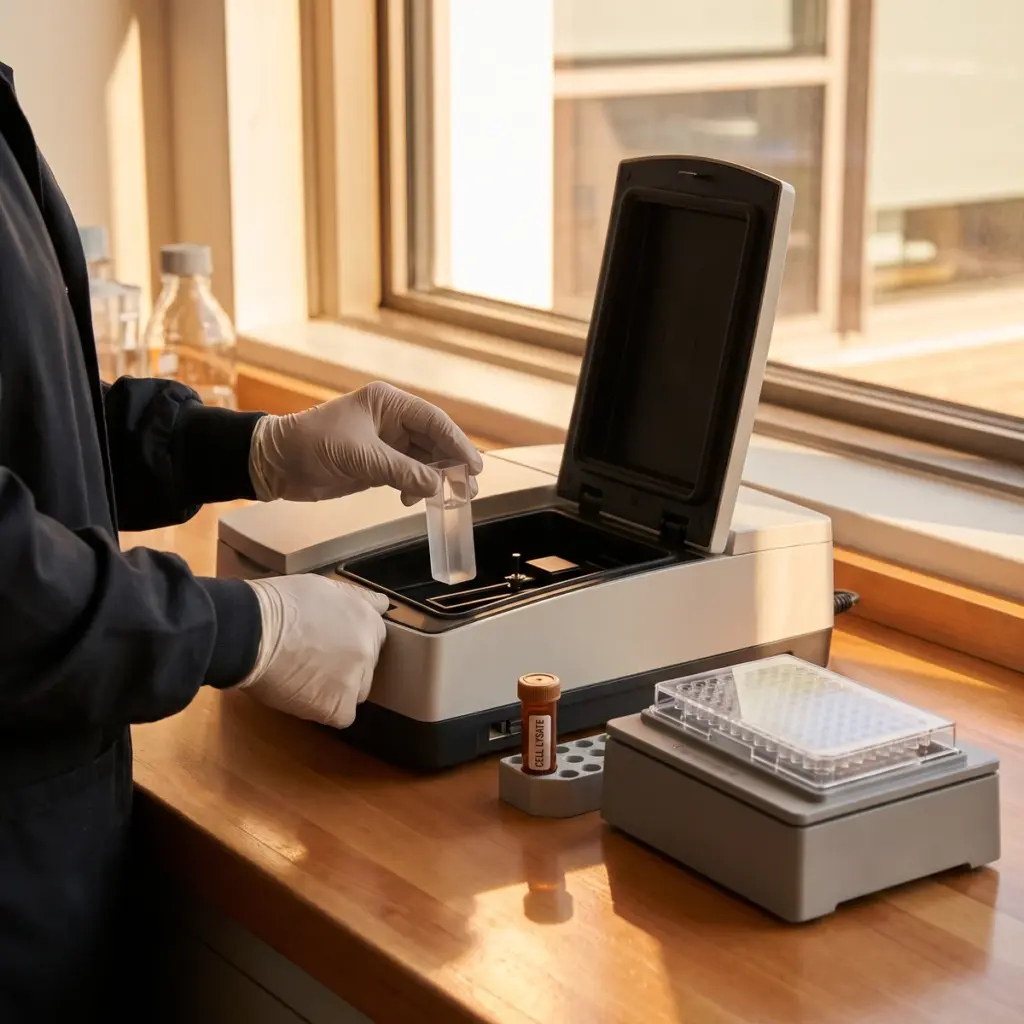
Chemical assays measure how readily the material neutralises radicals in a test tube. Free radical scavenging covers DPPH, ABTS and ORAC methods and cellular probes of reactive oxygen species. These screens are quick, so they suit ranking many candidates.
Activation of the skin’s own defences
Some actives work by switching on the cell’s antioxidant machinery. Nrf2 pathway studies follow the transcription factor that controls that response. SOD and catalase activity assays measure the enzymes that remove superoxide and hydrogen peroxide. Glutathione assays quantify the main small-molecule antioxidant inside the cell.
Protection against oxidative damage
Damage endpoints show what the active preserves during a challenge with UV, hydrogen peroxide or pollutants. Lipid peroxidation assays measure oxidised membrane lipids. Mitochondrial protection studies record respiration, membrane potential and ATP content.
Concentration-response, control and viability data supplied
Each assay comes with concentration-response data, results against untreated, vehicle and reference antioxidant controls, viability measurements and statistics. A combined programme gives you a dossier that links the mechanism to the protection it produces. Results from the separate assays can also be bought one at a time, so a supplier with an established scavenging profile can add only the cellular work it is missing.
Building an antioxidant claim with oxidative stress testing
The claim you plan to make decides which part of the programme you need, and how much of it.
Picking assays by claim
Match the assays to the wording you plan to use. An ‘antioxidant’ claim on an ingredient sheet usually starts with chemical scavenging data. ‘Boosts the skin’s natural antioxidant defences’ calls for Nrf2, enzyme or glutathione results. ‘Protects skin cells against pollution’ needs a damage endpoint measured under a pollutant challenge, such as lipid peroxidation or mitochondrial function.
Staging the programme
Most suppliers screen many candidates chemically, move the best into cell-based defence assays, then confirm protection on one or two leads. Staging keeps cell work, which costs more per sample, for the materials that earned it. For the finished product, the in vitro dossier is often followed by a clinical study that measures skin radiance or pollution particle adhesion on volunteers.
What to send with your enquiry
Describe the material, its solubility and its likely use level. Name the stressor relevant to your positioning, for example UVA, urban particulate matter or blue light, so the laboratory can propose a matching challenge. Coloured extracts can interfere with absorbance and fluorescence readouts, so mention strong colour or turbidity at the quoting stage.
More in Antioxidant & Redox Studies
Antioxidant & Redox Studies measure radical scavenging, cellular oxidative stress and the skin’s own defence enzymes to profile cosmetic antioxidants.