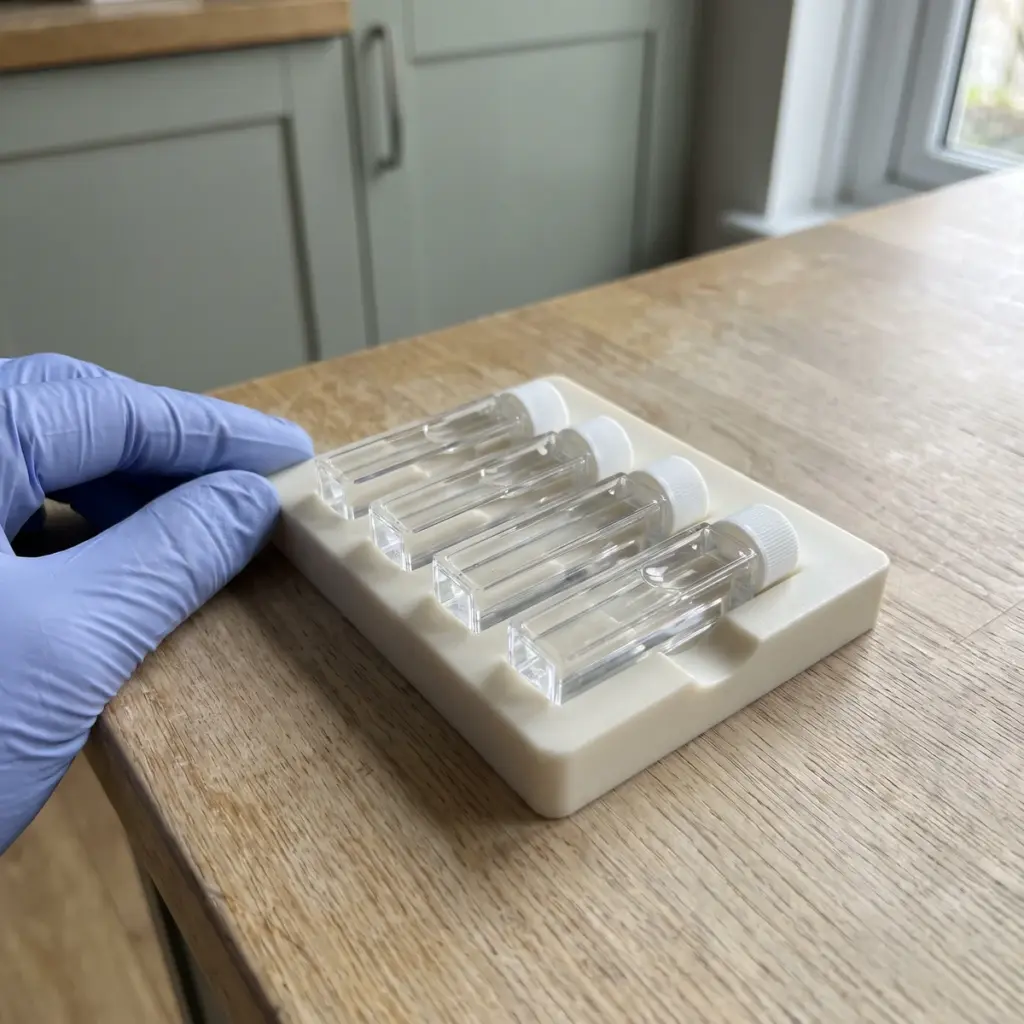
DPPH/ABTS radical quenching overview
Do you provide DPPH/ABTS radical quenching?
How DPPH/ABTS radical quenching assays work
Both assays rely on a coloured radical that turns pale when an antioxidant gives it an electron or a hydrogen atom. Running the two side by side gives a broader view than either alone, because the radicals differ in solvent compatibility and reactivity.
The DPPH assay
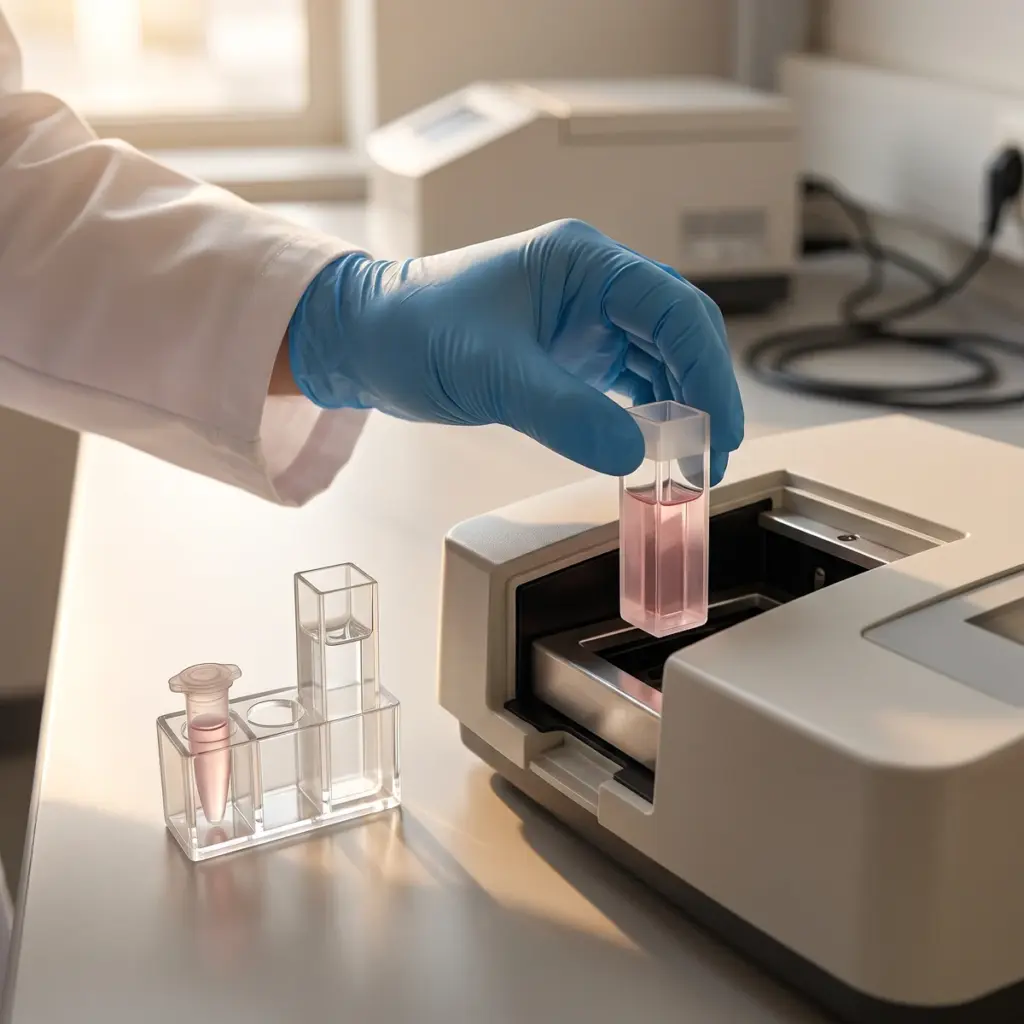
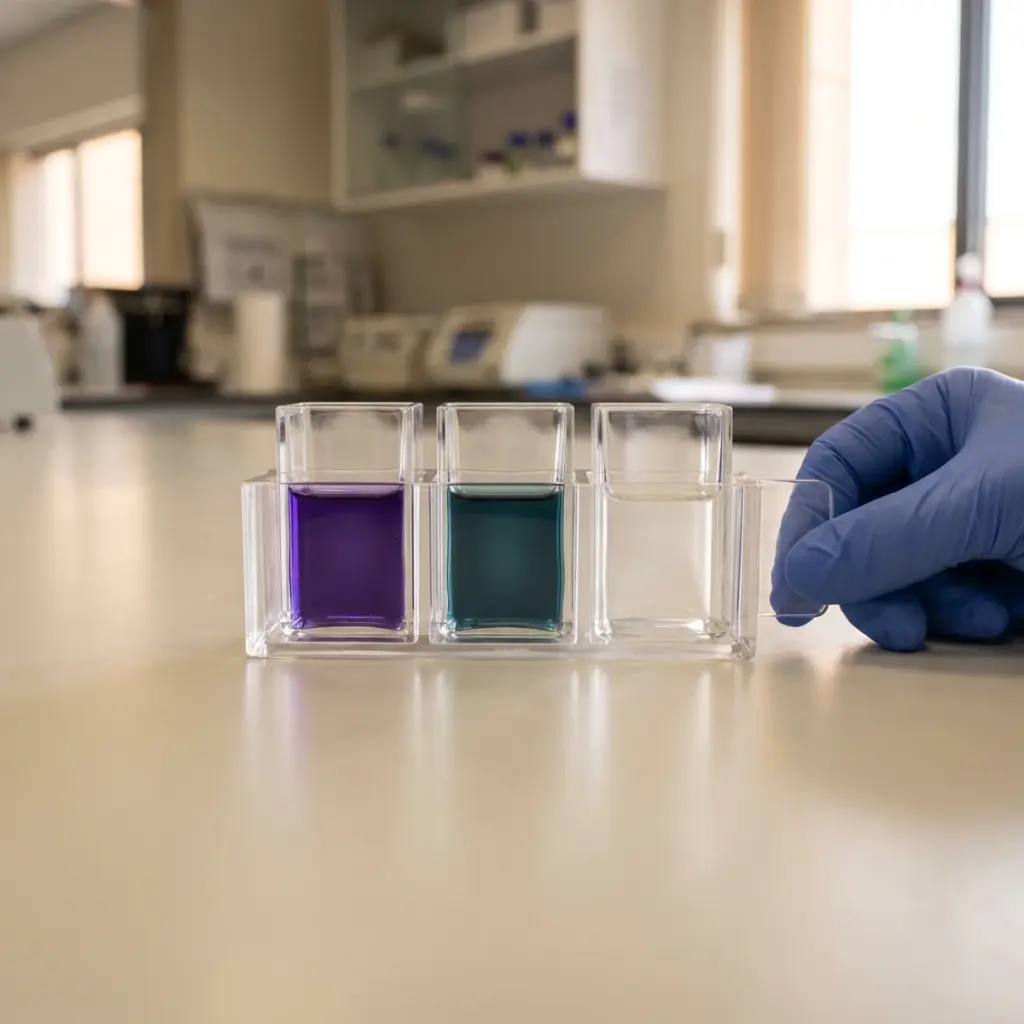
2,2-diphenyl-1-picrylhydrazyl is a stable nitrogen radical sold as a powder and dissolved in methanol or ethanol. Its deep purple solution absorbs strongly near 517 nm. The sample is added at a series of concentrations, the mixture stands in the dark for a fixed reaction time, and the drop in absorbance is recorded. The solvent suits alcohol-soluble materials such as polyphenol-rich extracts.
The ABTS assay
ABTS is oxidised beforehand, usually with potassium persulfate, to form its radical cation. The blue-green solution is read near 734 nm. Because the radical works in water and in organic solvents, the method suits both hydrophilic and lipophilic antioxidants. Results are commonly expressed as Trolox-equivalent antioxidant capacity (TEAC).
Data the laboratory reports
- Percentage radical inhibition per concentration
- IC50 derived from the dose-response curve
- Trolox- or ascorbic acid-equivalent capacity
- Sample blank corrections for colour and turbidity
- Reaction time, solvent and replicate data
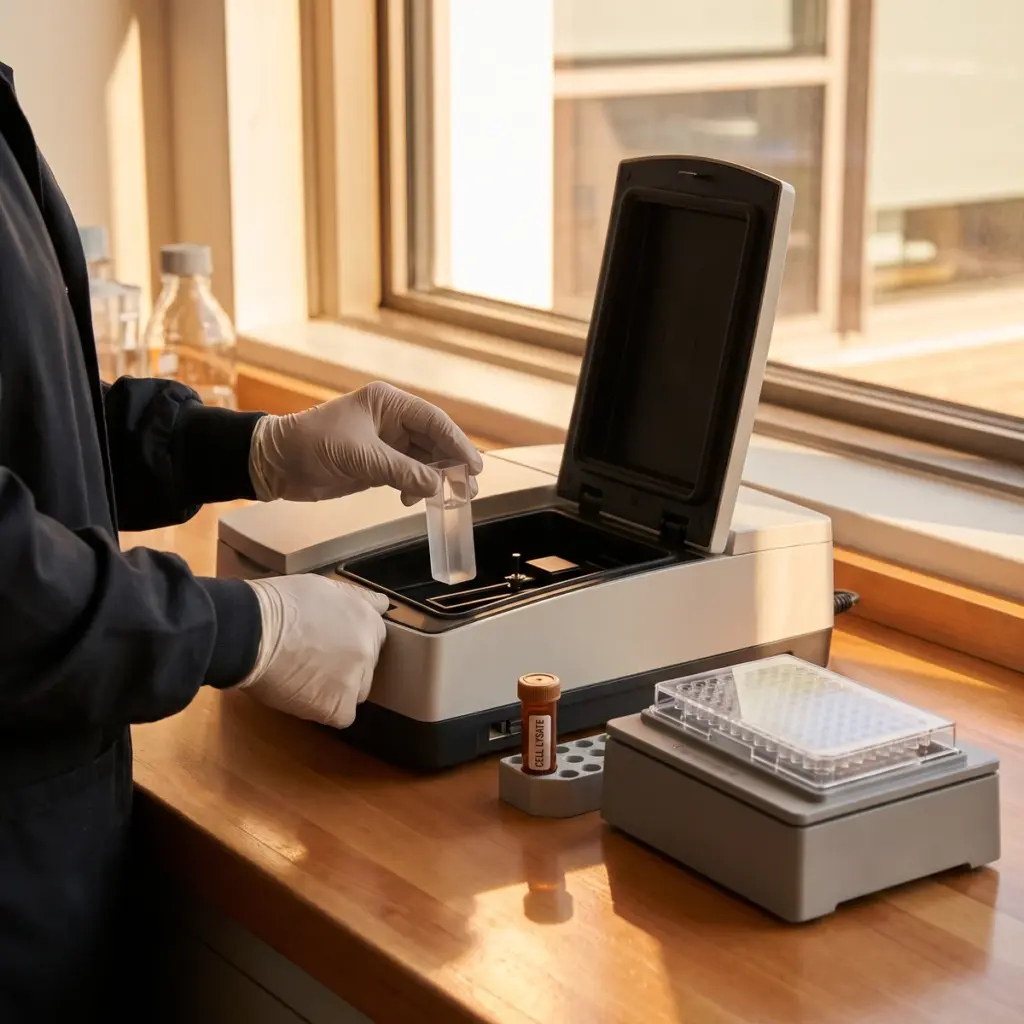
Plates are usually read in triplicate on a microplate spectrophotometer, which lets one run cover many samples. Ascorbic acid and Trolox standards are run on every plate so that results stay comparable from one run to the next.
Where DPPH/ABTS radical quenching fits in antioxidant development
The assays earn their place early in development and again in routine quality control.
Batch control and specifications
Because the assays are quick and reproducible within one laboratory, suppliers write DPPH or ABTS values into the specification of a botanical extract. Each production batch is tested against the reference range, which flags a weak harvest or an extraction problem before the material ships. Brands can request the same assay on incoming lots.
Comparing candidates fairly
Values from different laboratories, solvents or reaction times can differ widely. Send all candidates to one laboratory and ask for a single protocol. Include a reference antioxidant you already know, such as vitamin E or a familiar extract, so new results have a benchmark.
Moving on to biological models
A strong quenching result tells you the material is chemically reactive towards radicals. To find out whether it also protects skin cells, the usual next step is a free radical scavenging programme with cellular ROS probes. Candidates that perform there can move into the wider oxidative stress efficacy testing panel.
More in Antioxidant & Redox Studies
Antioxidant & Redox Studies measure radical scavenging, cellular oxidative stress and the skin’s own defence enzymes to profile cosmetic antioxidants.