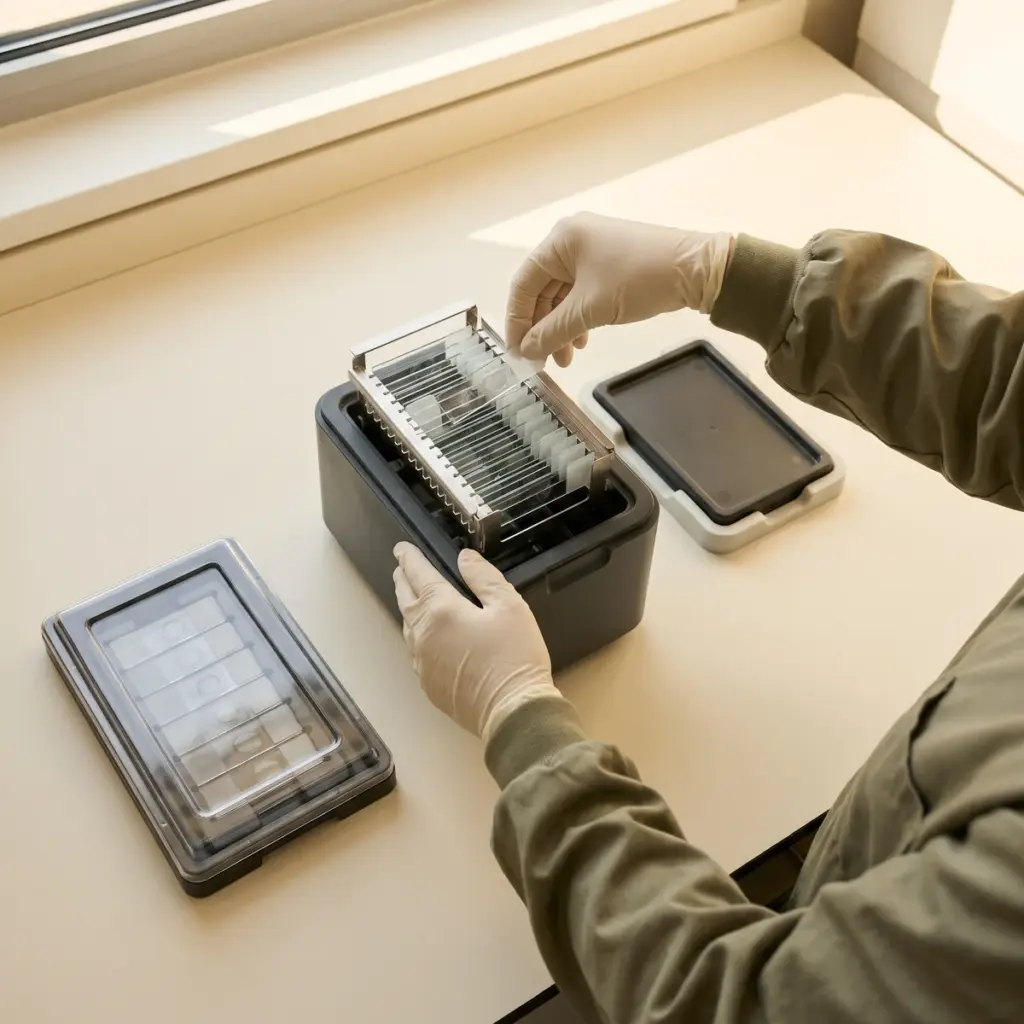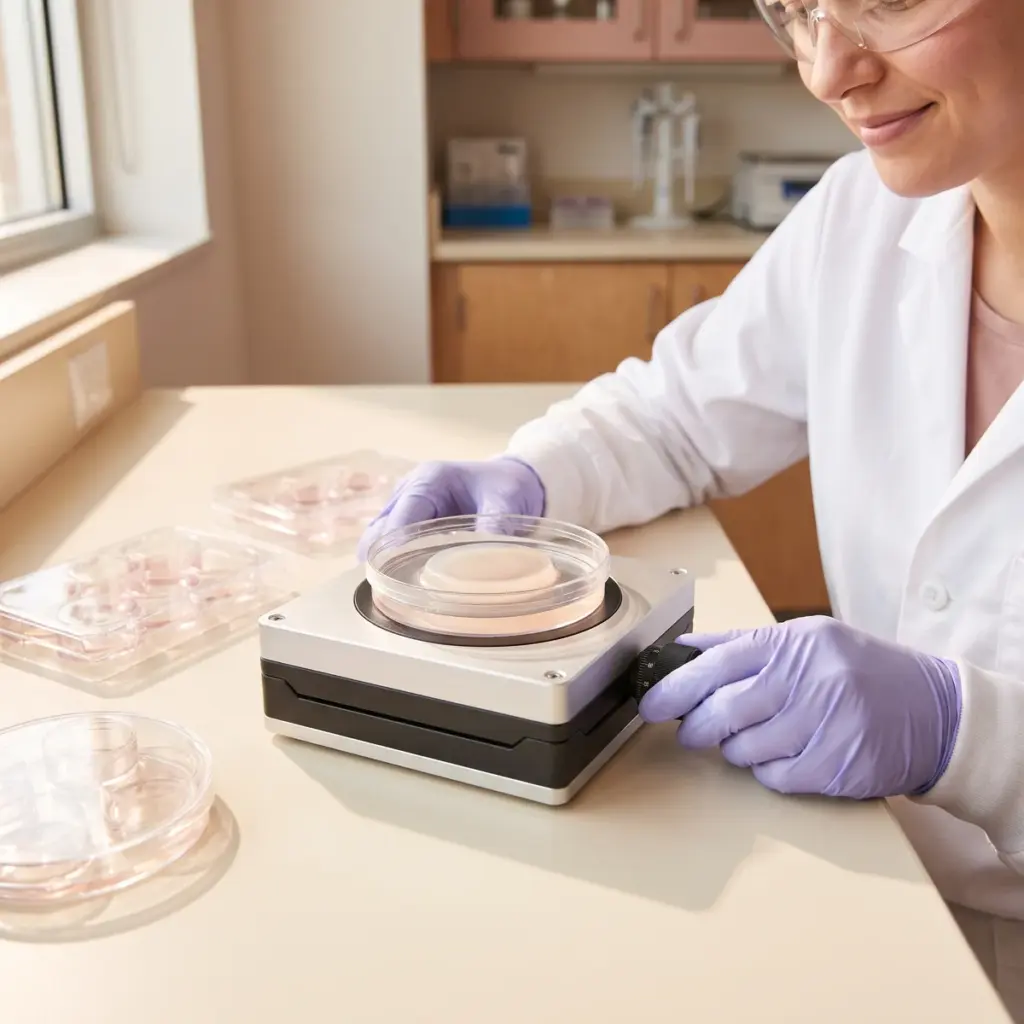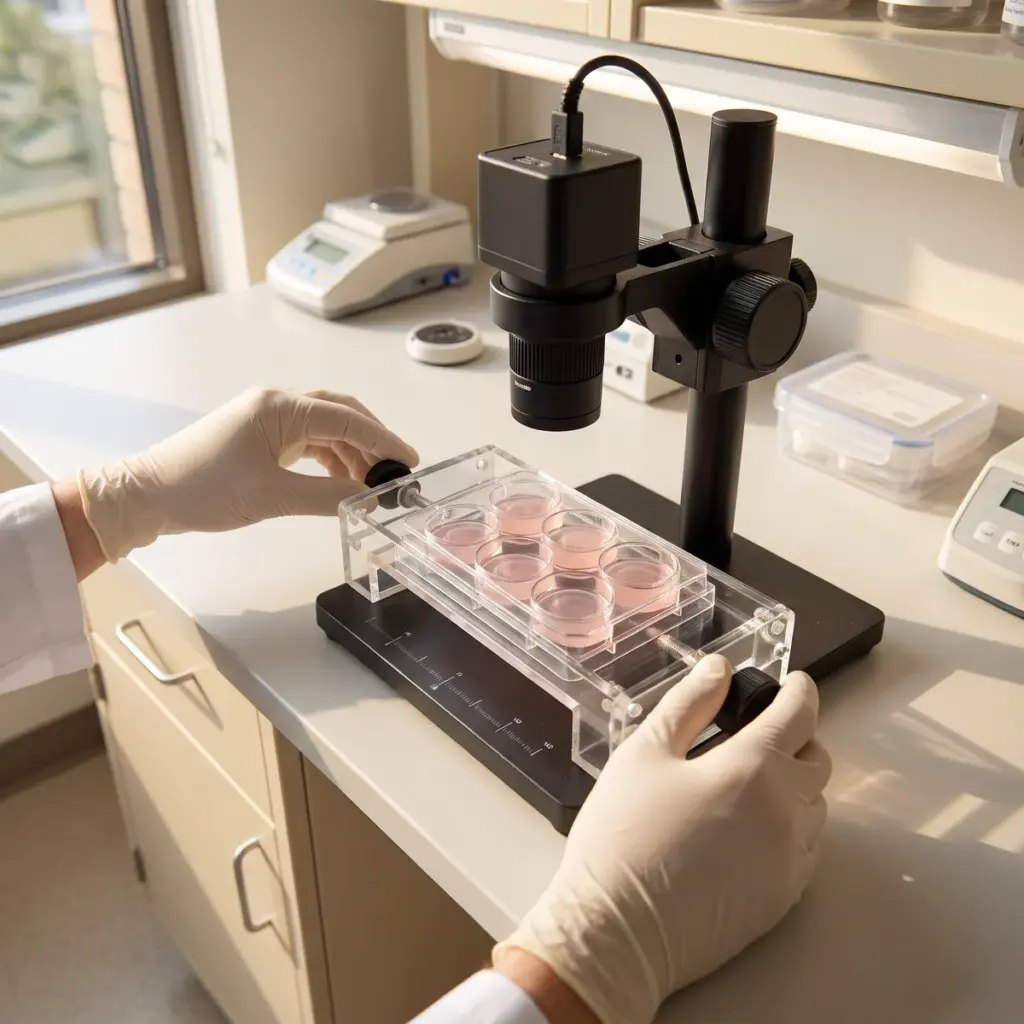
Skin firmness testing overview
Do you provide Skin firmness testing?
How skin firmness is measured in tissue and on volunteers
Firmness, elasticity and resilience are related but separate mechanical properties. Firmness is resistance to an applied force. Elasticity is how fully the skin returns after deformation. Resilience is how quickly it does so. A study names the property it will report and selects the instrument and parameters to match.
Ex vivo and reconstructed tissue testing
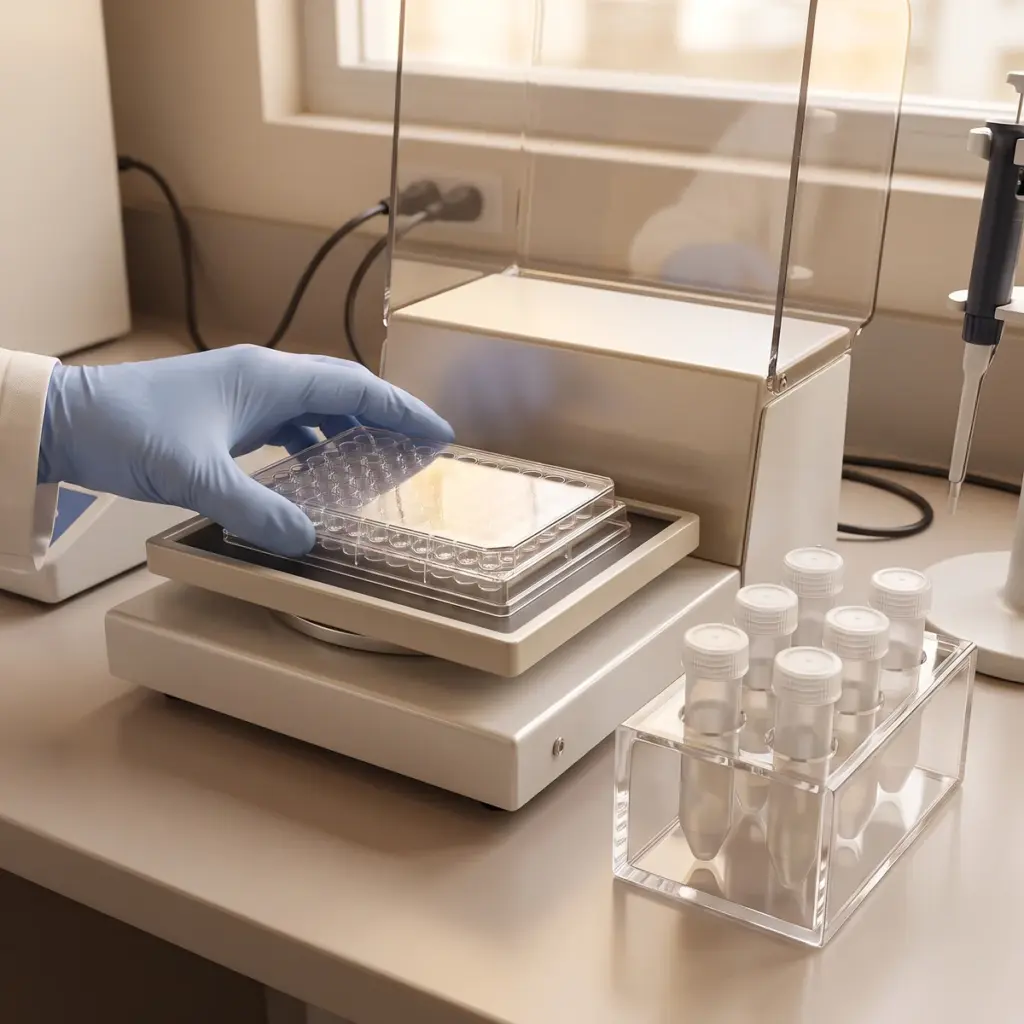
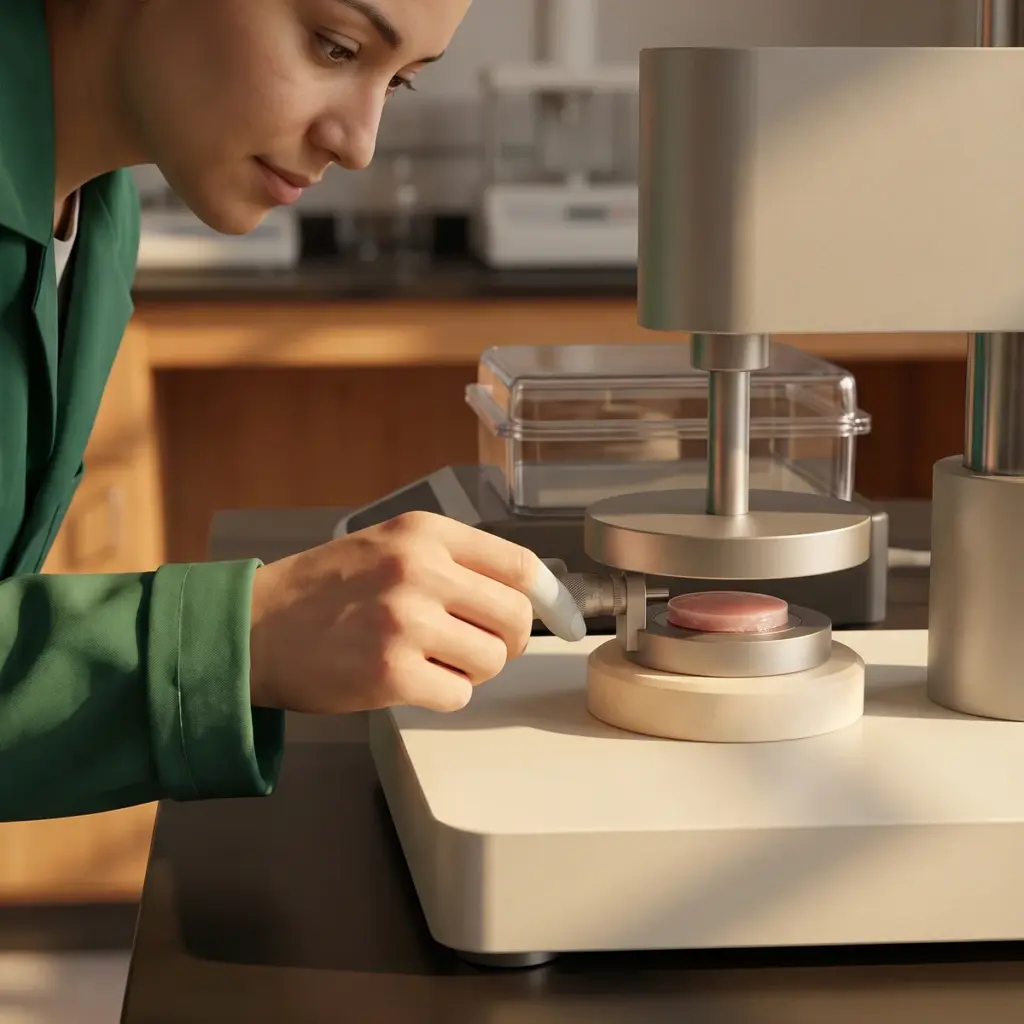
Human skin explants or full-thickness reconstructed skin are treated topically, then tested with indentation, extension or suction under controlled hydration and temperature. Testing parameters include:
- Resistance to a defined force or deformation
- Recovery after release of the load
- Time-dependent creep and relaxation
- Comparison with untreated, vehicle and benchmark samples
Histology on the same tissue can add collagen and elastin staining, linking the mechanical result to matrix structure.
Instrumental measurements on volunteers
Clinical studies use suction devices, which draw skin into a probe aperture and record its deformation and return, or torque devices, which twist the skin surface. Common outputs are firmness (R0) and recovery ratios such as R2 and R7 from suction measurements. Readings are taken on defined facial or body sites under controlled room temperature and humidity, at baseline and at set points during product use, often against an untreated or placebo-treated site.
Probe settings and firmness changes from baseline
The report gives the instrument, probe settings, conditioning protocol and parameters, then mean changes from baseline per time point with statistics. Clinical reports also include panel description, product application instructions and any self-assessment results collected alongside.
Using skin firmness testing to support product claims
Ingredient qualification and finished-product substantiation call for different firmness studies.
Which study supports which claim
Ex vivo firmness results suit ingredient dossiers and early comparisons between prototypes. Finished-product claims such as “skin feels firmer” or “visibly firmer skin after four weeks” rest on a volunteer study. It uses the actual formula, the stated use routine and the timepoint quoted in the claim. Volunteer self-assessment questionnaires are often added so that perceived firmness can be reported next to instrumental values.
Preparing a firmness study
Before asking for a quote, fix the claim wording, the body area, the target user group and the use duration. These four points decide panel inclusion criteria, measurement sites and visit schedule. Send the product’s directions for use and any existing safety data, since clinical providers need them before enrolling volunteers.
Linking firmness to mechanism
Firmness results gain weight when you can explain why the skin changed. Matrix data from collagen synthesis or elastin production studies on the same active give that explanation, and together they form the efficacy section of the product file.
More in ECM & Skin Ageing
ECM & Skin Ageing testing measures how actives affect collagen, elastin, matrix enzymes, glycation and senescence in skin cell and tissue models.