Fibrosis-Related Matrix Responses overview
Do you provide Fibrosis-Related Matrix Responses?
How fibrosis-related matrix responses are modelled in vitro
When fibroblasts receive strong TGF-β signalling, they lay down dense, stiff collagen and switch to a contractile myofibroblast phenotype marked by α-smooth muscle actin. Laboratory models reproduce that state on demand. The test then asks whether an ingredient keeps the response in check while the cells stay healthy and continue normal matrix maintenance.
Inducing and measuring the response
Dermal fibroblasts are stimulated with TGF-β1, with or without the test material, across a concentration range. The laboratory then reads:
- Collagen I and III expression and deposition
- α-smooth muscle actin by immunostaining or Western blot
- Smad phosphorylation and other TGF-β pathway markers
- MMP activity as a measure of matrix turnover
- Proliferation and viability
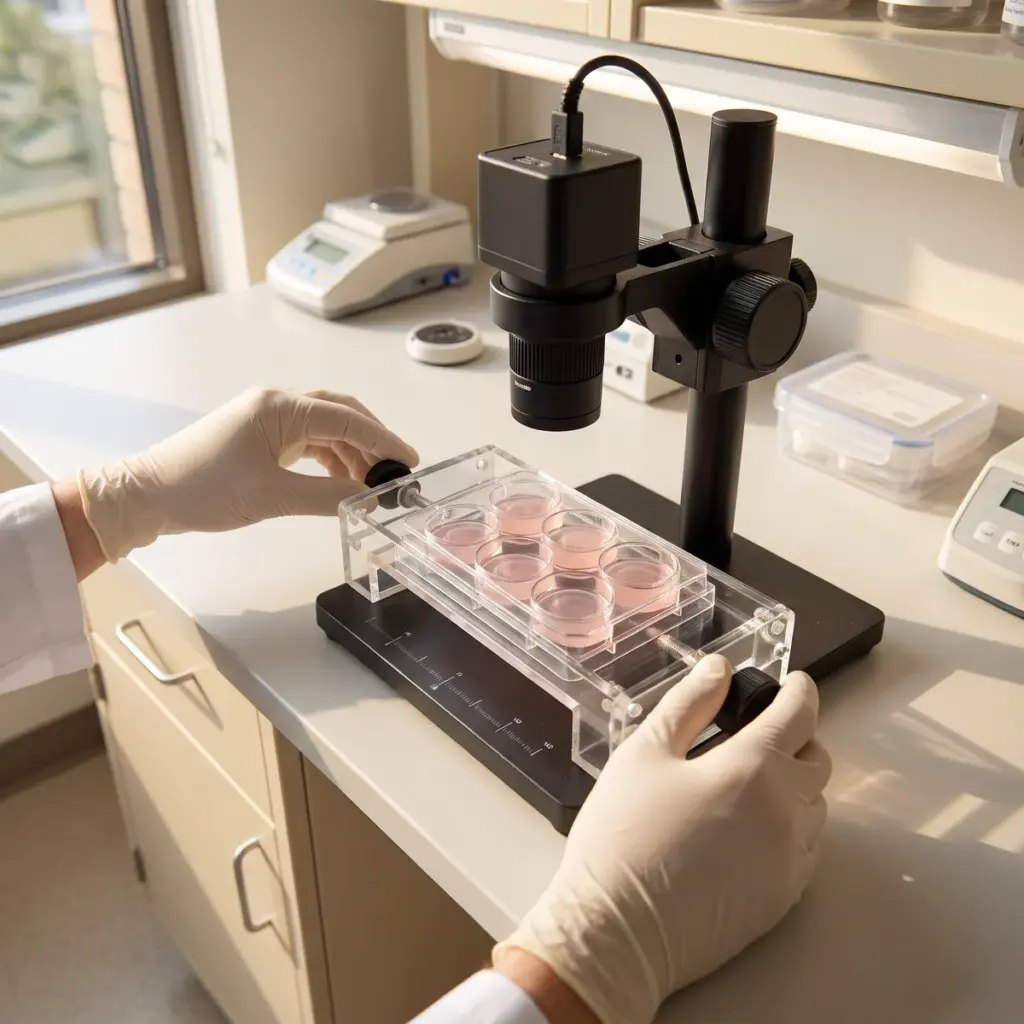
Imaging of the deposited matrix shows fibre density and alignment against stimulated and unstimulated controls.
Mechanical readouts
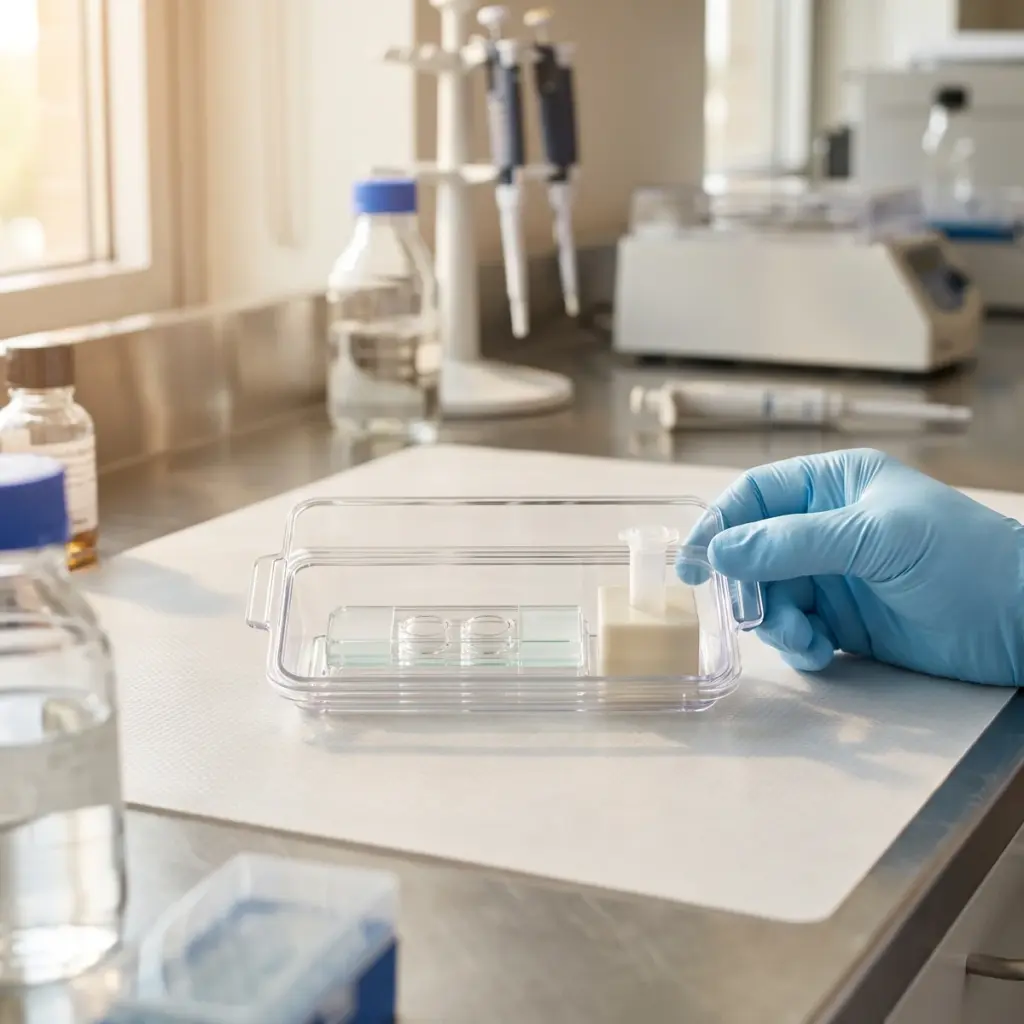
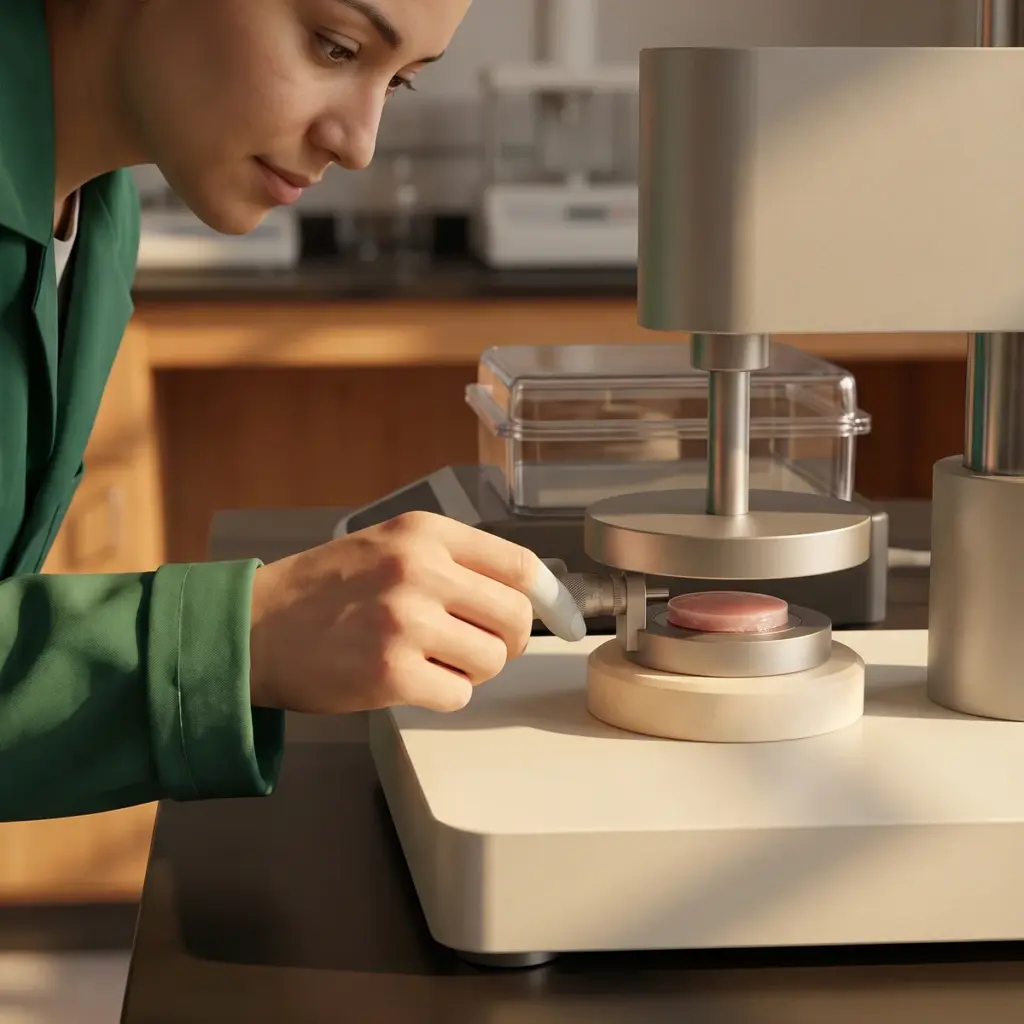
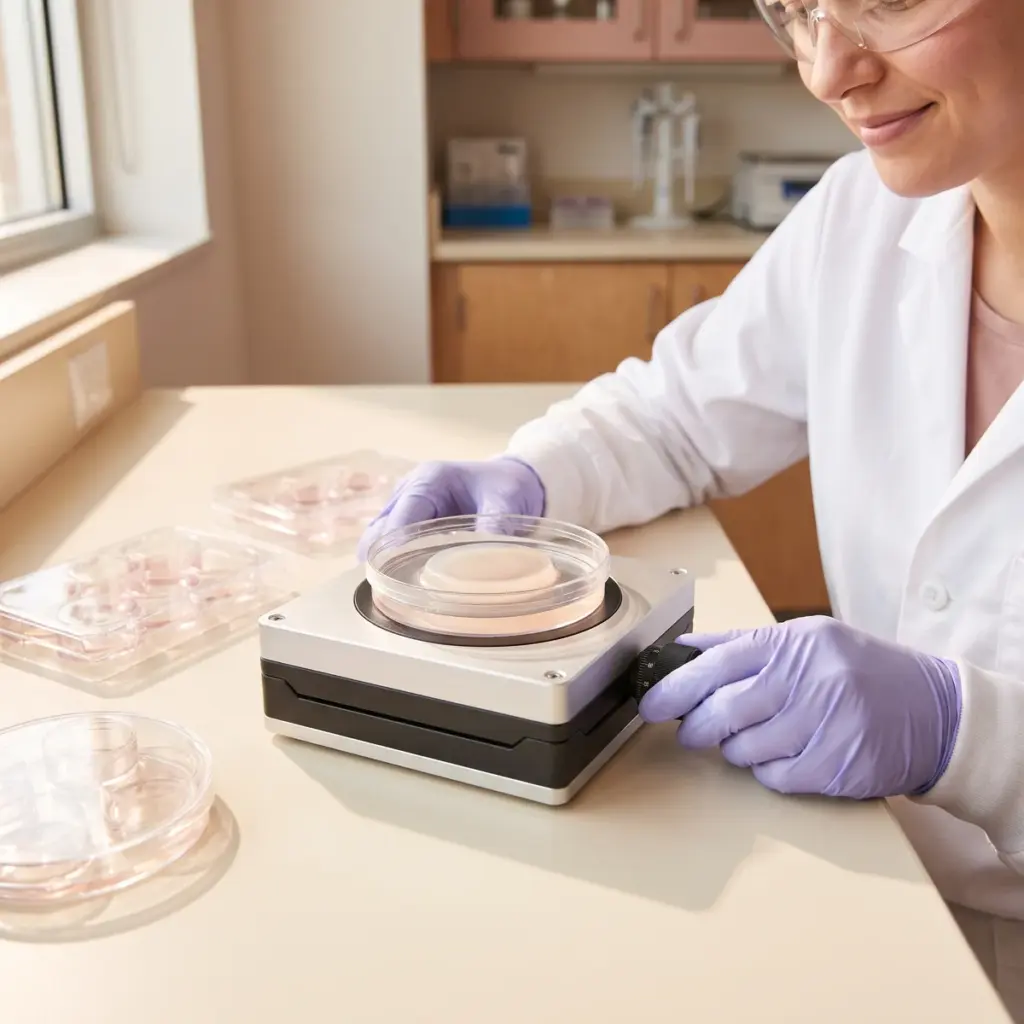
In a collagen-gel contraction assay, fibroblasts are embedded in a collagen lattice that shrinks as the cells pull on it. Smaller shrinkage in treated gels shows reduced contractile activity. Where a tissue model is used, extensibility or stress-strain testing adds data on stiffness.
Profibrotic marker, gel contraction and viability results
The report describes the stimulus, model and exposure, then presents each endpoint against the TGF-β control, with dose-response curves, gel images, contraction measurements and statistics. Viability data at each concentration are shown alongside, so the reduction in profibrotic markers can be read as a response of living, functioning cells.
Using fibrosis-related matrix data in product claims
This model answers a narrower question than most matrix assays, so it pays to match it carefully to the product and the wording.
Products and positioning
Data from this model support mechanism statements about calming excessive matrix build-up and fibroblast contraction in skin cells. They suit body products for smoother-looking skin, products for the look of cellulite and face products for tight or uneven texture. Keep the claim wording cosmetic and tied to the model, for example reduced collagen-gel contraction in dermal fibroblasts.
Choosing a laboratory for this model
This model is less common than standard collagen assays. Ask the provider whether they run TGF-β stimulation routinely, which contraction format they use (free-floating or attached gels) and how they quantify gel area. Experience with α-smooth muscle actin staining and image analysis matters, since this marker is the clearest readout of the contractile state. A laboratory that can also run explants gives you a route to tissue data later.
Related matrix studies
If the project is about rebuilding thin or ageing dermis, the opposite question applies and dermal matrix remodelling is the better design. For products on the look of cellulite, many brands pair the fibrosis model with volunteer measurements of skin surface and skin firmness.
More in ECM & Skin Ageing
ECM & Skin Ageing testing measures how actives affect collagen, elastin, matrix enzymes, glycation and senescence in skin cell and tissue models.