MMP inhibition overview
Do you provide MMP inhibition?
MMP inhibition testing: enzyme and cell assays
Matrix metalloproteinases are zinc-dependent enzymes. MMP-1 cuts fibrillar collagen, MMP-2 and MMP-9 degrade gelatin and basement membrane collagen, and MMP-3 acts on several matrix proteins and activates other MMPs. UV exposure raises MMP levels in skin, which is why MMP inhibition is a common anti-ageing mechanism.
Direct enzyme inhibition
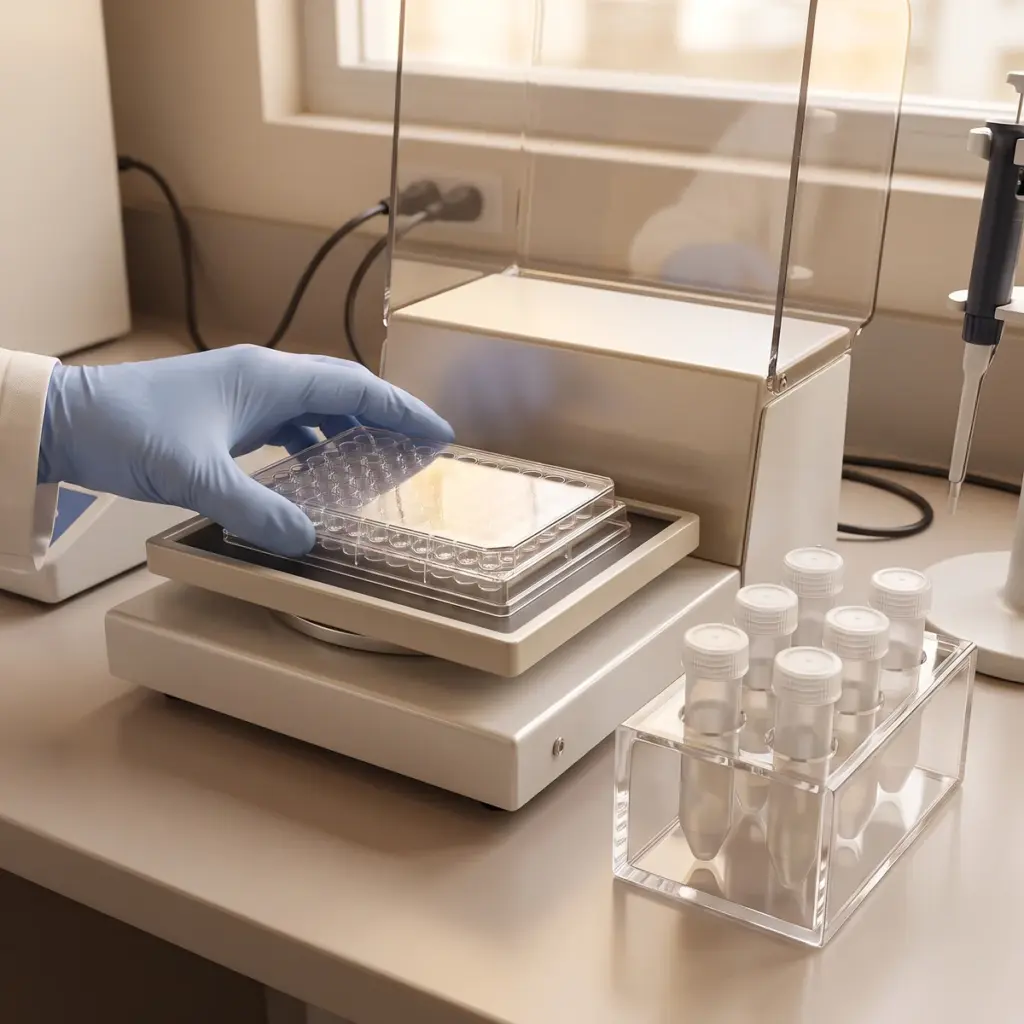
Purified, activated enzyme is mixed with the test material and a fluorogenic peptide substrate. As the enzyme cuts the substrate, fluorescence rises, and an inhibitor slows that rise. Results are expressed as percentage inhibition at each concentration, with an IC50 calculated where the curve allows. Assay designs can include:
- Concentration-response series
- Time-dependent inhibition
- Selectivity across a panel of MMPs
- Activity at defined pH
A known broad-spectrum inhibitor runs as positive control, and sample-only wells correct for colour or fluorescence from the test material.
MMP expression in skin cells
Dermal fibroblasts or keratinocytes are treated with the active, often with a UV or cytokine challenge to raise MMP output. qPCR measures MMP-1, MMP-3 or MMP-13 gene expression, ELISA measures secreted enzyme, and Western blotting shows protein levels. Zymography can show gelatinase activity in the medium. A viability readout runs at every concentration.
IC50 values and fold changes in the report
The report presents inhibition curves and IC50 values for enzyme assays, and fold changes against stimulated controls for cell assays, with statistics and method details for each.
Choosing the right MMP inhibition study for your claim
The study format, enzyme panel and companion assays all follow from the statement you want to make about matrix protection.
Enzyme assay or cell assay
The enzyme assay answers whether your ingredient can block the enzyme directly. It is fast, low-cost and suits ranking several extracts or checking batch consistency. The cell assay answers whether skin cells make less MMP when treated, which supports a claim about protecting the matrix from UV-driven breakdown. Many dossiers include both, because they describe two different ways an active can act.
Selecting the MMPs to test
Match the enzyme to the claim. MMP-1 is the main target for collagen protection. MMP-2 and MMP-9 suit claims about the basement membrane or gelatin-type substrates. If the active is pitched on elastic fibres, ask about elastase assays as well, since elastase is a separate enzyme with its own substrate.
Fitting MMP data into a matrix programme
MMP inhibition is the breakdown side of the matrix balance. Pair it with collagen synthesis testing for the production side, or run it under UV challenge as part of a UV photo-ageing protection study when the product is positioned on daily sun exposure.
More in ECM & Skin Ageing
ECM & Skin Ageing testing measures how actives affect collagen, elastin, matrix enzymes, glycation and senescence in skin cell and tissue models.