Tyrosinase inhibition overview
Do you provide Tyrosinase inhibition?
How a tyrosinase inhibition screen is run
Tyrosinase catalyses the oxidation of L-tyrosine to L-DOPA and of L-DOPA to dopaquinone. Blocking it slows the early part of melanin synthesis. Because the enzyme is a well-characterised target, inhibition is one of the most widely used first screens in brightening research. The screen compares enzyme activity with and without the test sample, so you can rank ingredients for brightening research by potency.
Mushroom tyrosinase and L-DOPA plate assay
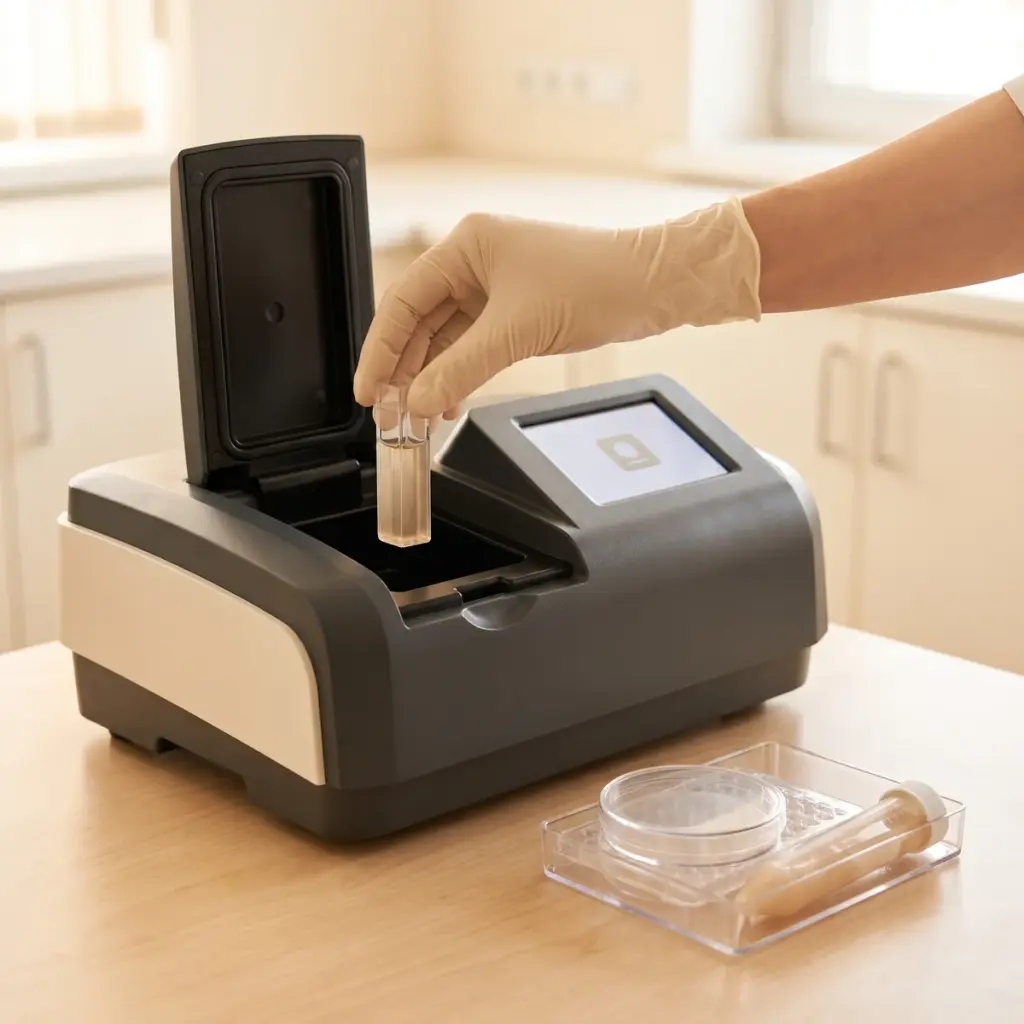
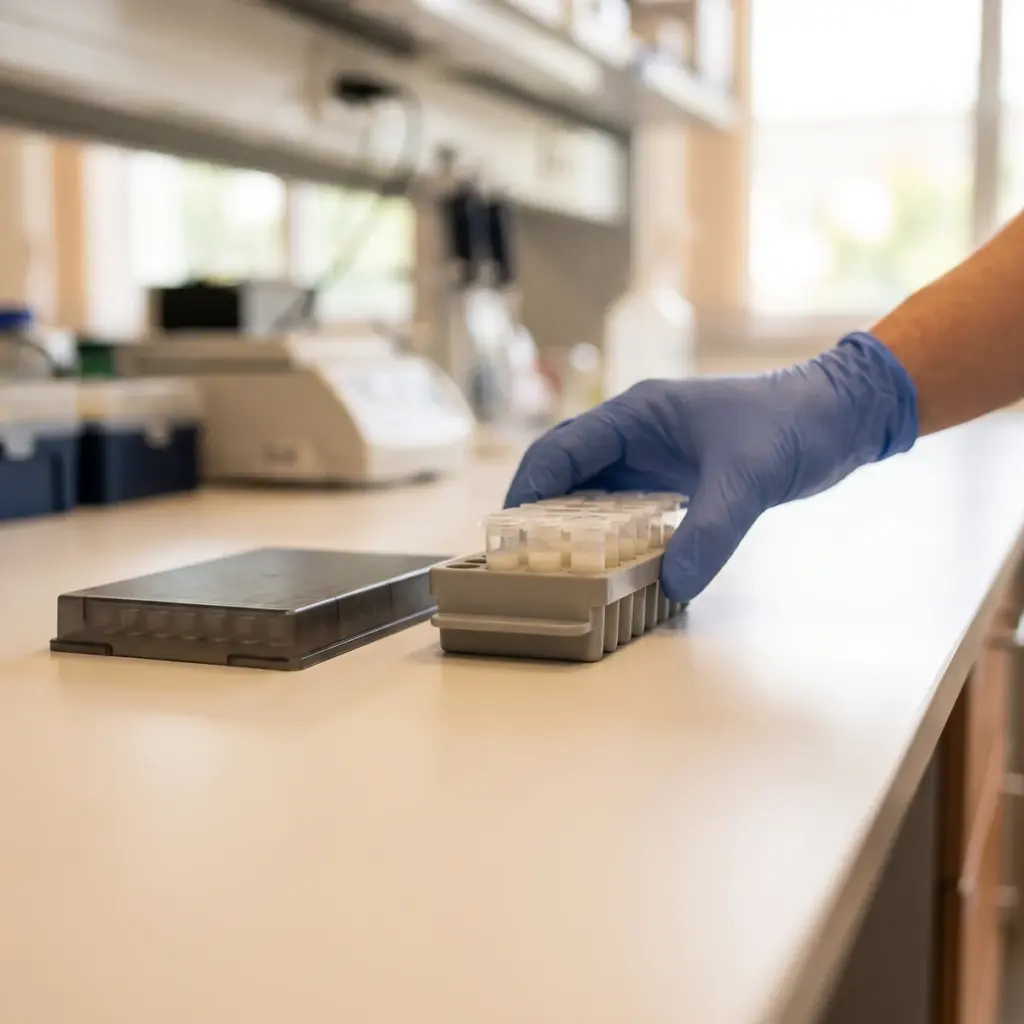
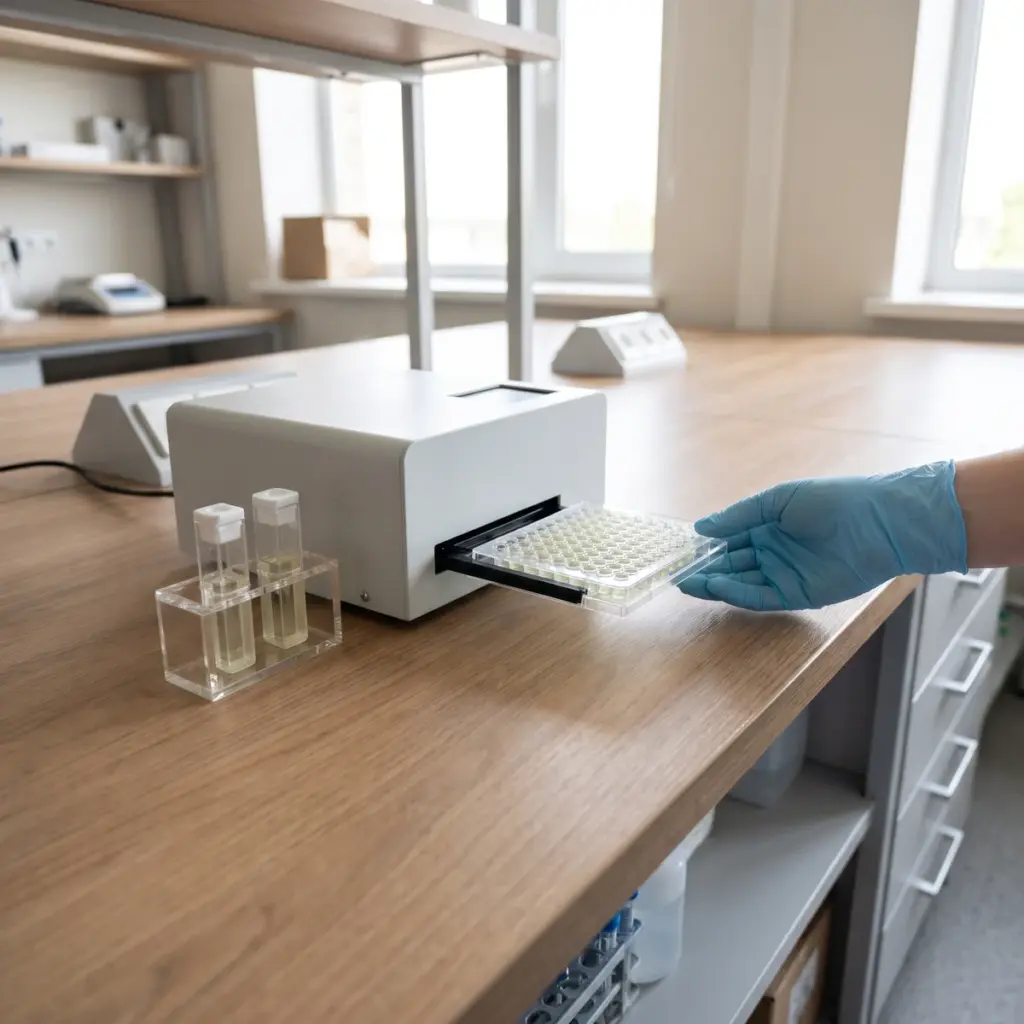
Mushroom tyrosinase and L-DOPA are combined in buffer in a microplate. The test sample is added across a dilution series, and absorbance from dopachrome is read over time, typically near 475 nm. Mushroom and human tyrosinase can respond differently to the same compound, so the enzyme source and substrate are named in the report.
Percentage inhibition, IC50 and kojic acid comparison
- Percentage inhibition at each concentration
- Concentration-response curve and IC50 where the data permit
- Comparison with a reference inhibitor such as kojic acid
- Sample blanks correcting for colour, turbidity and chemical interference
Follow-up in skin cells
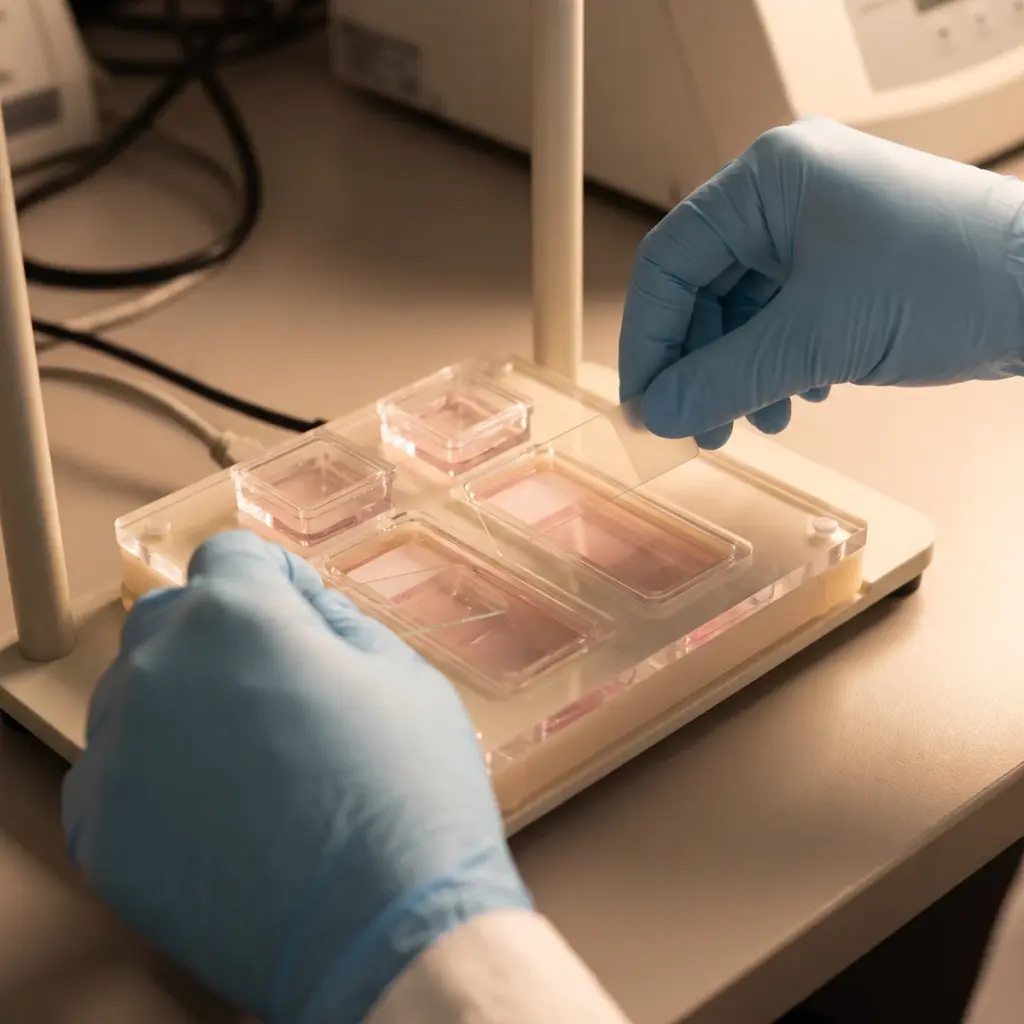
A strong inhibitor in the enzyme screen is a candidate for cellular work. Human melanocytes or pigmented reconstructed epidermis add cellular tyrosinase activity, melanin content and viability. These endpoints show whether the effect carries over into living pigment cells and help separate enzyme inhibition from other routes to lower pigment. A combined depigmentation study reports the net melanin outcome in one protocol.
Where tyrosinase inhibition data fits in a brightening programme
Order the screen at the start of a project, when you have a long list of extracts or molecules and want a ranked shortlist. IC50 values and reference comparisons are useful in an ingredient brochure and in a mechanism section of a technical file.
Solvent, dry matter and reference inhibitor to supply
Provide each sample with its solvent and any known solubility limit. Extracts are best supplied with a dry-matter value so concentrations can be expressed consistently. Name the reference inhibitor you want if you already use one in-house, and say whether you would like human enzyme as well as mushroom enzyme.
Signs of a well-run screen
Good providers run every concentration in replicate with its own sample blank, and they report enzyme lot, substrate concentration and reaction time. Ask whether they can confirm hits in melanocyte activity assays, since carrying the same samples into cells saves time. IC50 values are comparable when the laboratory keeps assay conditions fixed across your candidates.
More in Pigmentation & Melanogenesis
Pigmentation & Melanogenesis testing studies how actives change melanin synthesis, melanocyte behaviour and pigment transfer in lab models.