Melanocyte activity overview
Do you provide Melanocyte activity?
Inside a melanocyte activity study
Melanocytes make melanin and pass it on to the keratinocytes around them. A melanocyte activity study measures how the whole cell responds to a test sample, covering both a drop in pigment for brightening work and a rise for tanning research. The direction you want is fixed in the protocol before dosing starts.
Cell models and culture set-up
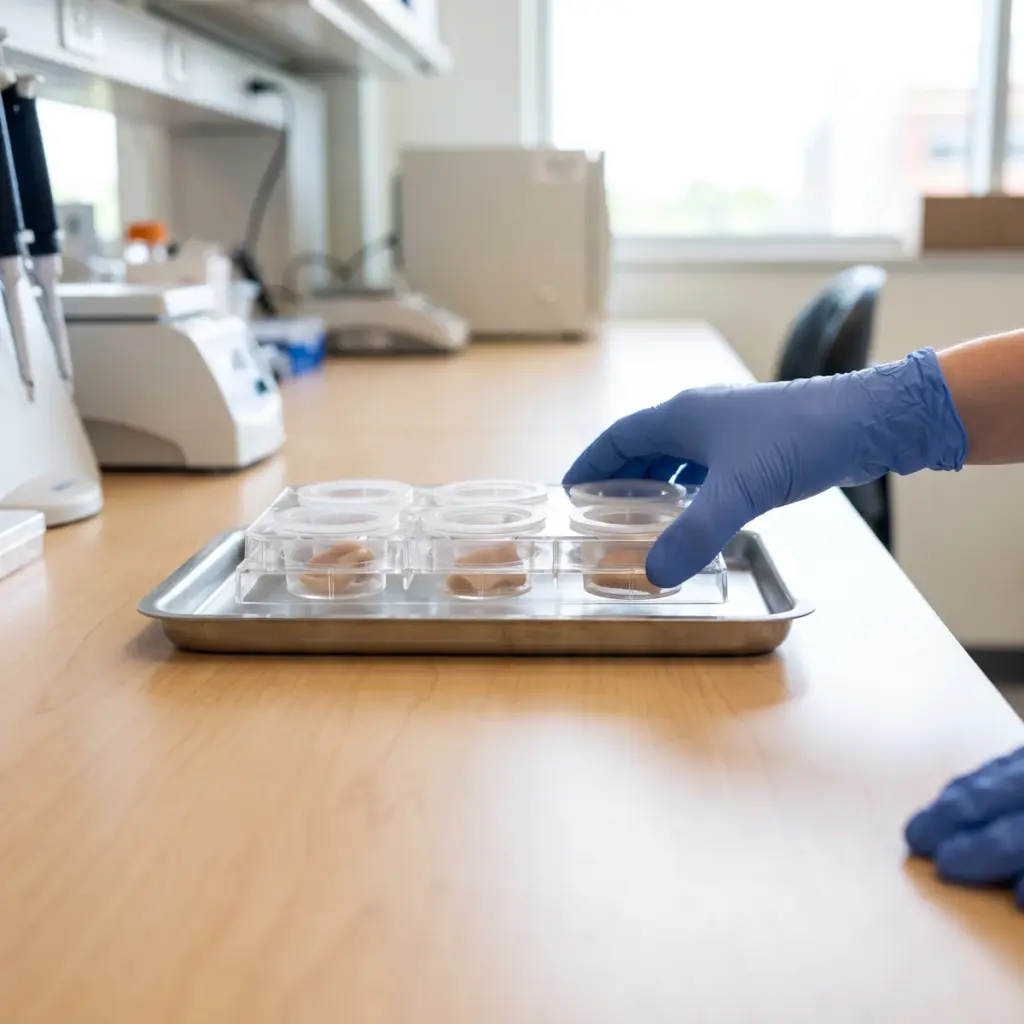
Normal human melanocytes are the usual starting point. The provider records cell source, passage, medium and any stimulus used to raise baseline pigment, because each of these shifts the response. Treatment runs alongside untreated, vehicle and reference controls. Exposure usually lasts several days, long enough for newly made melanin to accumulate and be extracted for measurement.
Readouts reported per concentration
- Total melanin, normalised to cell number or protein
- Cellular tyrosinase activity
- Viability and proliferation
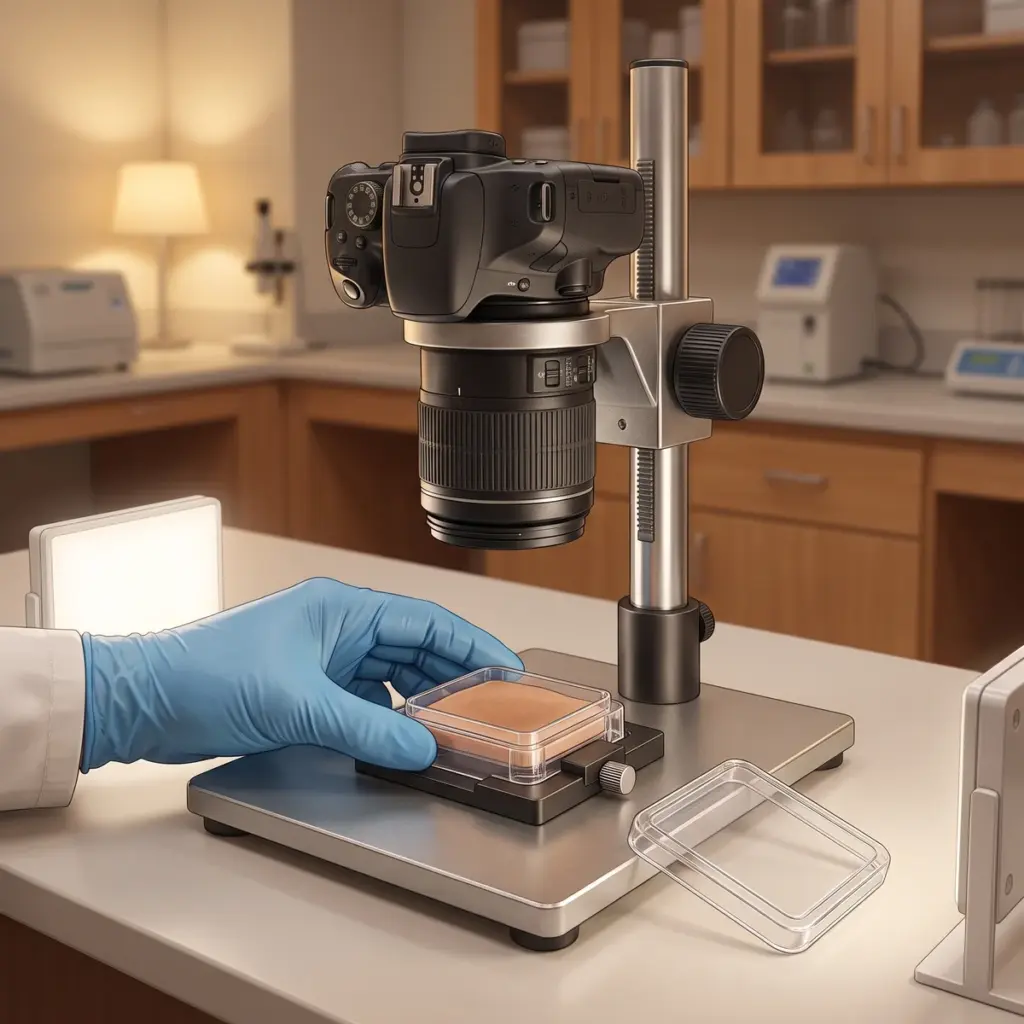
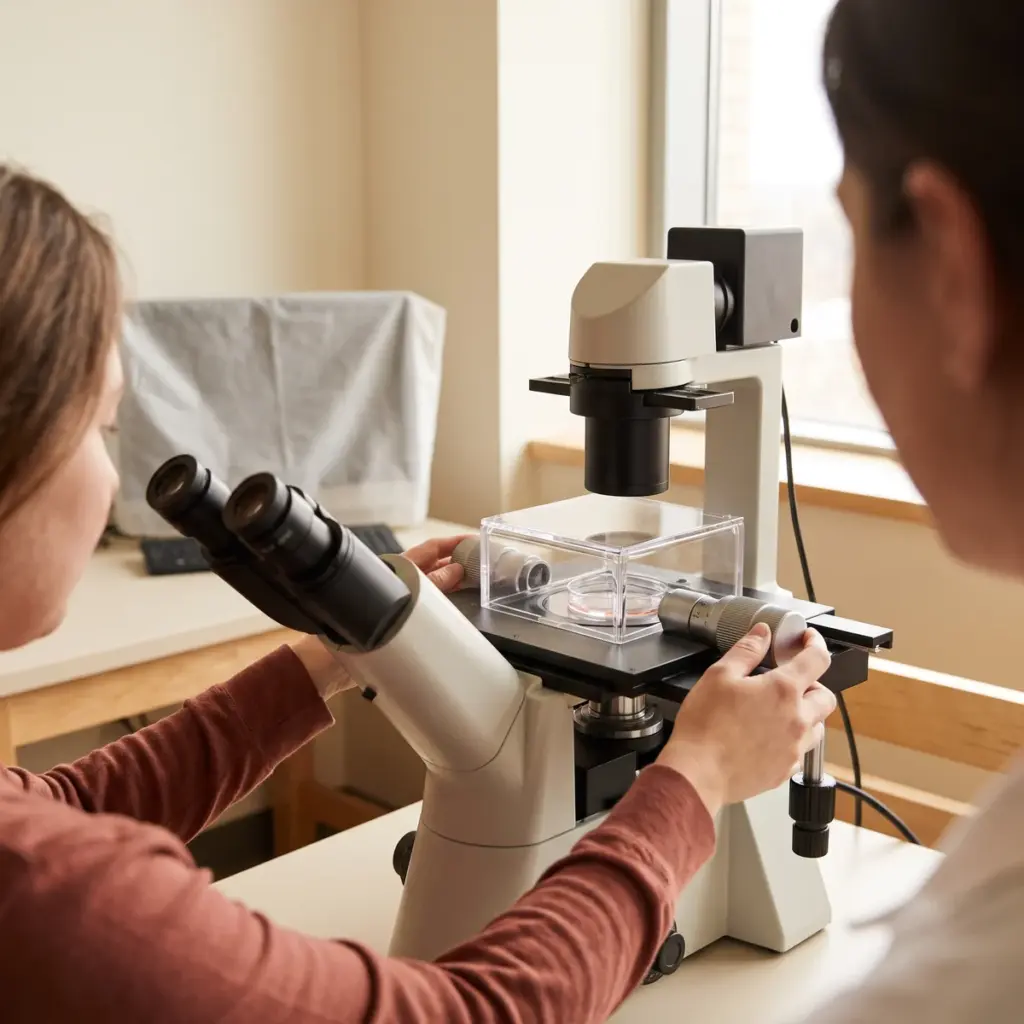
- Cell morphology from microscopy
- Concentration-response and exposure-time comparisons
Adding tissue-level context
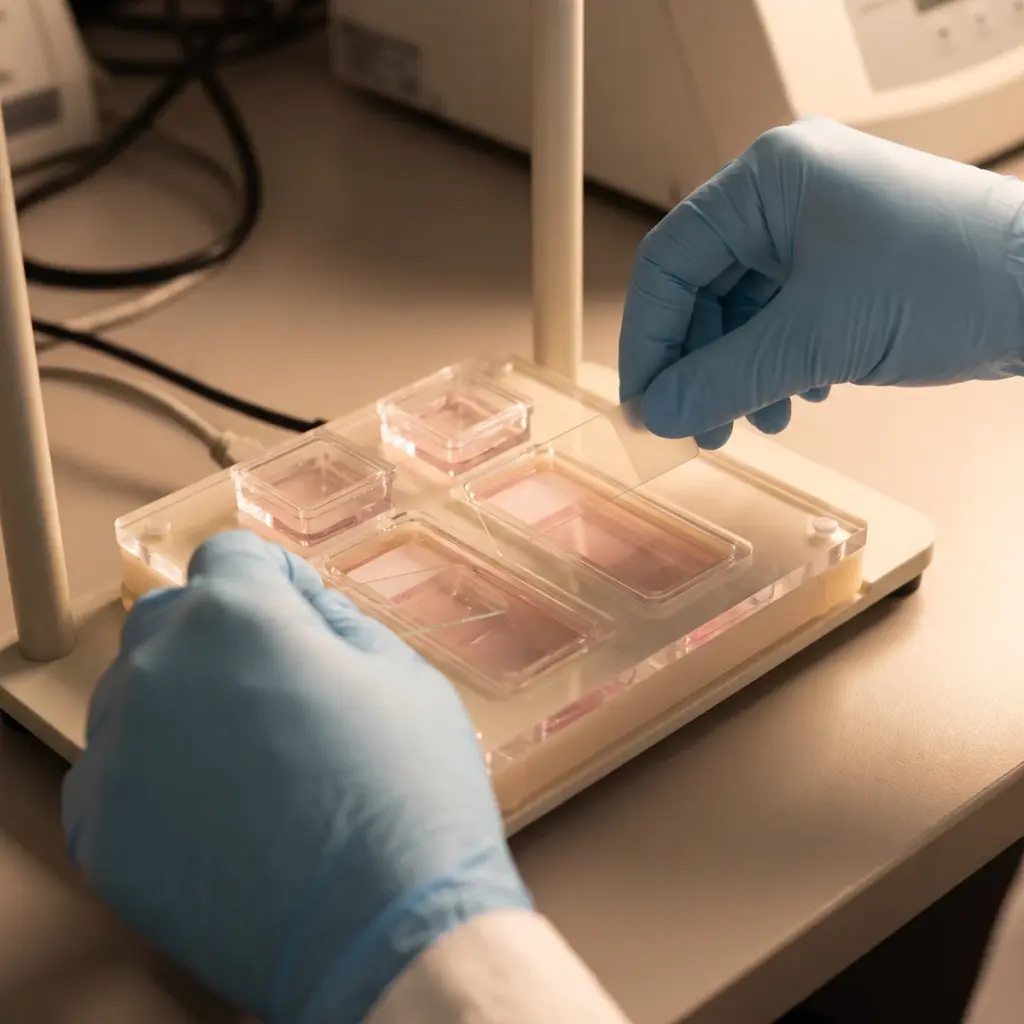
Pigmented reconstructed epidermis places melanocytes among keratinocytes, so pigment distribution and cell contacts can be seen in a skin-like structure. Topical application of a formula is possible in this format. Where a question about delivery arises, a dedicated pigment transfer study can be added.
The final report pairs pigment endpoints with viability for each dose, so a selective change in pigment output is clearly separated from cell loss. Microscopy images and raw data files are usually supplied with the summary tables.
Commissioning melanocyte activity work for ingredient selection
This study fits the point where you have several candidates and need one cellular comparison to pick a lead. It also supports a mechanism statement for an ingredient technical file, such as an effect on melanin output in human melanocytes.
Information a laboratory will ask for
Prepare the sample form and solvent, the top concentration that dissolves cleanly, the intended pigment direction, and your preferred reference compound. If the sample is coloured, say so early, since melanin is often read by absorbance. Tell the provider whether you also need tissue-level data, because pigmented epidermis adds cost and time.
How to compare providers
Ask which melanocyte source each laboratory uses and how it normalises melanin. A good report shows viability beside every pigment value and includes images. Providers that also run upstream assays, such as MITF regulation testing, can explain a result at the gene level when your claim calls for a named mechanism.
More in Pigmentation & Melanogenesis
Pigmentation & Melanogenesis testing studies how actives change melanin synthesis, melanocyte behaviour and pigment transfer in lab models.