Tyrosinase activity overview
Do you provide Tyrosinase activity?
Cellular and cell-free tyrosinase activity assays
Tyrosinase controls the first and rate-limiting steps of melanin synthesis. Its activity can rise or fall in response to an ingredient, and this service measures the change in both directions. The choice between a cellular and a cell-free system depends on whether you need the enzyme’s behaviour inside a living melanocyte or its direct response to the sample.
Cellular activity in treated melanocytes
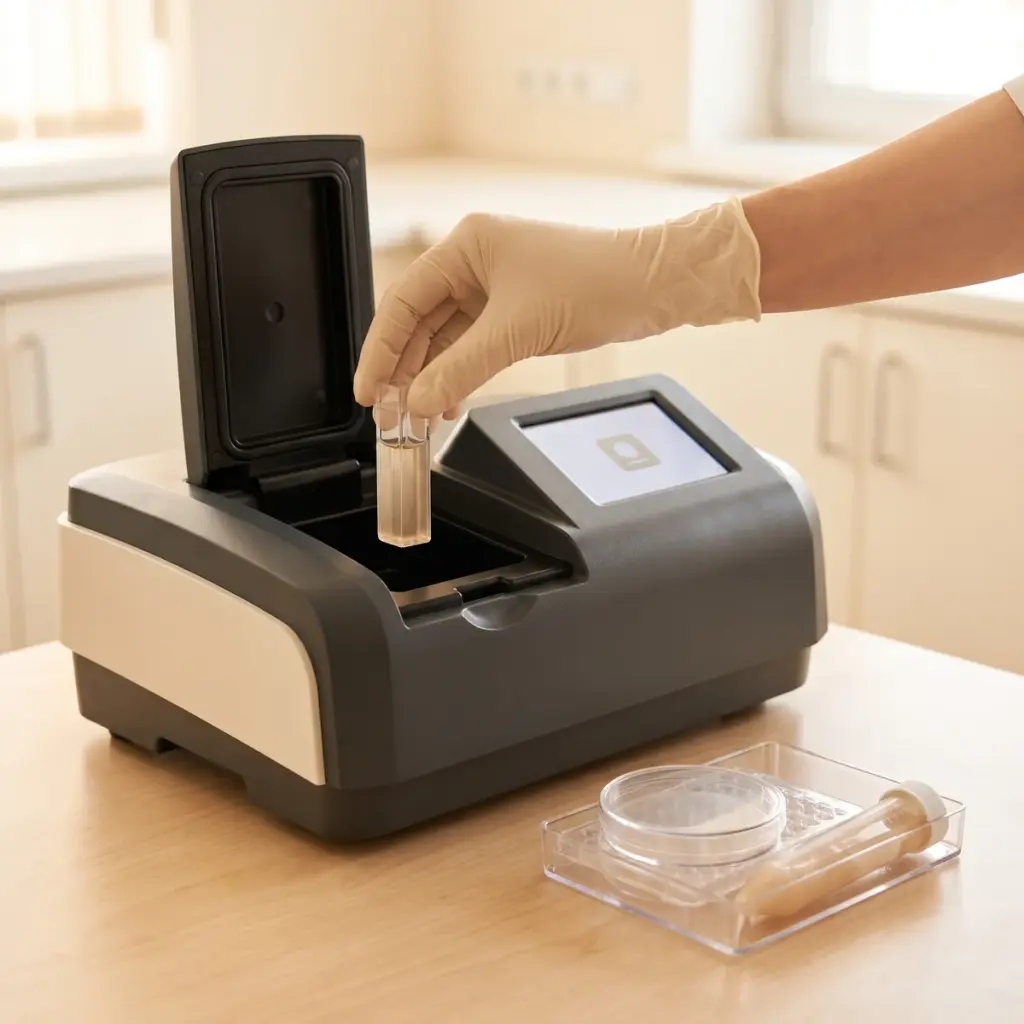
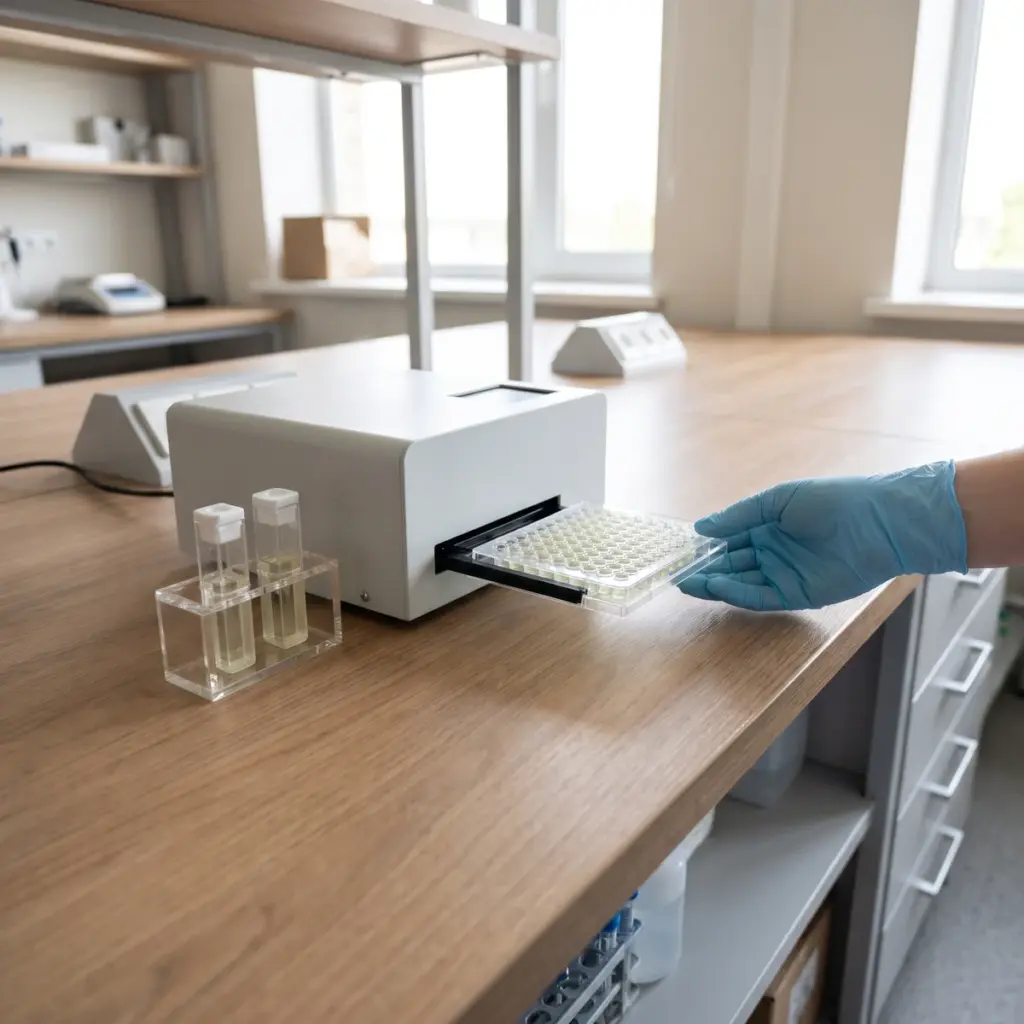
Melanocytes are cultured with the test sample, then lysed. The lysate is given a substrate such as L-DOPA, and the coloured product is read by absorbance over time. Activity is normalised to protein or cell number, so the result reflects enzyme output per cell.
Cell-free enzyme systems
A purified enzyme preparation lets the laboratory test direct effects under tightly controlled conditions. Mushroom tyrosinase is common for screening and is chosen for its availability. Human or mammalian enzyme sources give a closer match to skin, and the report names whichever was used.
Data provided
- Substrate conversion versus untreated and vehicle controls
- Concentration-response curves
- IC50 values when inhibition is the endpoint
- Sample-blank corrections for colour or turbidity
- Viability for every cellular condition
Tyrosinase protein levels and total melanin can be added so that activity, expression and pigment output are read together. Blends and finished formulas can also be compared when they are compatible with the assay medium.
Choosing a tyrosinase activity study for your project
Use this assay when you need a quick, quantitative comparison of several actives, or when you want to check that a formula keeps the activity seen with the raw ingredient. For a pure inhibition screen with an IC50 as the headline, tyrosinase inhibition testing is the focused option.
Preparing the samples
Send each sample with its solvent and the highest concentration that stays clear in buffer. Flag strongly coloured or reducing materials, since they absorb near the reading wavelength or react with the product. Say which enzyme source you want, or ask the laboratory to recommend one for your claim.
Enzyme source, substrate and blanks in the report
Look for a report that lists the enzyme source, substrate, reaction time and reference inhibitor. Check that sample blanks are run for every concentration. A laboratory that can move straight from the enzyme result to melanocyte activity testing shortens the step from screening to a cellular data set you can put in a dossier.
More in Pigmentation & Melanogenesis
Pigmentation & Melanogenesis testing studies how actives change melanin synthesis, melanocyte behaviour and pigment transfer in lab models.