Pigmentation efficacy testing overview
Do you provide Pigmentation efficacy testing?
How pigmentation efficacy testing maps the melanogenesis pathway
Melanin forms inside melanocytes through a chain of enzyme, signalling and transport steps, then passes to the surrounding keratinocytes. This service places an ingredient somewhere along that chain by pairing complementary assays and reading each stage against matched controls. Viability checks run alongside every endpoint, so a drop in pigment caused by cell stress is told apart from a true effect on pigment biology.
Enzyme and signalling endpoints
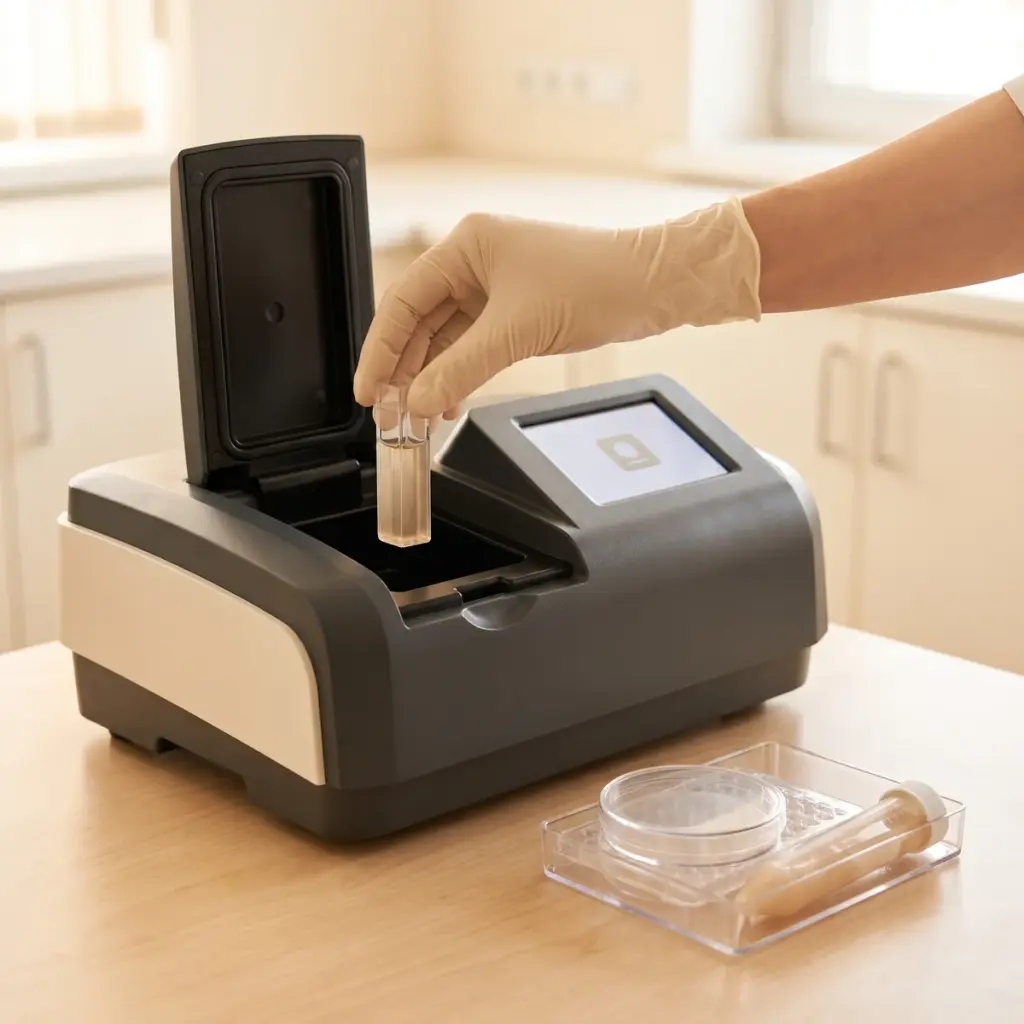
Tyrosinase sits at the start of melanin synthesis, so many screens begin there. You can measure enzyme activity directly, or look upstream at the alpha-MSH signal and the transcription factor MITF that drives pigment genes. The related proteins TYRP1 and DCT can be read where eumelanin chemistry is the question. Each marker answers a different part of the mechanism.
Pigment production, transport and transfer
Melanocyte cultures and pigmented reconstructed epidermis report total melanin and how pigment is arranged. Dendrite shape, melanosome behaviour and delivery to keratinocytes each describe a later stage of distribution. For a brightening programme you can combine a tyrosinase inhibition screen with a cell assay, while a rise in output is read through pro-pigmentation testing.
What the report sets out
You receive concentration-response data, the measured endpoints, viability results and a comparison with reference actives, so each candidate can be ranked on the evidence it produced.
Planning a pigmentation study and briefing a provider
Commission this work when you need evidence behind a brighter-tone, dark-spot or even-pigment message, or when you are choosing between actives for a new formula. Settle the direction first, because reducing melanin and raising it call for different assays and controls.
Ingredient, solubility and benchmark details to send
Send the ingredient identity, its solubility and the concentrations you expect to use, the claim or mechanism you want to support, and any reference active you want as a benchmark. State if the sample is a raw material or a finished formula, because a formula changes solubility and how the sample behaves in the assay.
Choosing a pigmentation laboratory
Look for a laboratory that runs both biochemical and cell-based pigment endpoints and reports viability with every result. A provider that can carry a promising active from an enzyme screen into a melanocyte activity study gives you a clearer development path. Ask how the team corrects for coloured or reducing samples, since both can distort optical readings.
More in Pigmentation & Melanogenesis
Pigmentation & Melanogenesis testing studies how actives change melanin synthesis, melanocyte behaviour and pigment transfer in lab models.