Matrix protein protection overview
Do you provide Matrix protein protection?
Matrix protein protection testing on damaged hair fibres
The hair cortex is built from keratin filaments held in a matrix of sulphur-rich proteins, linked by disulphide bonds. Bleaching oxidises these bonds, heat denatures the proteins, and UV light degrades amino acids such as cystine and tryptophan. Damaged fibres lose protein into the water every time they are washed. The test measures that loss and how a product changes it.
Tress preparation and treatment
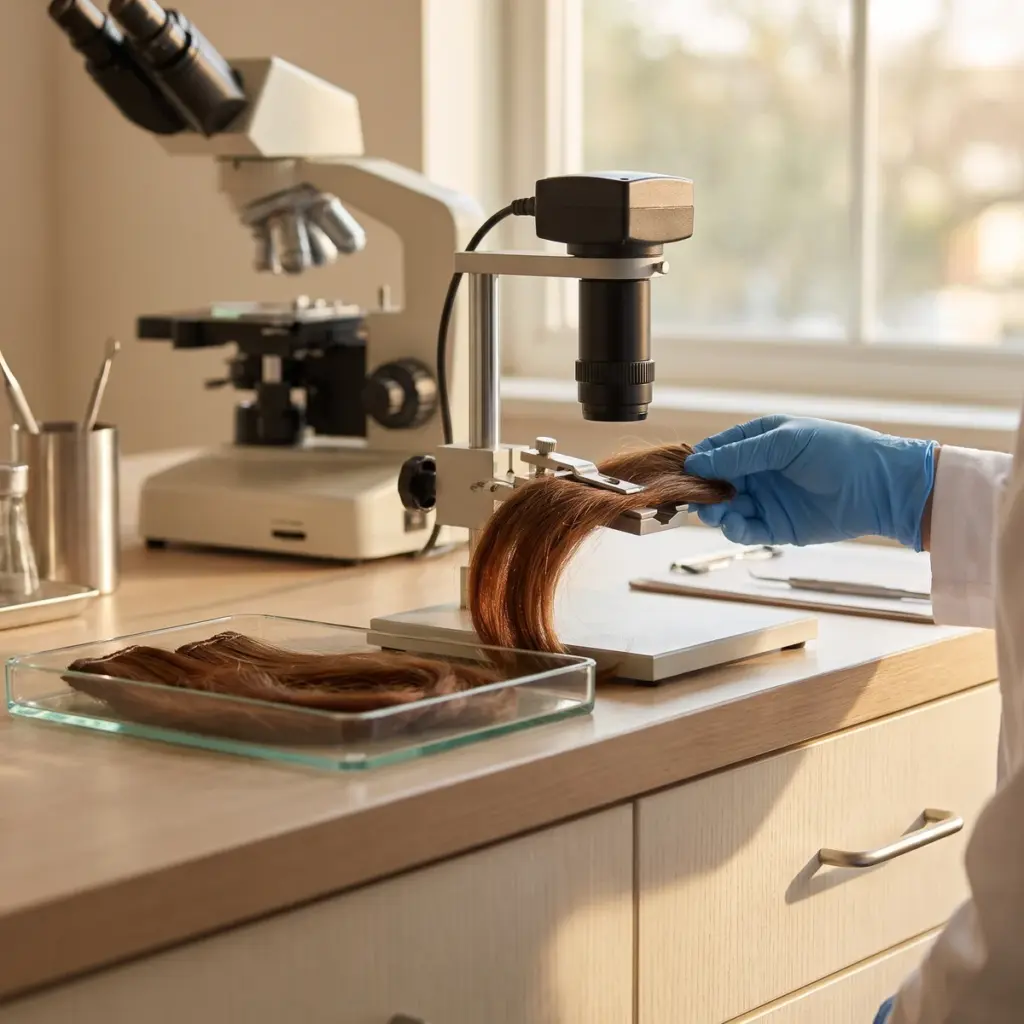
Tresses of standardised hair type, length and weight are cleaned and assigned to groups. Each group receives the test product, a placebo or a benchmark product, following the use instructions. A damage protocol relevant to the product then follows, for example a bleach application, repeated passes with a flat iron at a set temperature, or irradiation in a UV chamber.
Analytical endpoints
- Protein released into wash or extraction solutions
- Amino acid composition, including cysteic acid as an oxidation marker
- Changes in disulphide cross-linking
- Thermal or mechanical behaviour of the fibre
Released protein is quantified with colorimetric protein assays. Amino acid analysis shows which residues were damaged. Differential scanning calorimetry and tensile testing add data on fibre structure and strength. The laboratory runs blanks to correct for product residues on the fibre that could interfere with readings.
Protein loss per group against placebo
The report states hair type, prior damage, product dose, stress conditions and number of cycles, and gives results per group with statistics and percentage differences against placebo.
Turning protein protection results into product claims
Matrix protein protection data supports claims such as “reduces protein loss from bleached hair” or “protects hair from heat damage”. The claim should mirror the stress used in the study. A heat protectant needs heat-cycle data, a pre-colour treatment needs bleach data, and a summer leave-in needs UV data.
Matching the protocol to your consumer
Tell the laboratory how the product is used: rinse-off or leave-on, how many applications, and which styling routine it is designed for. Ask for the damage protocol to reflect that routine, such as the iron temperature and number of passes your target consumer uses. If you want to compare with a market leader, supply the benchmark so it runs in the same study.
Evaluating a fibre laboratory
Look for a lab that sources hair of a defined origin and can supply pre-damaged or virgin tresses as needed. Ask which protein assay it uses and how it corrects for product residues. Laboratories with amino acid analysis, calorimetry and tensile testing in house can give a fuller picture of fibre condition in one study. If your active works at the root, follicular keratin synthesis testing is the study that fits that claim.
More in Hair Follicle & Fibre
Hair Follicle & Fibre studies test how an active works on the living follicle and the hair shaft: growth signals, androgens, keratin and pigment.