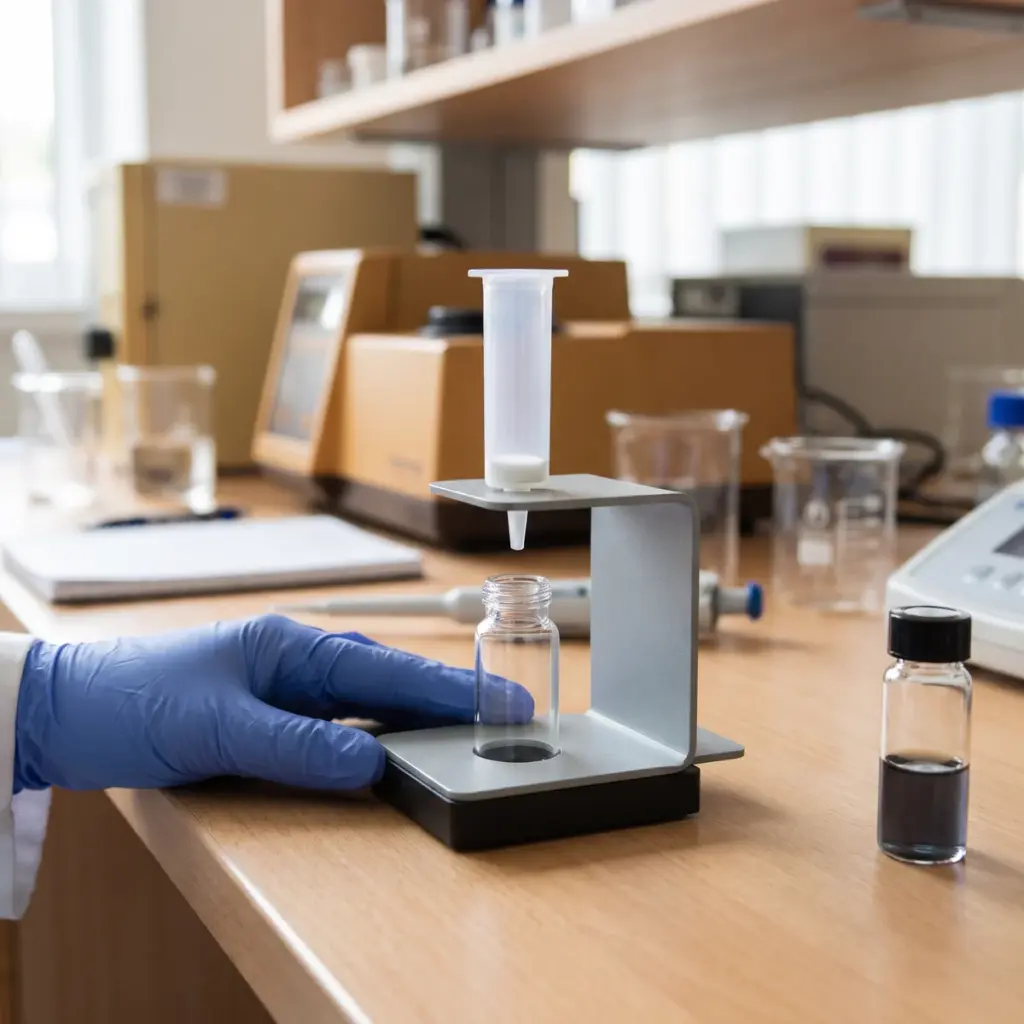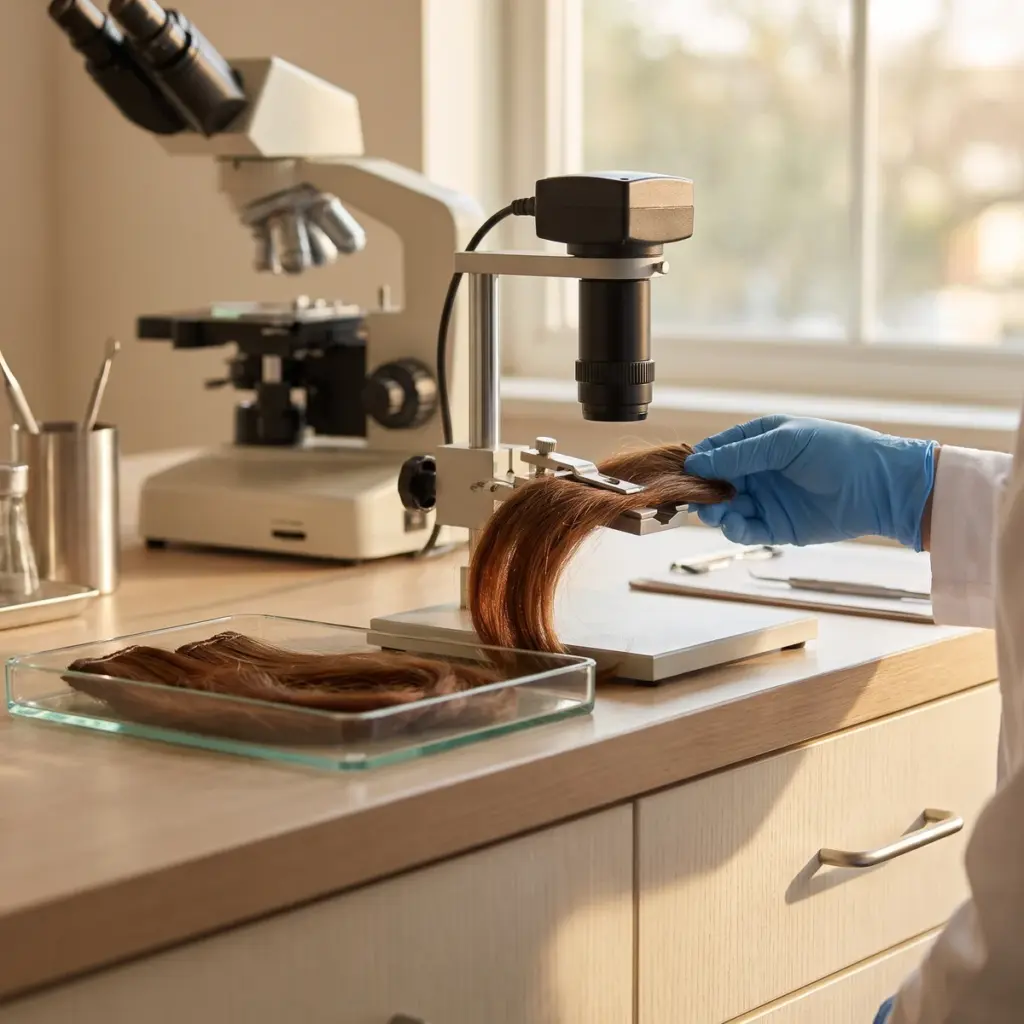
Unwanted growth inhibition overview
Do you provide Unwanted growth inhibition?
Unwanted growth inhibition: follicle models and endpoints
Hair-minimising products act on the follicle after the visible hair has been removed by waxing, epilation or shaving. Their goal is slower or finer regrowth. Laboratory testing measures this effect on the follicle itself, using the growth readouts of hair growth studies with the opposite target direction.
Isolated follicle culture
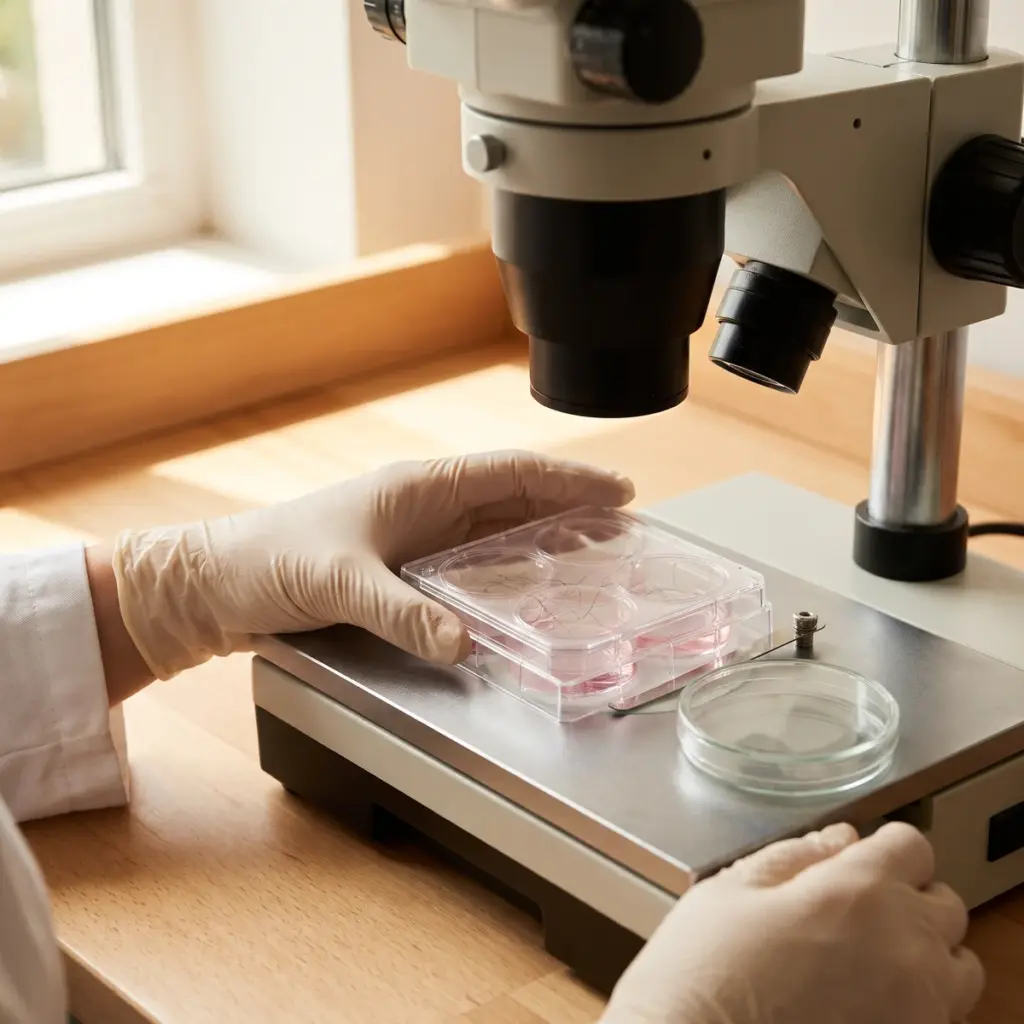
Growing follicles are microdissected from donor tissue and cultured with the test material, a vehicle and, where available, a reference inhibitor. The laboratory images each follicle over the culture period and records how much new shaft it produces. Bulb morphology shows whether follicles move early into the regression phase.
Separating inhibition from damage
A follicle can stop growing because an ingredient switches off a growth pathway, or because the tissue is injured. Viability staining, histology and recovery after the active is removed tell the two apart.
- Shaft elongation against untreated and vehicle controls
- Growth-phase and regression-phase scoring
- Follicle viability and tissue morphology
- Keratinocyte proliferation and selected protein markers
- Recovery after washout where feasible
Cell assays
Keratinocyte and dermal papilla cultures show which pathway the active affects, using proliferation measurements and protein markers. They are useful for screening many candidates before follicle work, since cell plates hold far more test conditions than a follicle study.
Follicle elongation, phase scoring and viability data
The report covers follicle source, treatment groups, elongation data, phase scoring, viability evidence and statistics.
Using unwanted growth inhibition data in a hair-minimising product
Unwanted growth inhibition studies give you a reason to pick one active over another before formulating, and they supply the mechanism section of a technical file for an after-wax or post-epilation product.
Matching the follicle source to the body area
Hair on the legs, underarms, face and scalp differs in follicle size and cycle length. Most laboratory follicle work uses scalp follicles because donor tissue is available. If you are developing a facial or body product, discuss with the laboratory how close its follicle source is to your target area and whether it can source body follicles.
From follicle data to a user claim
Statements such as “regrowth appears finer and slower” are measured in a volunteer study run by a clinical research organisation. Hair is removed by a standard method, the product is applied for a set period, and regrowth is assessed by imaging, hair counts and shaft diameter. The laboratory result tells you which concentration to take into that study. The same tissue models used for hair growth efficacy testing apply here, so providers often offer both directions.
More in Hair Follicle & Fibre
Hair Follicle & Fibre studies test how an active works on the living follicle and the hair shaft: growth signals, androgens, keratin and pigment.