Hair Pigmentation Mechanism Studies overview
Do you provide Hair Pigmentation Mechanism Studies?
Inside hair pigmentation mechanism studies
Hair colour is made in the follicle bulb, where melanocytes produce melanin and pass it to the keratinocytes forming the shaft. With age, the number and activity of these melanocytes fall and the melanocyte stem cell reservoir is depleted, partly through oxidative stress in the follicle. Studies of greying therefore look at pigment output, pigment-cell survival and protection from oxidative damage.
Melanocyte assays
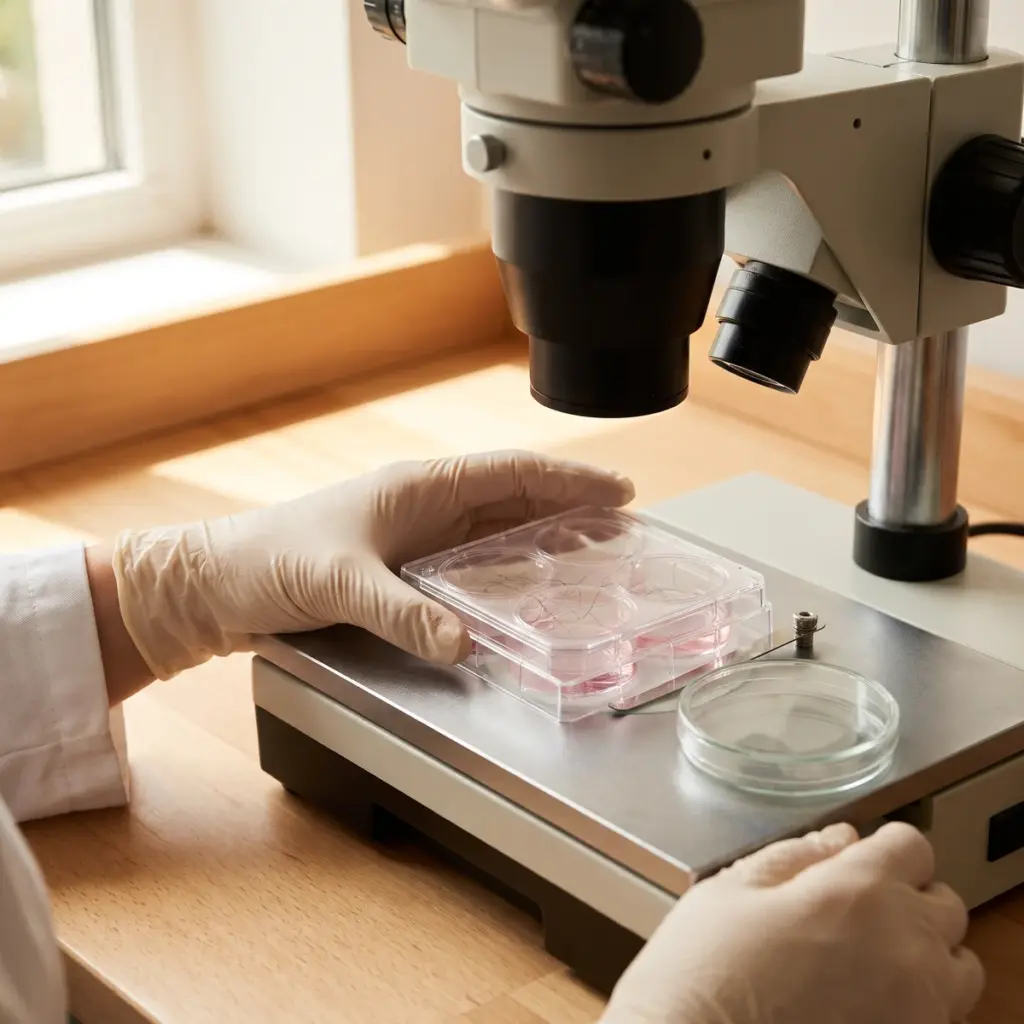
Hair follicle melanocytes, or melanocyte models chosen to represent them, are treated with the test material across a concentration range. The laboratory measures melanin content, tyrosinase activity and the expression of pigment-related genes and proteins. Cell counts and viability are taken at the same time so that pigment can be expressed per cell.
Oxidative stress challenge
Hydrogen peroxide accumulates in greying follicles, and a common design exposes melanocytes to a controlled peroxide challenge with and without the active. Survival, reactive oxygen species levels and antioxidant enzyme activity show whether the ingredient protects pigment cells under stress.
- Melanin content and distribution
- Tyrosinase activity and selected pigment markers
- Melanocyte survival under oxidative challenge
- Concentration-response against vehicle control
Follicle-level studies
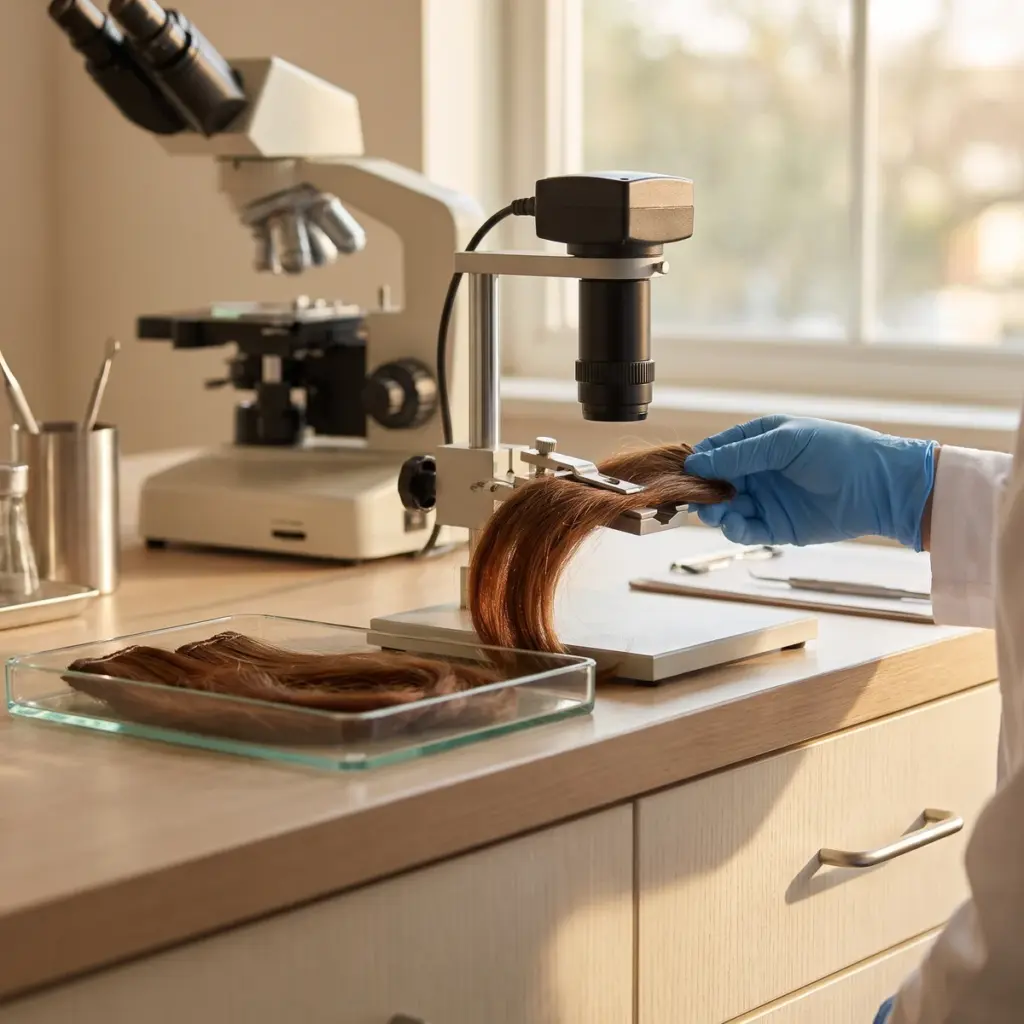
Isolated human hair follicles let the laboratory stain melanin in the bulb and the newly formed shaft, and assess the follicular pigment unit in intact tissue. Work on melanocyte stem cells uses models in which that population is identified with markers.
Pigment, enzyme and stress-challenge results reported
You receive the model description, pigment and enzyme data, stress-challenge results, statistics and stained images.
Building an evidence file for a greying-hair active
Hair Pigmentation Mechanism Studies give the first layer of evidence for an anti-greying ingredient, and their design should follow its positioning.
Which mechanism to document
Anti-greying actives are positioned in different ways: stimulating melanin production, protecting melanocytes from oxidative stress or supporting the melanocyte stem cell reservoir. Choose the study design that matches your positioning. A melanogenesis claim relies on melanin and tyrosinase data. A protection claim relies on the peroxide challenge. A stem cell claim needs a model with identified stem cells, which fewer laboratories offer.
Planning the route to a consumer claim
Laboratory pigment data is the first part of the file. Visible results, such as fewer grey hairs or a slower appearance of new grey hairs, come from a volunteer study on the finished product with standardised photography and grey hair counts on a defined scalp area. These studies take several months because hair grows slowly, so the active and concentration are usually fixed from laboratory results first.
Related follicle studies
Pigment work often runs alongside other follicle research. Brands developing a combined product for greying and thinning hair can add hair growth efficacy testing on the same donor follicles, which gives two sets of data from one tissue source.
More in Hair Follicle & Fibre
Hair Follicle & Fibre studies test how an active works on the living follicle and the hair shaft: growth signals, androgens, keratin and pigment.