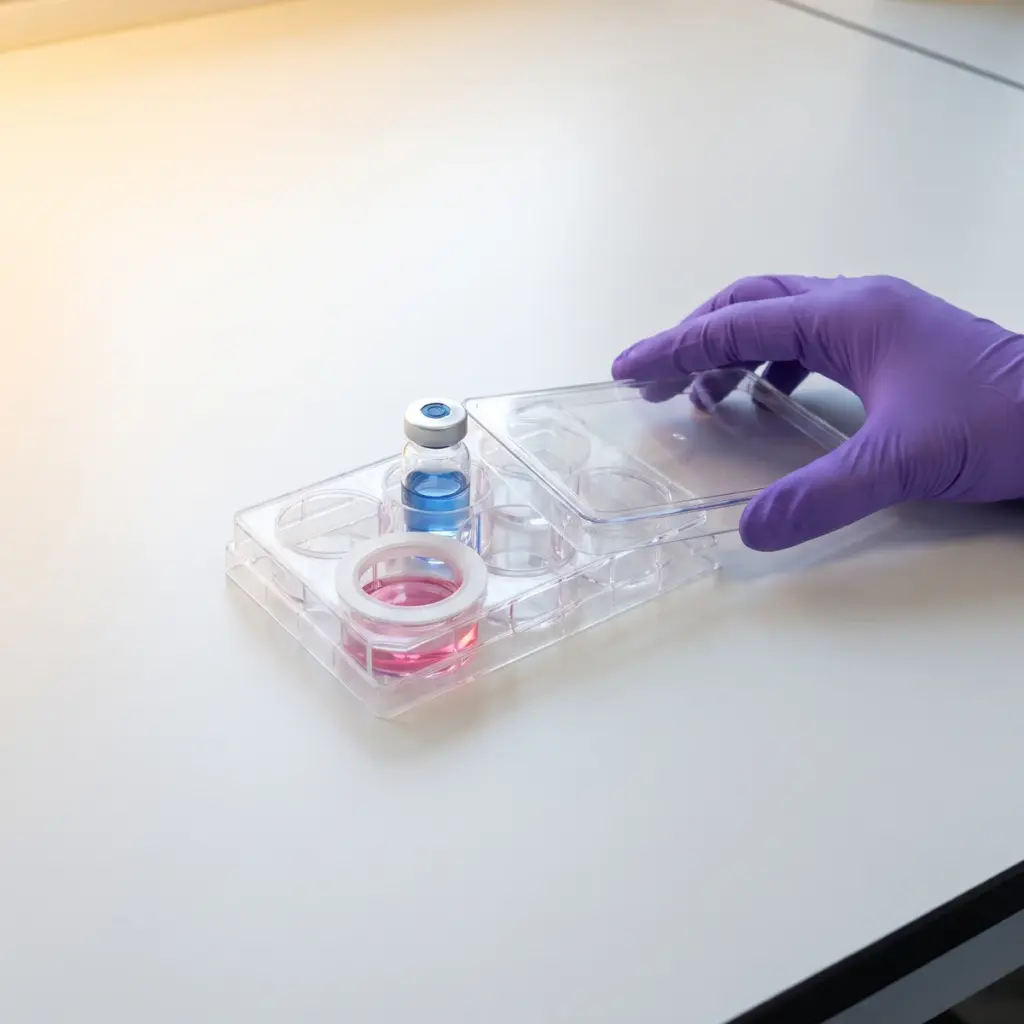
Stress response proteins overview
Do you provide Stress response proteins?
What stress response protein testing measures
Skin cells raise or lower a set of protective proteins when they meet oxidative or environmental load. This service tracks those changes after a defined challenge and links them to a cosmetic ingredient, so you can see whether the active shifts the cellular stress response and by how much.
Proteins and pathways analysed
Measurements centre on heat-shock proteins such as HSP70, HSP90 and HSP27, together with antioxidant enzymes including superoxide dismutase, catalase, glutathione peroxidase and glutathione S-transferase. NRF2 signalling connects these readouts to the wider antioxidant and metabolic response, which helps explain why a given marker moves. Glutathione S-transferase also links the stress response to phase II conjugation, so one panel can cover both protective and clearance-related activity.
- Protein abundance by immunoassay or Western blot
- Enzyme activity where it forms part of the hypothesis
- Concentration-dependent and time-dependent changes
- Oxidative-damage and viability endpoints for context
Challenge design and deliverables
A laboratory selects the stressor to match the brief, using particulate matter, cigarette smoke extract, ozone or a metal challenge in a reconstructed epidermis or cell model. Pre-treatment, co-treatment and recovery designs each answer a different question about when the ingredient acts. You receive the exposure conditions, the control comparisons, quantified protein and enzyme values, and a reading that ties any marker induction to measured changes in damage. The output supports a mechanistic account behind a pollutant protection and skin detoxification claim.
Putting stress response protein data to work
Protein profiles are most useful early in development, when several actives compete for one claim and you need a measured reason to back one of them. They also give a formulator a concentration range to work from.
When to run the study
Commission the assay while you are screening actives or defending a resilience claim, before you commit to a full formulation. Comparing several candidates under one exposure shows which raises a protective response and which stays flat. That narrows the shortlist early and focuses the clinical efficacy work that follows.
What to prepare and compare
Bring the target claim, the intended use concentration and the environmental stressor you want to model. Report the model, the controls and the observed variability so candidates can be read against each other. Where an ingredient is proposed to work through metabolic clearance, pairing this data with metal chelation testing adds mechanistic weight. Higher protein expression reads as a response to the stressor, and the measured drop in damage is what gives that response meaning.
More in Xenobiotic & Cellular Clearance Studies
Xenobiotic & Cellular Clearance Studies show how skin cells respond to pollutants and foreign compounds, and how an active supports their recycling system.