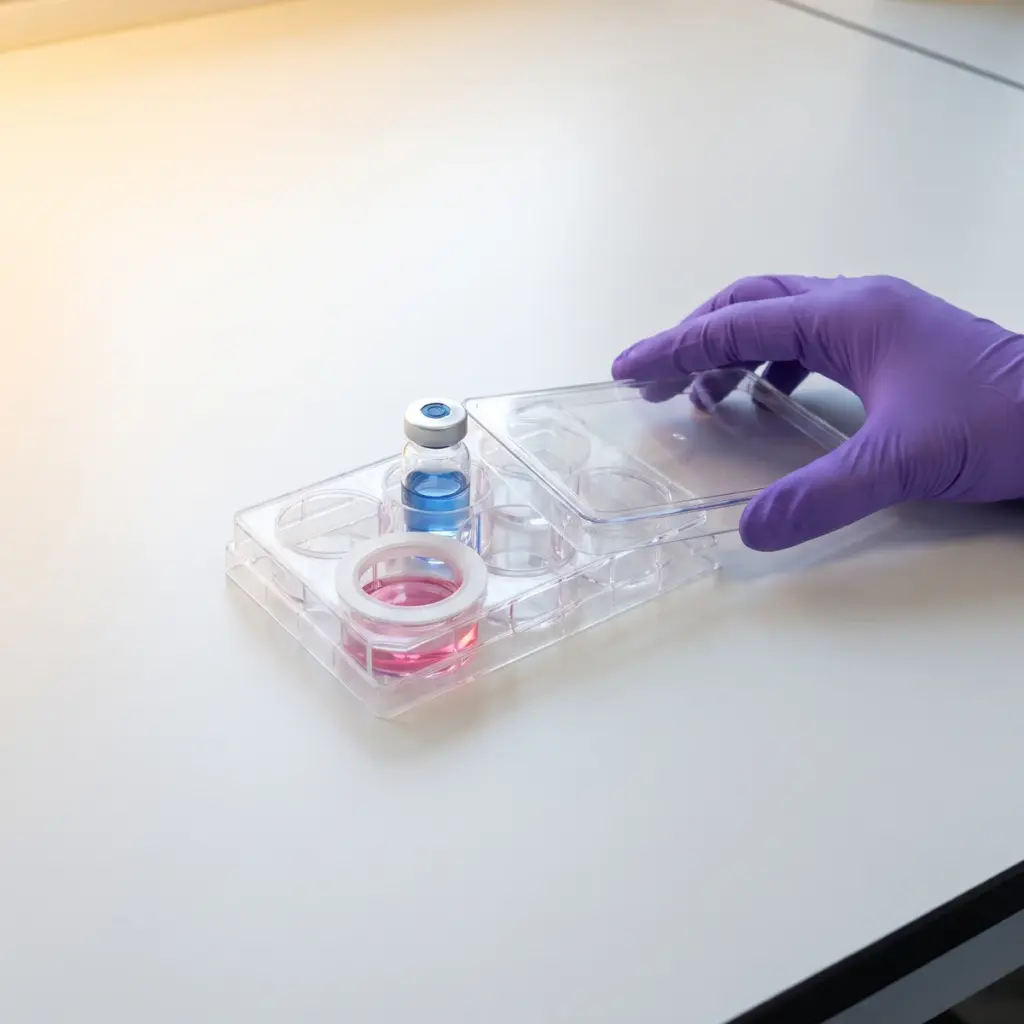
Barrier function reinforcement overview
Do you provide Barrier function reinforcement?
How barrier function reinforcement testing is carried out
These studies investigate whether treatment preserves or improves the physical properties that limit exchange between skin and its environment. The laboratory first fixes a model suited to the chosen measurements and a pollutant challenge that matches the product brief, then reads the barrier before and after exposure.
Permeability and integrity measurements
Reconstructed epidermis or excised skin carries the test. The readout is chosen to fit the tissue system: impedance suits a reconstructed model in culture, while water-loss readings need a setup where evaporation from the surface can be measured cleanly. Lipid organisation is examined on the stratum corneum after exposure.
- Transepidermal water loss and other permeability measures
- Dye penetration and electrical impedance
- Corneocyte cohesion and lipid organisation
- Surface pH or buffering behaviour where relevant
A fall in water loss or dye entry shows a tighter barrier. Linking that to the entry of one named pollutant calls for a distribution measurement that tracks the pollutant itself.
Supporting cellular readouts
Viability, cytokine levels, glutathione and oxidative-damage markers add context on how the tissue copes during exposure. You receive the treated, untreated and challenge-control comparisons, the structural and lipid data, and a report that separates a short-lived surface effect from a real change in the model’s barrier. The findings describe a defined barrier mechanism that can anchor a pollutant protection claim.
Using barrier function reinforcement results
Barrier data answers a practical question for a brand: which formula keeps the skin model intact when the challenge arrives. That makes it a ranking tool during development and the mechanistic base for a barrier or anti-pollution positioning at launch.
Comparing formulations
Run the candidate formulas through the same tissue system and exposure, then compare integrity and permeability side by side. Structural and lipid information explains why one sample holds the barrier better than another, which helps you choose a lead formula before clinical work begins. Send the full formula with its intended dose per area, since the amount applied to the tissue changes the result.
Backing a specific exposure claim
A statement about reduced entry of a particular pollutant needs a method that follows that pollutant or a justified surrogate. Cytokine and oxidative-damage markers give supporting response data without quantifying penetration. Where the mechanism points at the cellular stress response, stress response protein testing can sit alongside the barrier data. Define the decision criteria for your model so the comparison stays consistent across batches.
More in Xenobiotic & Cellular Clearance Studies
Xenobiotic & Cellular Clearance Studies show how skin cells respond to pollutants and foreign compounds, and how an active supports their recycling system.