Stress response timing overview
Do you provide Stress response timing?
How stress response timing studies are run
The clock controls many genes that skin cells use to handle stress, including antioxidant enzymes and inflammatory signalling components. As a result, the same dose of UV or oxidant causes a different amount of damage and inflammation depending on when it arrives in the cycle. A timing study maps that variation and measures how an ingredient changes it.
Challenge at defined phases
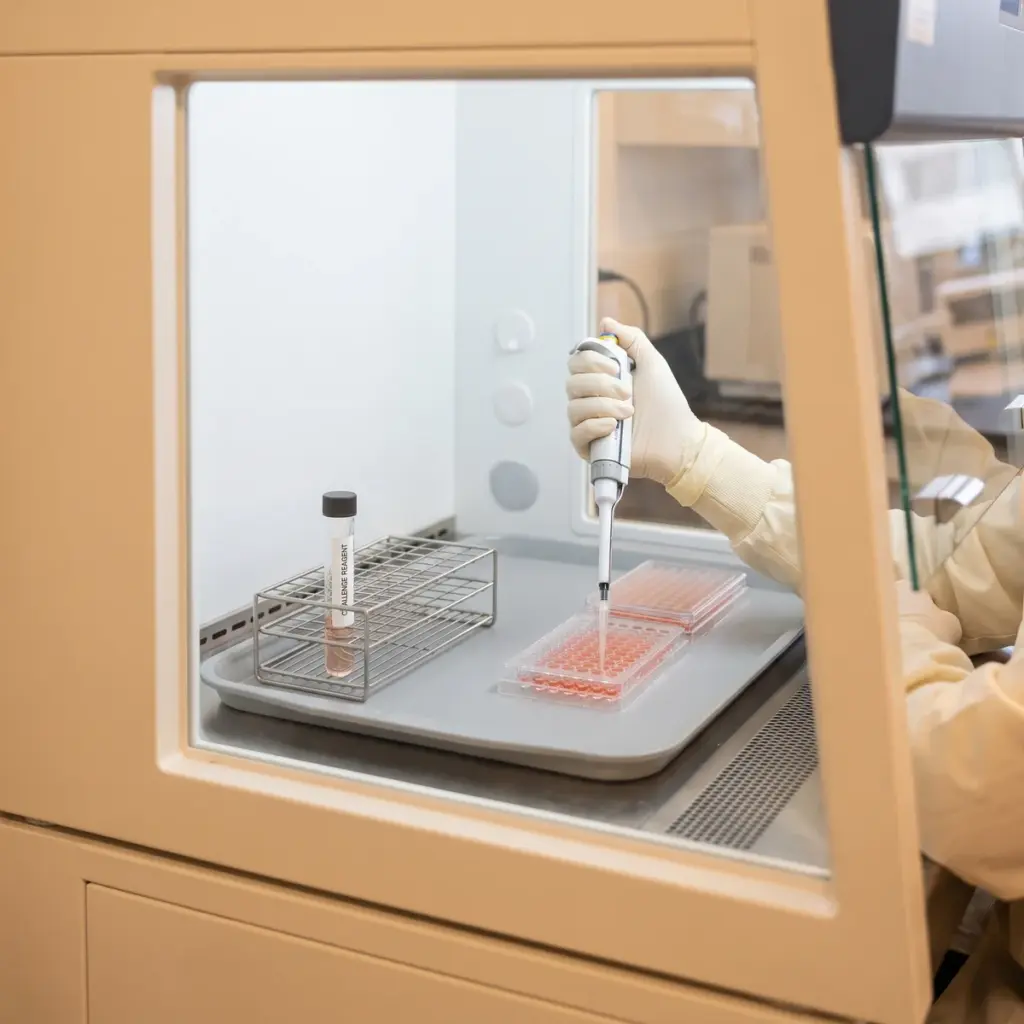
Keratinocyte or fibroblast cultures, or reconstructed epidermis, are synchronised and pre-treated with the ingredient or vehicle. Separate groups are then challenged at several points across the cycle. Typical stressors are UVB or UVA at a set dose, hydrogen peroxide, particulate matter, or cortisol to model a stress-hormone signal.
Read-outs after the challenge
Samples are taken at fixed intervals after each challenge, so the laboratory can compare both the peak response and how fast cells return to baseline.
- IL-1α, IL-6, IL-8 and TNF-α release
- Intracellular reactive oxygen species
- NRF2 activation and HMOX1 expression
- Viability and cell number
Cytokines are measured by ELISA or multiplex bead assay. Reactive oxygen species are read with fluorescent probes, and gene targets by RT-qPCR.
Marker results by challenge phase and treatment
The report shows each marker by challenge phase and treatment, with statistics on phase differences and on the ingredient effect at each phase. A summary plot identifies the phase at which treated and control cells differ most.
Deciding when an active works best with stress response timing data
Timing data turns a general protection claim into a specific one about when in the day the ingredient helps skin most.
Day product or night product
The study gives a direct answer to a common formulation question. If an ingredient reduces cytokine release or oxidative stress most when the challenge falls in the cells’ active phase, it fits a day cream with environmental protection claims. If its strongest effect is on recovery after the challenge, it suits an evening or overnight product. Brands use this to place actives across a range and to support wording such as ‘helps skin cells defend against daily environmental stress’.
Choosing the right stressor
Match the challenge to the claim. UV fits sun and photo-ageing positioning. Particulate matter or diesel exhaust extract fits anti-pollution products. Cortisol fits concepts for skin under lifestyle stress or short sleep. Running two stressors in one design costs more but gives a broader protection profile.
Connecting to repair studies
Inflammation and oxidative stress are the early part of the response. To follow what happens to damaged cells afterwards, combine this study with repair mechanisms timing on the same synchronised model.
More in Skin Circadian Rhythm Studies
Skin Circadian Rhythm Studies track clock genes and timed repair in synchronised skin cells to show how day and night actives work with the skin clock.