Cellular synchronization overview
Do you provide Cellular synchronization?
Measuring cellular synchronization in skin-cell clocks
Every keratinocyte and fibroblast runs its own clock, but in an unsynchronised dish the cells peak at different times and the population signal looks flat. A brief cue resets them to a common phase. The population rhythm then starts with high amplitude and gradually damps over successive days as individual clocks drift apart. That damping rate is the core read-out of a synchronization study.
Synchronising cue and reporters
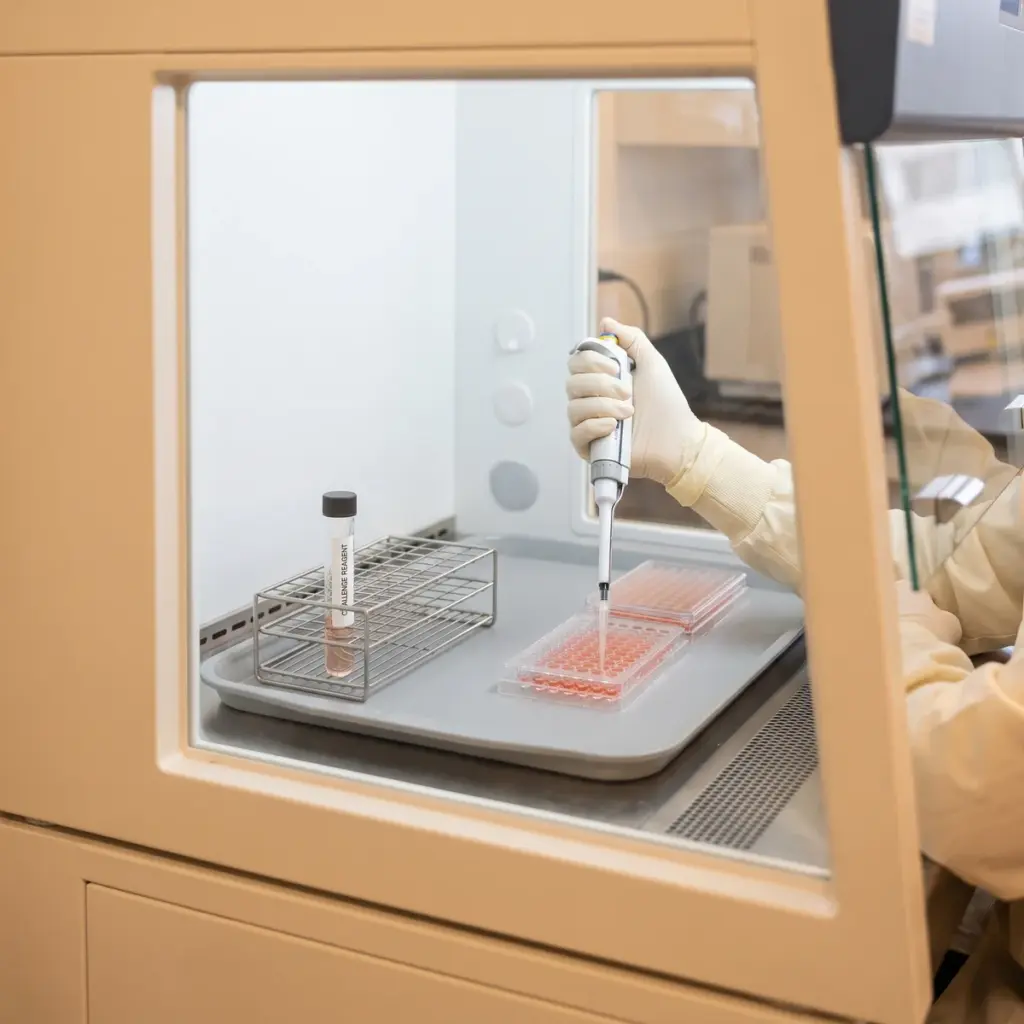
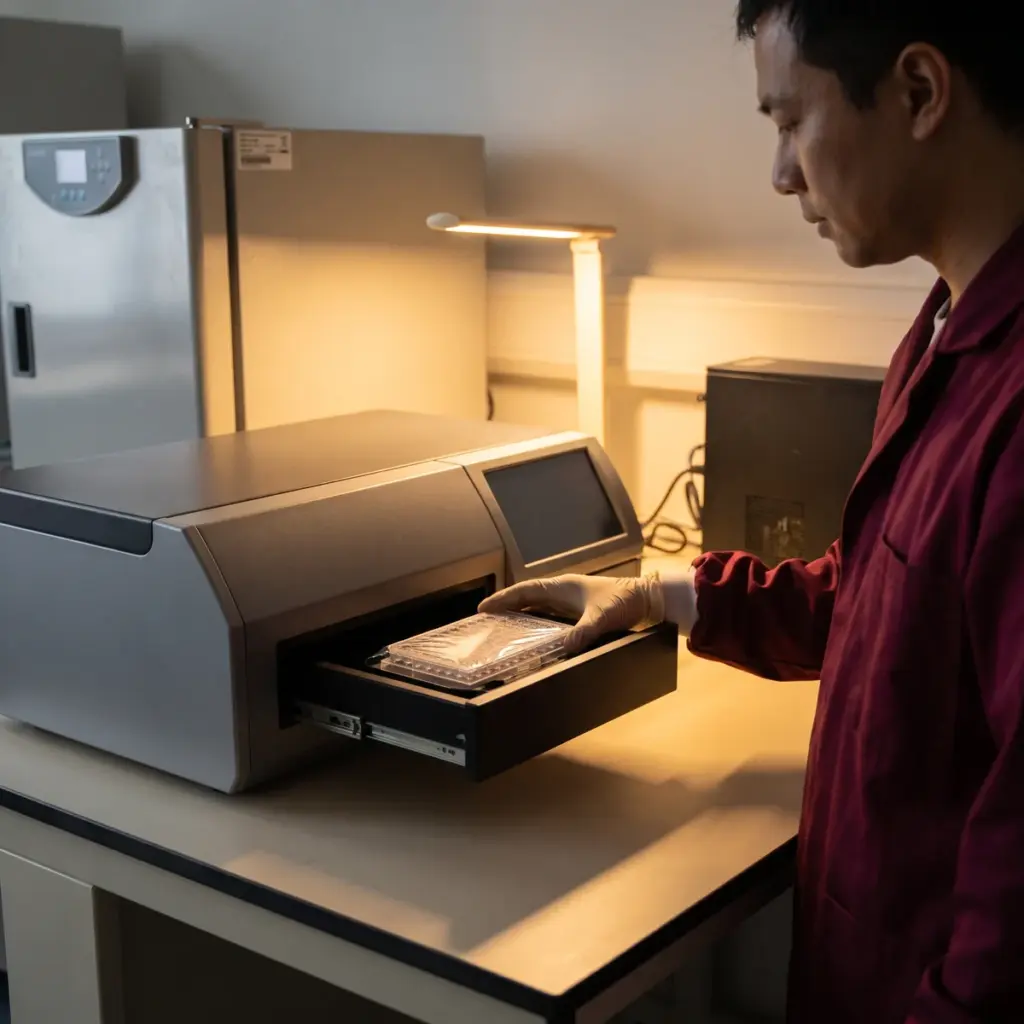
Common cues are a serum shock, dexamethasone, forskolin or a temperature cycle. Most studies use cells carrying a luciferase reporter driven by the BMAL1 or PER2 promoter. Placed in a real-time luminometer, the culture emits light in step with its clock. One dish yields a continuous trace over four or more days.
Study designs
The ingredient can be added with the synchronising cue, to test whether it sharpens the reset, or after the rhythm is running, to test whether it slows damping. A disrupted condition, such as a mistimed second cue or an oxidative stressor, models a clock under strain and shows whether treated cells hold their rhythm better.
- Rhythm amplitude on each cycle
- Damping rate across successive days
- Phase and period
- Recovery of rhythm after a disruption
Single-cell imaging and report
Bioluminescence imaging of individual cells separates loss of alignment from loss of rhythm in each cell, a distinction available only at single-cell level. The final report includes raw traces, detrended rhythms, fitted parameters with statistics and the synchronisation protocol.
Where cellular synchronization data fits a chrono-cosmetic claim
Synchronization is the right study when your product’s positioning is about keeping skin on schedule. Typical cases are care for frequent flyers, night-shift workers or people with irregular sleep, where the idea is that skin cells lose their shared rhythm. A result showing slower damping or faster recovery after disruption supports wording such as ‘helps skin cells stay in sync with their natural rhythm’.
Sequencing with other circadian studies
Synchronization works at the population level, so it pairs with gene-level detail. Clock genes expression profiling shows which components of the clock the ingredient acts on. To connect a stronger rhythm to a functional benefit, follow with repair mechanisms timing in the same model.
Provider capability to look for
Ask whether the laboratory has its own stable reporter keratinocyte or fibroblast line and a multi-channel real-time luminometer kept at constant temperature, since temperature shifts can reset the clock. Single-cell imaging capacity is a plus if your claim concerns alignment specifically. Check that the analyst reports damping and period with fitted confidence intervals.
More in Skin Circadian Rhythm Studies
Skin Circadian Rhythm Studies track clock genes and timed repair in synchronised skin cells to show how day and night actives work with the skin clock.