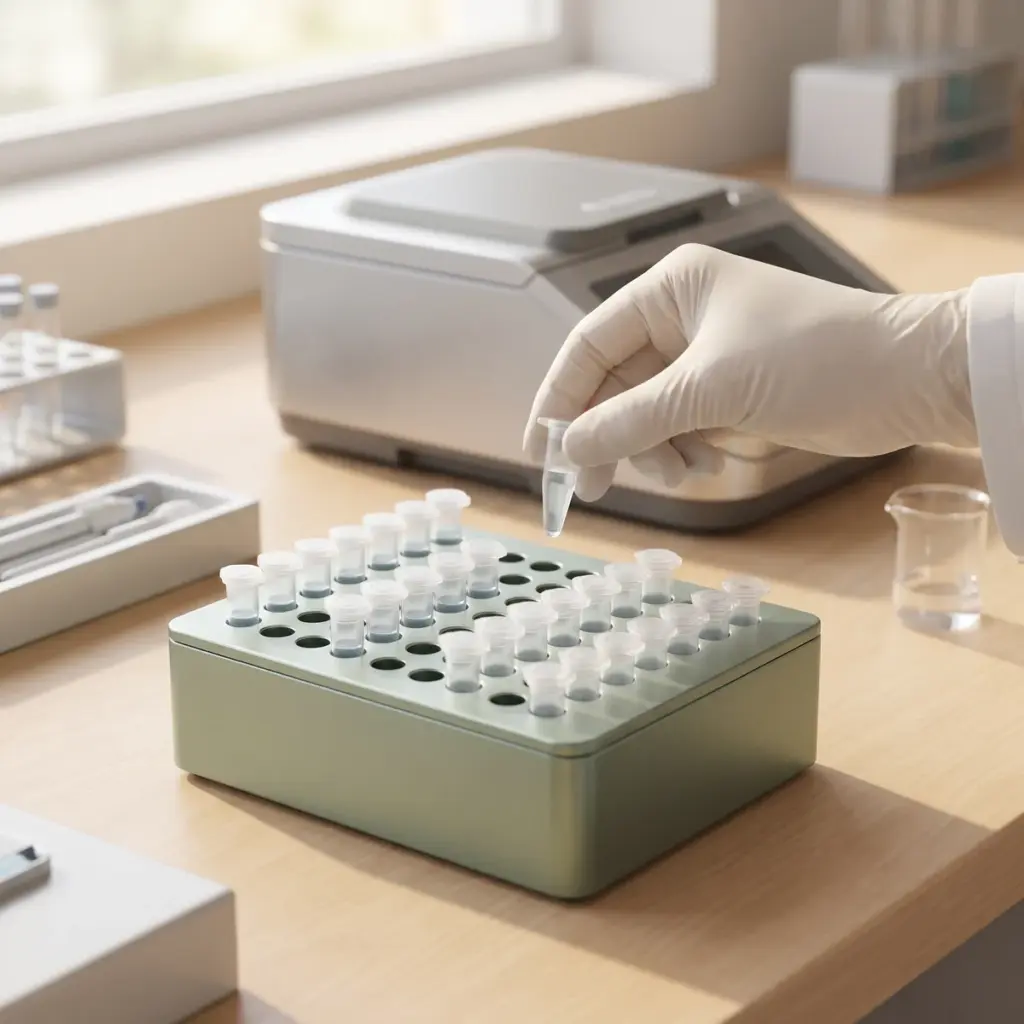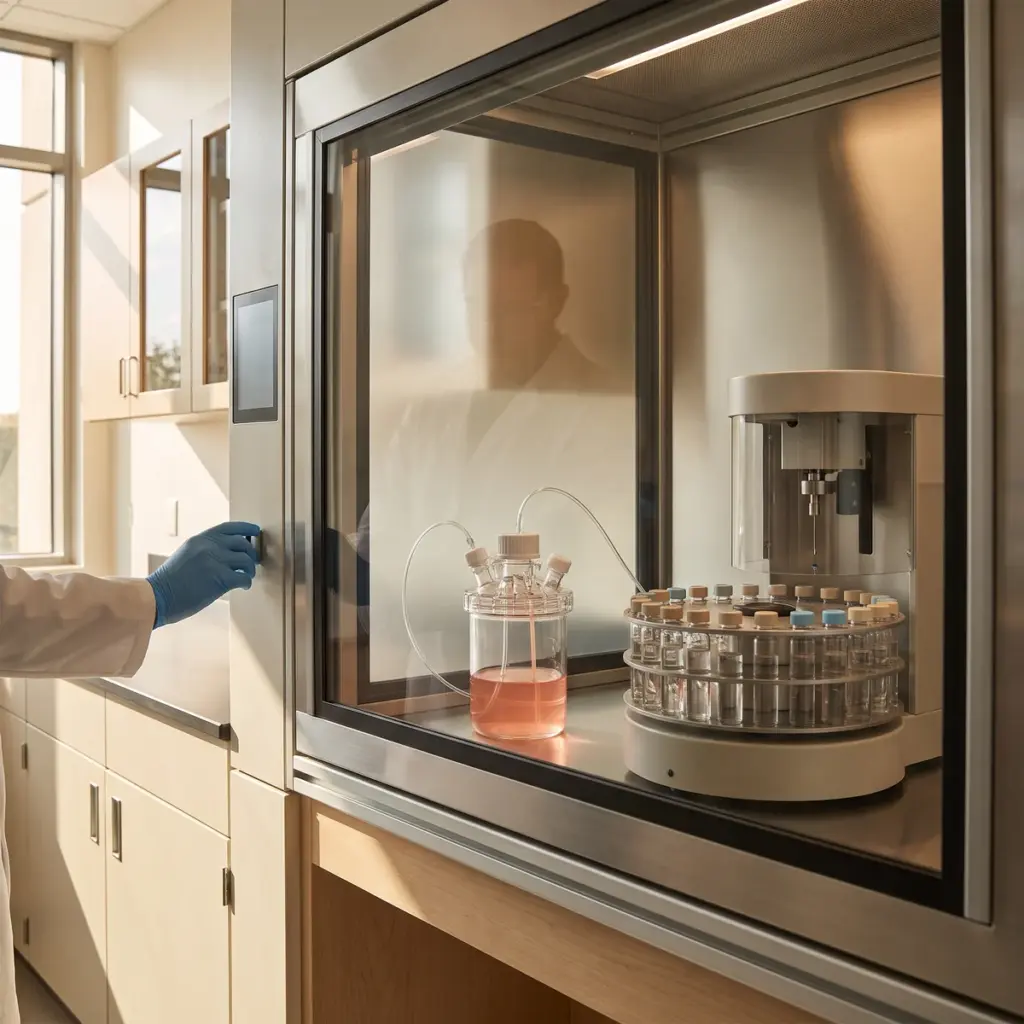
Circadian rhythm efficacy testing overview
Do you provide Circadian rhythm efficacy testing?
What circadian rhythm efficacy testing covers in skin models
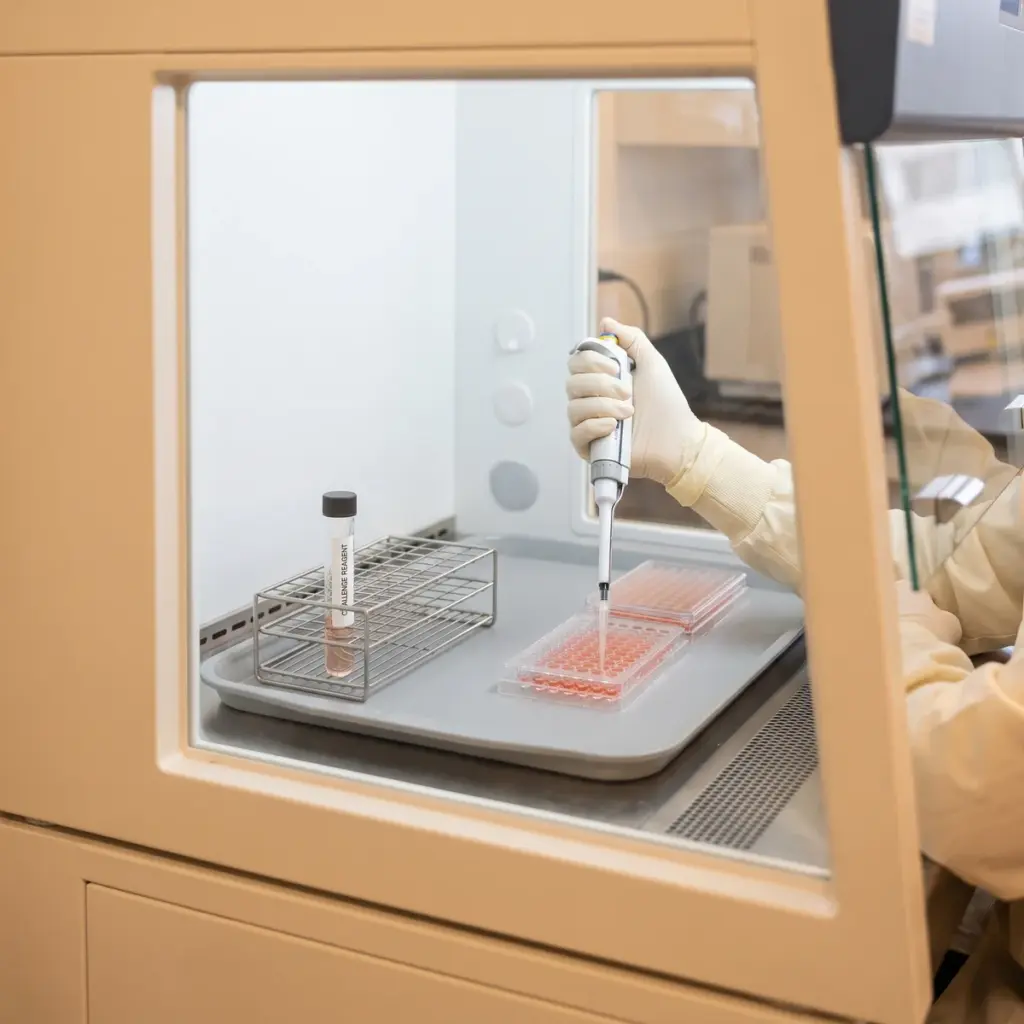
Keratinocytes and fibroblasts each carry a molecular clock built from a transcription-translation feedback loop. CLOCK and BMAL1 switch on PER and CRY genes, and the PER and CRY proteins then shut CLOCK and BMAL1 down until they are degraded and the cycle restarts. In culture, a synchronising cue such as a serum shock or dexamethasone aligns the cells so their rhythm can be measured.
Study modules
Clock genes expression profiling tracks BMAL1, CLOCK, PER and CRY transcripts over time and reports changes in amplitude, phase and period. PER/CRY regulation studies look closely at the negative arm of the loop. Cellular synchronisation studies, often with luciferase reporter cells, measure how well the population stays in step. Melatonin pathway testing covers receptor signalling in skin cells. Timing studies for repair and stress responses expose cells to UV or oxidative challenge at different phases.
Sampling and analysis
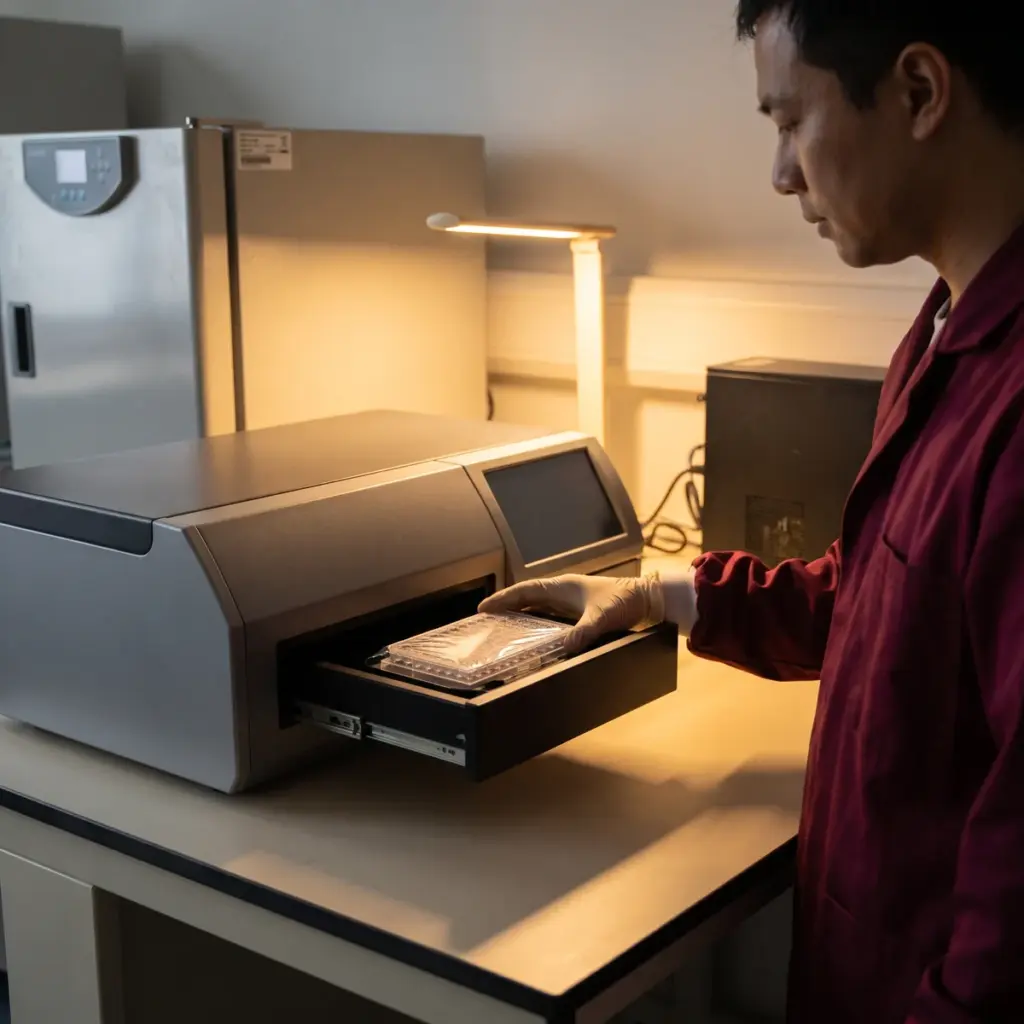
A typical design samples every few hours across at least one full cycle. Expression is measured by RT-qPCR or RNA sequencing, or continuously with a real-time luminescence recorder for reporter cells. Rhythm parameters are fitted with cosinor or similar analysis.
- Amplitude of clock-gene oscillation
- Phase and period
- Persistence of rhythm over successive cycles
- Phase-dependent repair and stress markers
Circadian study report
You receive time-course data, fitted rhythm parameters with statistics for treated and control cultures, and a conclusion on how the ingredient affected the clock and the phase-dependent responses measured.
Using circadian rhythm testing in chrono-cosmetic development
The circadian family has several modules, and the right combination depends on what your product promises.
Matching modules to the product
A night cream built on repair benefits is best supported by repair mechanisms timing data, which compares DNA repair or antioxidant recovery across phases. A product for people with irregular schedules needs evidence that the ingredient restores clock amplitude or synchronisation in cells whose rhythm has been flattened. A day-and-night system can draw on both. Start with clock-gene profiling to confirm activity, then add the module that matches your claim.
Skin-clock and overnight repair wording supported
The data supports ingredient wording such as ‘helps maintain the skin cell’s natural clock’ or ‘supports skin-cell rhythm of repair’. Brands combine it with a finished-product study on volunteers when the pack carries a visible overnight benefit.
Picking a circadian laboratory
Look for a provider that has already characterised the rhythm of its chosen cell model, including period and amplitude under its own synchronisation protocol. Real-time luminescence recording gives continuous data from a single culture and needs fewer plates than repeated harvesting. Ask how many time points the design covers and which rhythm-fitting method the statistician uses.
More in Skin Circadian Rhythm Studies
Skin Circadian Rhythm Studies track clock genes and timed repair in synchronised skin cells to show how day and night actives work with the skin clock.