Repair mechanisms timing overview
Do you provide Repair mechanisms timing?
Measuring repair mechanisms timing across the skin-cell clock
Nucleotide excision repair removes UV-induced DNA lesions such as cyclobutane pyrimidine dimers (CPDs) and 6-4 photoproducts. Base excision repair removes oxidised bases such as 8-oxo-guanine. The availability of repair factors, including XPA, varies over the circadian cycle, so the speed of repair depends on when damage occurs. A repair timing study measures that dependence and the ingredient’s effect on it.
Synchronised cells irradiated at two or more phases
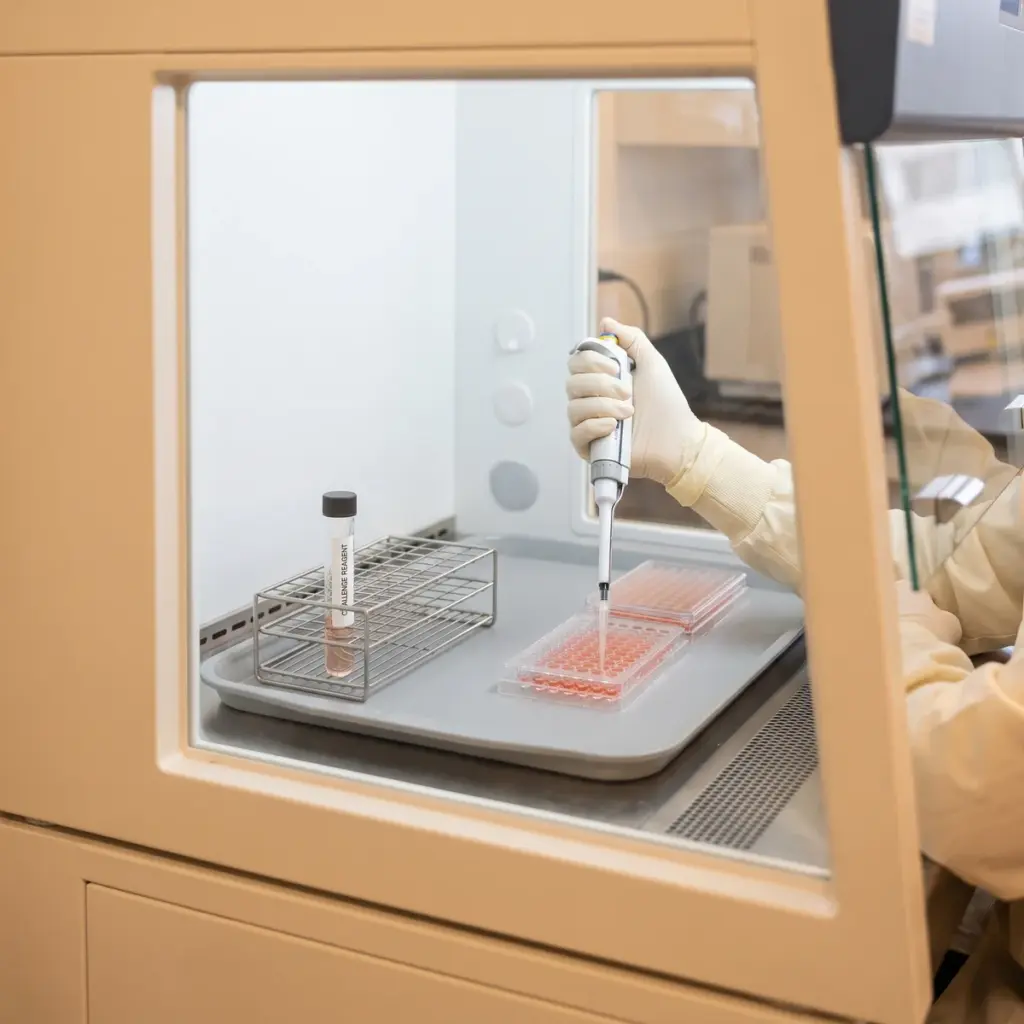
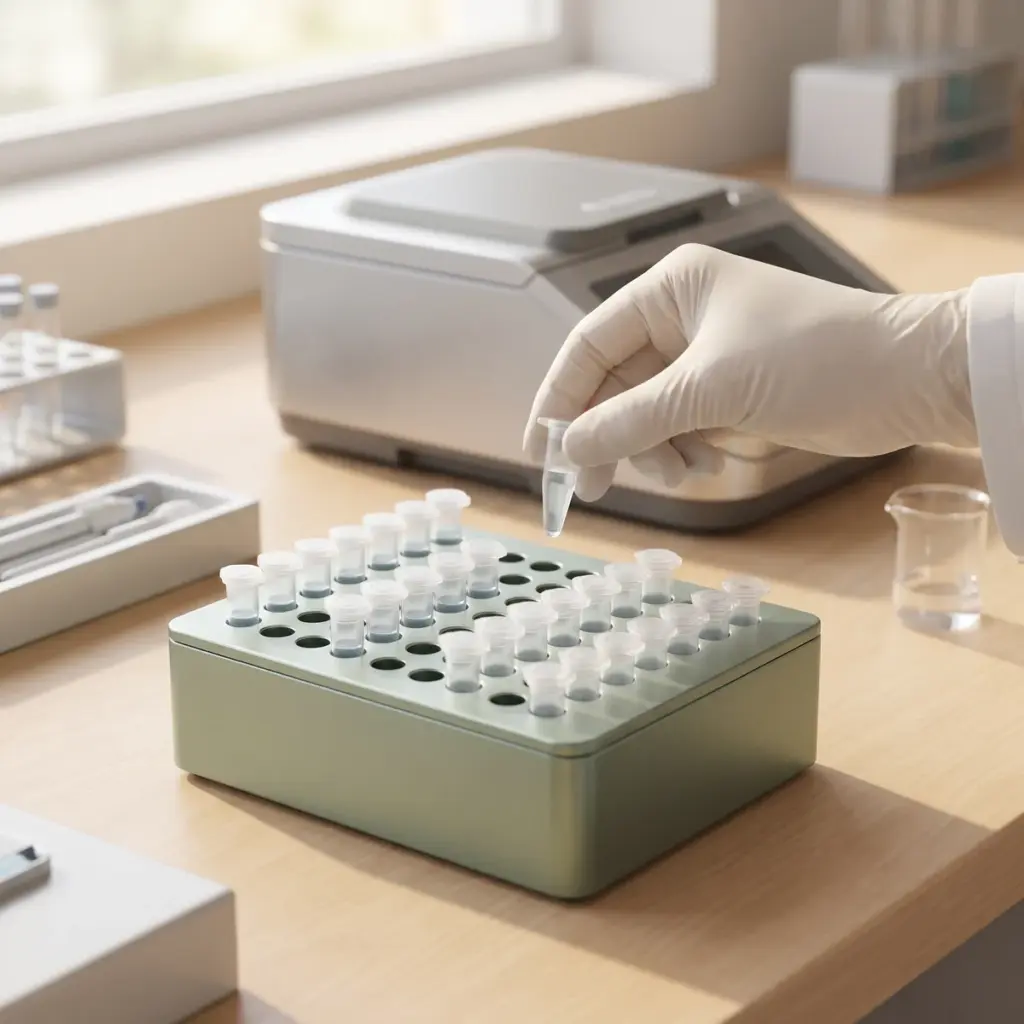
Keratinocytes, fibroblasts or reconstructed skin models are synchronised and treated with the ingredient or vehicle. Groups are irradiated with UVB or UVA, or exposed to an oxidant, at two or more phases. Cells are then harvested at several recovery times, from minutes to a day after the challenge, so a repair curve can be drawn for each phase and treatment.
Repair read-outs
- CPD and 6-4 photoproduct levels by ELISA or immunostaining
- DNA strand breaks by comet assay
- 8-oxo-guanine levels
- γ-H2AX foci as a marker of DNA damage signalling
- XPA and other repair gene expression by phase
Clock-gene expression is measured on parallel samples to confirm the phase of each challenge.
Repair kinetics report
The report plots residual damage against recovery time for each phase and treatment, gives repair half-times or the percentage of lesions removed at each time point, and tests the ingredient effect statistically. It shows at which phase repair is fastest and how much the ingredient adds.
Using repair mechanisms timing data for night repair products
For a night repair cream or serum, this study links the product concept to measured repair in skin cells. A result showing faster CPD removal in treated cells supports ingredient statements such as ‘helps skin cells repair UV-induced DNA damage’ and, where the effect is phase-dependent, ‘supports the skin’s natural night-time repair’. Brands then show the visible overnight result, such as smoother or more radiant-looking skin, in a separate study on volunteers.
Choosing damage type and repair phases
Decide on the type of damage that fits your claim. UV DNA lesions fit sun-recovery and photo-ageing products. Oxidative base damage fits anti-pollution and antioxidant ranges. Agree the number of phases and recovery time points with the laboratory, since each combination multiplies the sample count. Two phases, chosen from earlier clock genes expression data to cover the high and low points of repair factor expression, keep the design manageable.
Laboratory set-up to check
Ask for the UV source specification and how the dose is measured at the cell surface, because dose accuracy drives lesion levels. Check whether the laboratory runs its own CPD and 6-4 photoproduct antibodies with standard curves, and whether it can stain reconstructed skin sections when you want repair measured in a tissue model.
More in Skin Circadian Rhythm Studies
Skin Circadian Rhythm Studies track clock genes and timed repair in synchronised skin cells to show how day and night actives work with the skin clock.