Melatonin pathway overview
Do you provide Melatonin pathway?
What melatonin pathway testing measures in skin cells
Skin makes its own melatonin. Serotonin is converted by arylalkylamine N-acetyltransferase (AANAT) and then by acetylserotonin O-methyltransferase (ASMT). Melatonin acts on the MT1 and MT2 receptors, which are coupled to inhibitory G proteins and lower intracellular cAMP when activated. Melatonin is also a direct antioxidant, and its metabolites such as AFMK scavenge further radicals. A pathway study picks the part of this system that matches the ingredient’s proposed action.
Assay options
- MT1 and MT2 gene and protein expression
- Receptor activation measured as reduced forskolin-stimulated cAMP
- AANAT and ASMT expression
- Melatonin and AFMK levels by ELISA or LC-MS
- NRF2 activation and antioxidant enzyme expression
Receptor signalling design
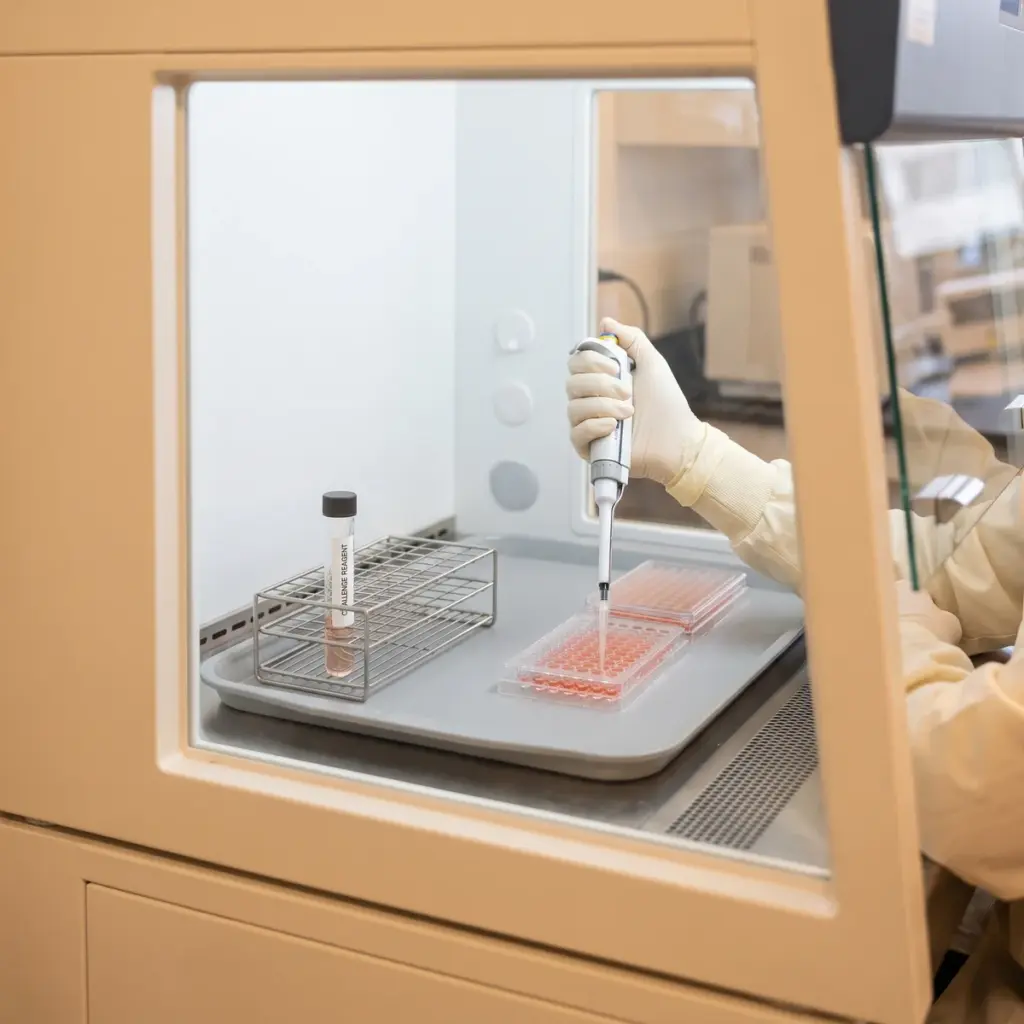
For an ingredient expected to act like melatonin, the laboratory stimulates cAMP production with forskolin and measures how far the test material brings it down, with melatonin as the positive control. A receptor antagonist such as luzindole confirms that the effect runs through MT1 or MT2. Reporter cell lines expressing a single receptor separate MT1 from MT2 activity.
Combined circadian designs
Melatonin signalling can be measured in synchronised cultures alongside clock genes, which shows whether receptor activation shifts the cell’s rhythm. Oxidative challenge with UV or hydrogen peroxide tests the antioxidant arm.
Melatonin pathway data delivered
You receive the protocol, quantified receptor, enzyme or signalling data with statistics against vehicle and melatonin controls, and a conclusion on which part of the pathway the ingredient engaged.
Building a night-care claim on melatonin pathway data
The study is most useful for ingredients whose positioning links them to the skin’s own night-time chemistry. A botanical said to act like melatonin needs receptor signalling data with an antagonist control. An ingredient said to raise the skin’s own melatonin needs synthesis enzyme and melatonin level data. An antioxidant claim draws on the NRF2 and enzyme read-outs under oxidative challenge.
Claim wording the results support
Results support ingredient statements such as ‘activates melatonin receptors in skin cells’ or ‘stimulates the skin’s own melatonin production’. Brands keep these as mechanism support for a night product and measure any visible overnight effect, such as radiance or a rested look, in a separate study on volunteers.
Adding timing to the study
Melatonin is the body’s night signal, so pairing receptor data with clock genes expression profiling shows whether the ingredient also moves the skin-cell clock. For a fuller chrono-cosmetic dossier, the receptor study can sit inside a wider circadian rhythm efficacy testing programme. Ask the laboratory whether its cell model expresses both receptors at measurable levels before you commission the signalling work.
More in Skin Circadian Rhythm Studies
Skin Circadian Rhythm Studies track clock genes and timed repair in synchronised skin cells to show how day and night actives work with the skin clock.