PER/CRY gene regulation overview
Do you provide PER/CRY gene regulation?
Studying PER/CRY gene regulation in synchronised skin cells
CLOCK and BMAL1 switch on PER and CRY genes during the cell’s active phase. The PER and CRY proteins build up, pair, move into the nucleus and shut down CLOCK and BMAL1 activity. They are then tagged and degraded, which releases the brake and starts the next cycle. Changes in PER or CRY level or stability can therefore advance, delay or shorten the whole rhythm.
Gene and protein measurements
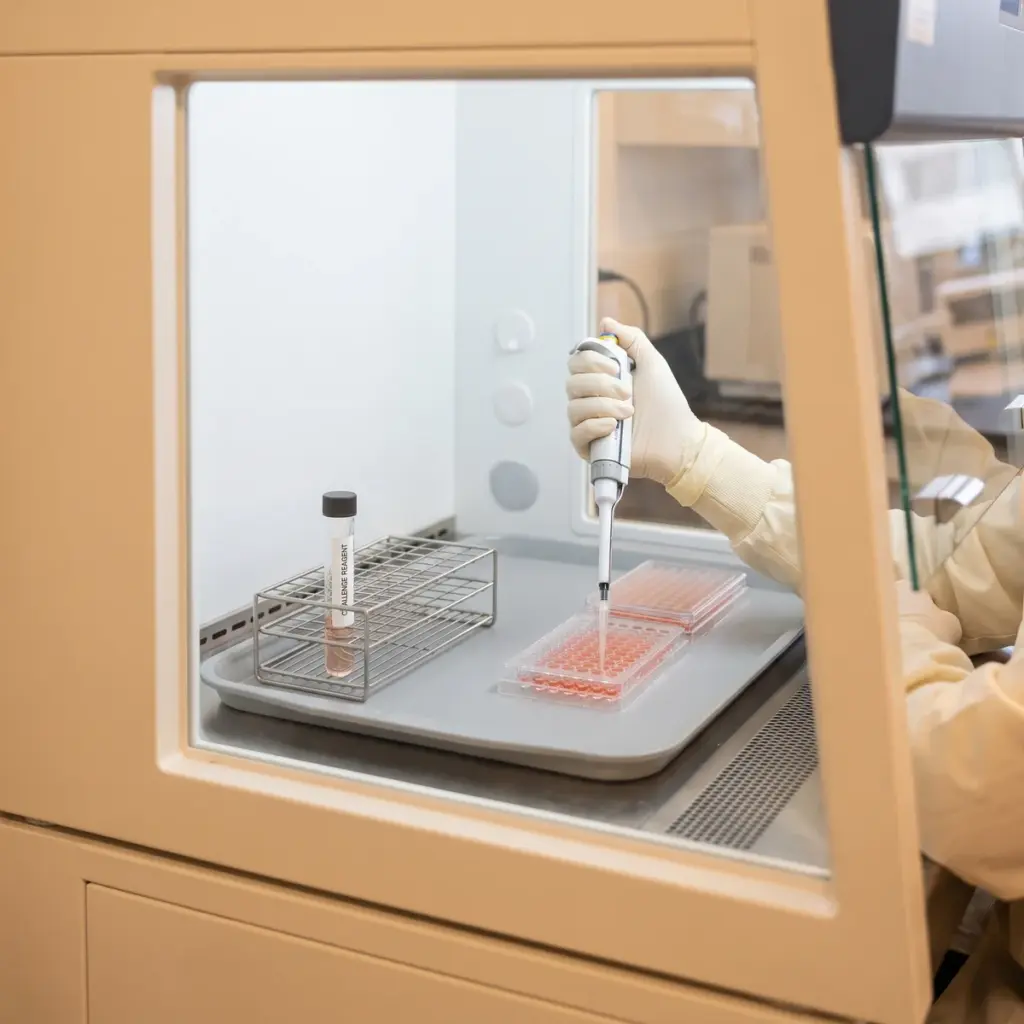
Synchronised keratinocytes or fibroblasts are treated and harvested at regular intervals over at least one cycle. RT-qPCR quantifies the main transcripts, and Western blot or immunofluorescence follows the proteins and their nuclear entry. A PER2 promoter luciferase reporter gives a continuous readout from a single culture.
- PER1 and PER2 transcript rhythms
- CRY1 and CRY2 transcript rhythms
- PER and CRY protein levels by time point
- Peak phase and amplitude for each gene
Protein stability and timing
When an ingredient is expected to act on protein turnover, a cycloheximide chase measures how quickly PER or CRY protein disappears once new synthesis stops. Slower turnover tends to lengthen the cycle. This detail explains a phase or period shift seen at gene level.
PER/CRY results package
The report presents expression and protein time courses for treated and control cultures, fitted rhythm parameters with statistics, any stability data and the full synchronisation and sampling protocol.
PER/CRY gene regulation data in an ingredient development plan
Commission a PER/CRY study when broader clock genes expression profiling has already pointed at the repressive arm, or when your ingredient is designed around a known PER or CRY mechanism. The focused design delivers more time points and protein data for the same budget, which makes the conclusion on phase and amplitude firmer.
Linking the clock brake to skin function
PER and CRY control the timing of many output genes, including those for DNA repair and antioxidant defence. A result showing a stronger or better-timed PER/CRY rhythm becomes more useful when it is followed by a functional readout. Stress response timing studies measure how cells handle UV or oxidative challenge at different phases and show the practical effect of the clock change.
Information a laboratory needs
Tell the provider which genes matter most for your mechanism, whether you need protein data as well as transcripts, and the concentrations to test. If you hold earlier clock-gene results, share them so the sampling plan concentrates time points around the expected PER and CRY peaks.
More in Skin Circadian Rhythm Studies
Skin Circadian Rhythm Studies track clock genes and timed repair in synchronised skin cells to show how day and night actives work with the skin clock.