Repeat-insult patch (HRIPT) overview
Do you provide Repeat-insult patch (HRIPT)?
How the HRIPT repeat-insult patch protocol works
The HRIPT copies the way contact allergy develops. The first exposures can prime the immune system without any visible sign. A later exposure, on skin that has never been patched, reveals whether priming has taken place. The study is therefore built in three phases.
Induction phase
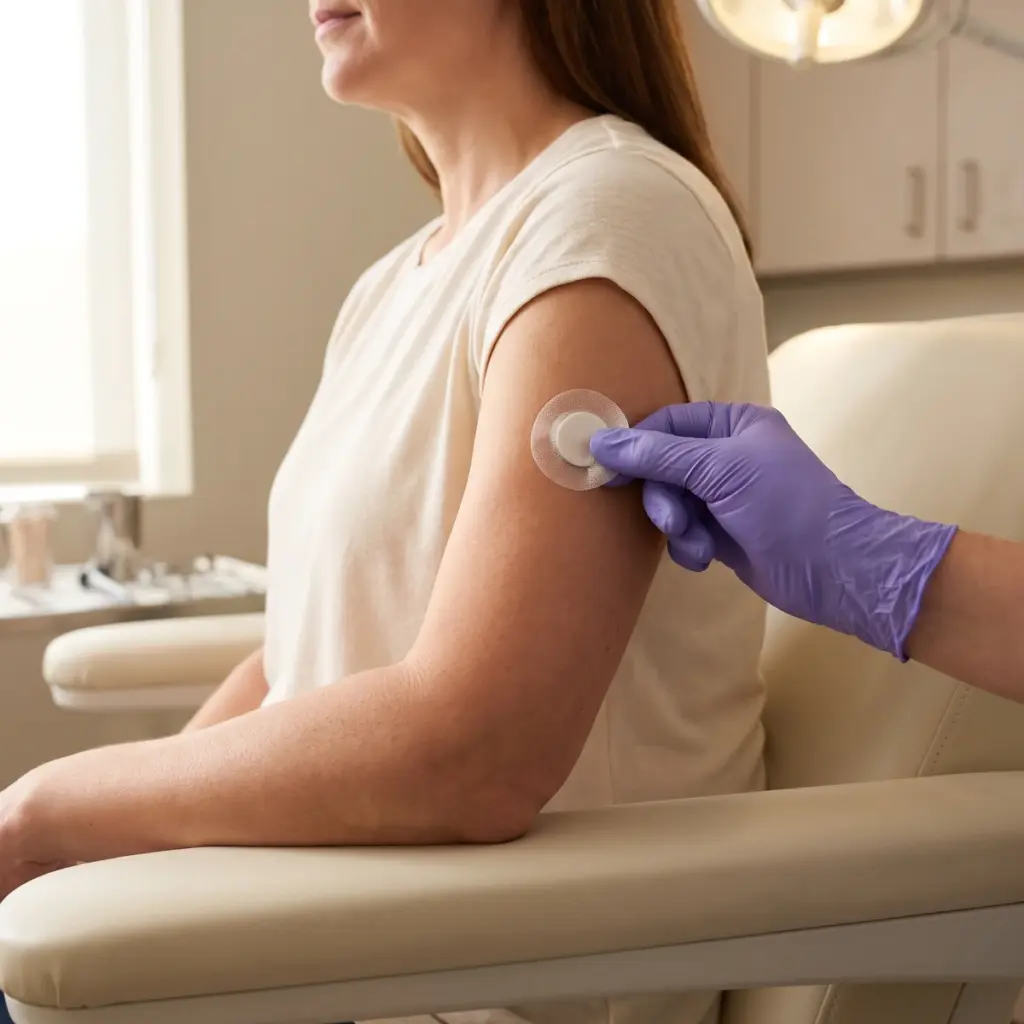
The product is applied under a patch to the same site, usually on the back, at fixed intervals. Each patch stays on for a set time, is removed and the site is graded before the next application. Patches are occlusive or semi-occlusive depending on the product: a rinse-off cleanser is often diluted or patched semi-occluded, a leave-on cream is usually applied neat.
Rest period
A rest period with no applications follows. This interval gives any sensitisation time to develop before the skin is exposed again.
Challenge phase
The product is applied again under the same conditions, this time to a virgin site as well as the original one. The site is read at intervals after removal so that delayed reactions are caught. A reaction that appears at challenge but was absent in induction is reviewed by the investigator, and a re-challenge may be arranged to confirm it.
Grading and the final report
Erythema, oedema and other skin changes are scored on a defined scale at every reading. The report gives you:
- identity of the tested batch and how it was applied
- panel description, completion and withdrawals
- score tables for each induction and challenge reading
- description of any irritant or suspected allergic reaction
- the investigator’s conclusion on sensitisation potential
Using HRIPT results in your safety and claims file
An HRIPT report is read by two audiences: the safety assessor who signs off the product and the team writing the pack copy.
Where the study sits in the safety sequence
An HRIPT is the human confirmation step. It comes after the ingredients have been assessed and, for new materials, after in vitro work such as the skin sensitisation assessment pathway has characterised the hazard. The safety assessor uses the HRIPT outcome in the product safety report, and the marketing team uses it for allergy-related wording.
Deciding exposure conditions
The patch conditions need to reflect how the product is used. Tell the provider whether the product stays on the skin or is rinsed off, how much is applied, and whether it contains volatile solvents or high surfactant levels. These answers decide dilution and occlusion, and a well-chosen set-up keeps irritation from masking the sensitisation reading.
Selecting a patch-test clinic
Look for a clinic with its own recruitment base, so panels fill quickly and drop-out stays low. Ask how virgin-site challenge is handled, who grades the readings, and whether a dermatologist reviews every suspected reaction. If you also want a dermatologist-tested statement for daily use, the same provider can often add a dermatologist-supervised tolerance assessment.
More in Human Tolerance Testing
Human tolerance testing checks how skin and eyes respond to a cosmetic on volunteers, through patch tests and supervised in-use studies.