Skin Irritation Testing overview
Do you provide Skin Irritation Testing?
How skin irritation testing on reconstructed epidermis works
Irritation is direct, non-immune damage to skin cells. Reconstructed human epidermis reproduces the layered structure of the outer skin, including a functional stratum corneum, so a material applied to its surface meets a barrier much like the one on a person. The method is described in OECD Test Guideline 439 and is accepted for hazard classification.
Test procedure
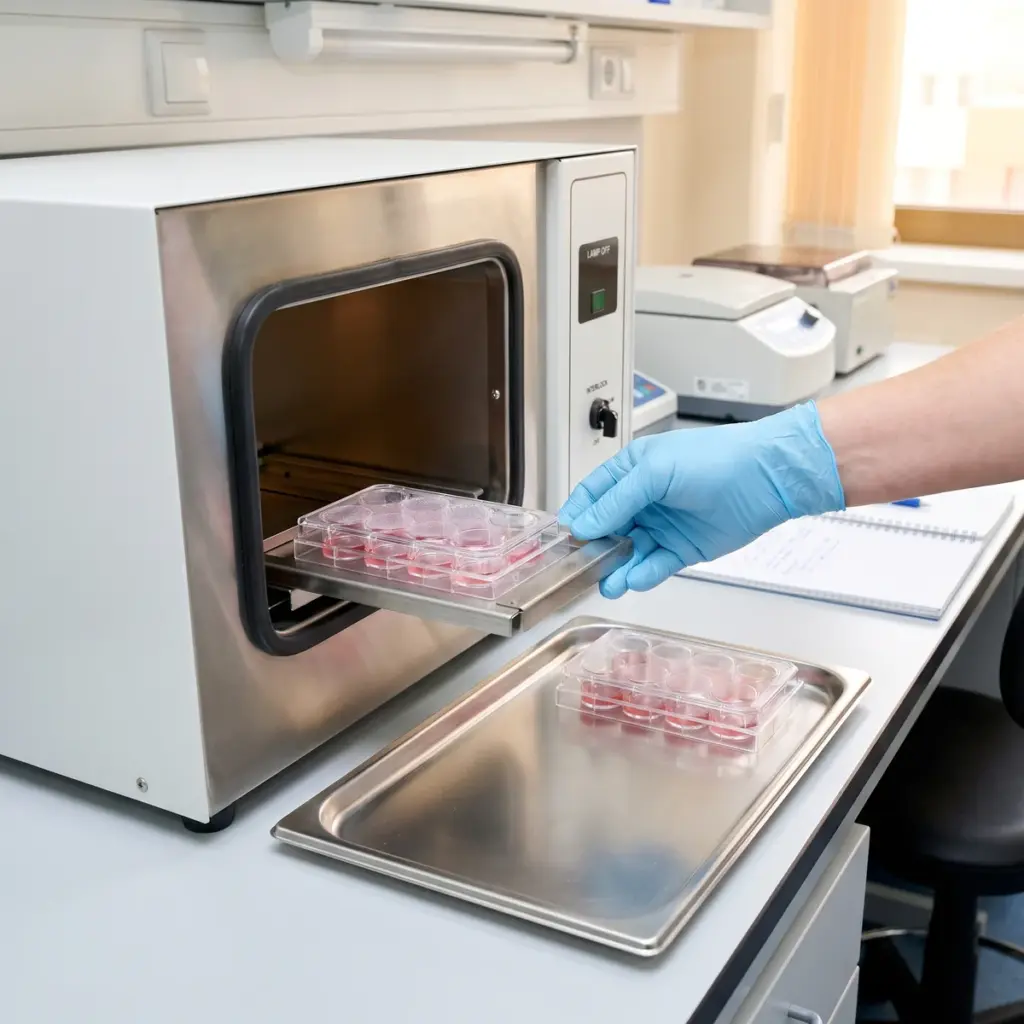
- Tissues are equilibrated in culture medium on receipt.
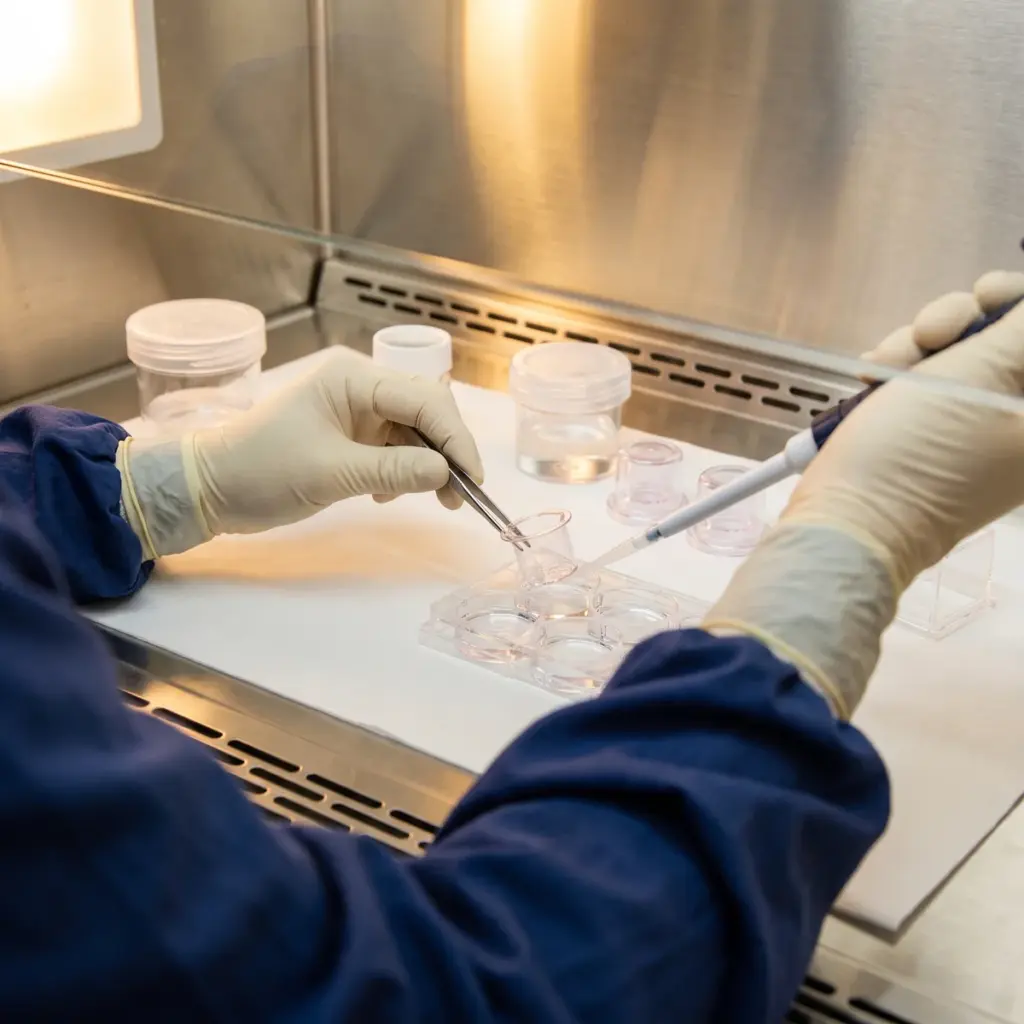
- The test material is applied neat to the tissue surface, in triplicate, along with a negative control and a positive control.
- After the set exposure period the tissues are rinsed and returned to fresh medium for a recovery period.
- Viability is measured by MTT conversion and extracted dye is read in a spectrophotometer.
Prediction model
Mean tissue viability is expressed as a percentage of the negative control. Under OECD TG 439, a viability at or below the method’s cut-off classifies the material as an irritant (UN GHS Category 2), and a viability above it indicates no classification. Materials that colour the tissue or reduce MTT themselves are run with extra control tissues, so the reading reflects living cells only.
Reliability checks
Every run has to meet acceptance criteria for the controls and for variability between replicate tissues. The tissue batch comes with quality data from the manufacturer, including barrier function, which the laboratory records.
Tissue viability and classification in the report
You receive a study report with the test item details, the tissue model and batch, the protocol, individual and mean viability values, control results and the classification. Studies run under good laboratory practice include a quality assurance statement, which regulators and safety assessors expect for regulatory dossiers.
Using skin irritation testing in your safety programme
An irritation result is usually needed once per ingredient, so it pays to get the material choice and the provider right the first time.
Which materials to test
The method is best suited to single substances and raw materials: new actives, surfactants, solvents, acids and preservatives. Results feed classification and labelling of the ingredient and the toxicological safety assessment of any product that contains it. Finished formulations can be tested too, when the laboratory confirms that the product form is compatible with the method.
Epidermis model and GLP status to check
Ask which validated epidermis model the laboratory uses and how long it has run it, since technical proficiency with the tissues affects reliability. Check whether studies are run under good laboratory practice if the result will go into a regulatory dossier. For coloured or reducing materials, confirm that the laboratory routinely runs the extra controls. Laboratories that also offer eye irritation testing can often schedule both studies on the same sample.
From irritation data to volunteer studies
A non-irritant result on the ingredient gives the safety assessor grounds to move the finished product into supervised use studies on volunteers. Those studies then provide the human tolerance data for claims on pack.
More in In Vitro & In Chemico Safety Testing
In vitro and in chemico safety testing uses cell cultures, tissue models and chemical assays to identify irritation, sensitisation and phototoxic hazards.