Cytotoxicity assays

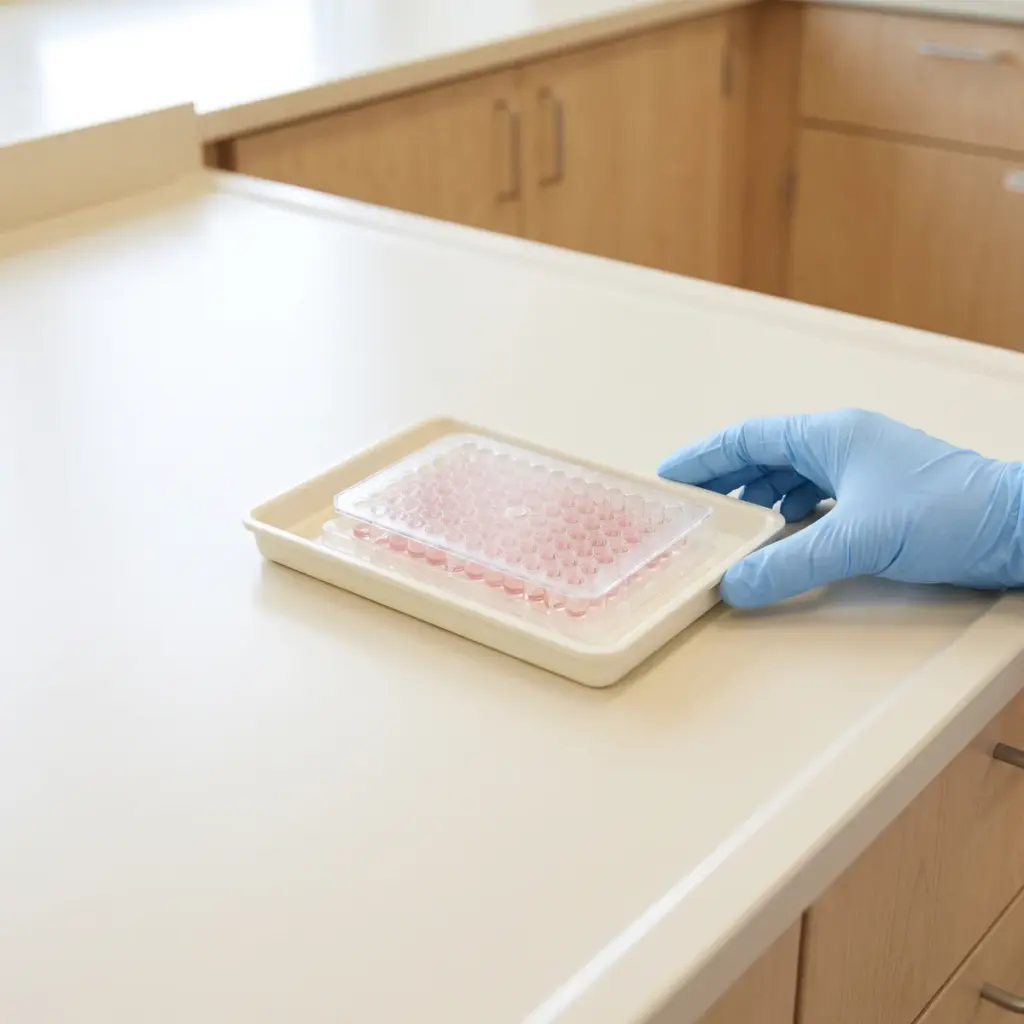
What is Cytotoxicity assays?
Cell-viability and concentration-response data; not a complete safety conclusion.
Why do you need this service?
Cytotoxicity assays investigate cell viability or damage after exposure to a test material. Use them for concentration selection and hazard-related investigation while recognising that cellular tolerance does not establish overall product safety.
Who provides Cytotoxicity assays services?
Companies linked to Cytotoxicity assays or a more specific service
Hoynoza Technologies
Choose us for our unwavering commitment to pioneering innovative exosomes and liposomes based biotechnological solutions and prioritizing skincare.Cytotoxicity assays for cosmetics
Cytotoxicity testing examines cellular responses to a test material under controlled exposure conditions. The cell model, preparation method and exposure duration determine what the result can support. It is useful for comparing candidates and selecting concentrations for further studies.
Viability and damage endpoints
- MTT and XTT assays measure metabolic reduction of indicator compounds.
- Neutral red uptake assesses dye accumulation associated with lysosomal function.
- LDH release indicates loss of cell membrane integrity.
- ATP-based assays estimate viable cell activity through luminescence.
Colored, reducing or otherwise interfering formulations may distort assay signals. Appropriate blanks and controls are needed to separate biological effects from analytical interference.
Study design and interpretation
Keratinocytes, fibroblasts or other cell types may be chosen according to the question. Raw materials, botanical extracts, preservatives and finished products can require different preparation and dilution procedures. A concentration-response curve may yield an IC50, meaning a concentration that reduces the measured response by half, not necessarily one that causes exactly half the cells to die.
Reports should document controls, replicates, exposure conditions and limitations. Results guide further safety assessment rather than serving as proof of clinical tolerability or product efficacy.
Using cell-viability findings
Select the cell model, exposure and assay for the material and question. Metabolic, membrane-damage and other viability endpoints provide different information. Coloured or reactive ingredients can interfere with the signal and need suitable controls.
Concentration-response data can identify conditions for further work in that model. They do not directly determine safe human-use concentrations, since exposure and intact tissue behaviour differ from the assay setting.
A wider safety assessment considers the ingredient, formulation, intended use and other relevant hazards. ISO 10993-5 addresses medical-device cytotoxicity; any use or adaptation for cosmetic research needs a justified scope rather than presentation as a universal cosmetic safety protocol.
Investigate cosmetic hazards using cell and tissue methods for cytotoxicity, irritation and sensitisation, as inputs to a broader safety evaluation. Explore another In Vitro & In Chemico Safety Testing page on cosmetic-labs.com.