3T3 NRU Phototoxicity Testing overview
Do you provide 3T3 NRU Phototoxicity Testing?
How 3T3 NRU Phototoxicity Testing measures light-induced toxicity
Phototoxicity happens when a substance on or in the skin absorbs light energy and damages cells as a result. The 3T3 NRU method reproduces that sequence in culture. It compares two concentration-response curves for the same substance, one with light and one without, and asks how much light increases its toxicity.
Prerequisite: light absorption
A substance must absorb light in the solar range to be phototoxic. Before testing, the laboratory or the supplier records the UV and visible absorption spectrum. Substances that absorb too little in that range can be considered without the cell assay, which saves an unnecessary study.
Assay procedure
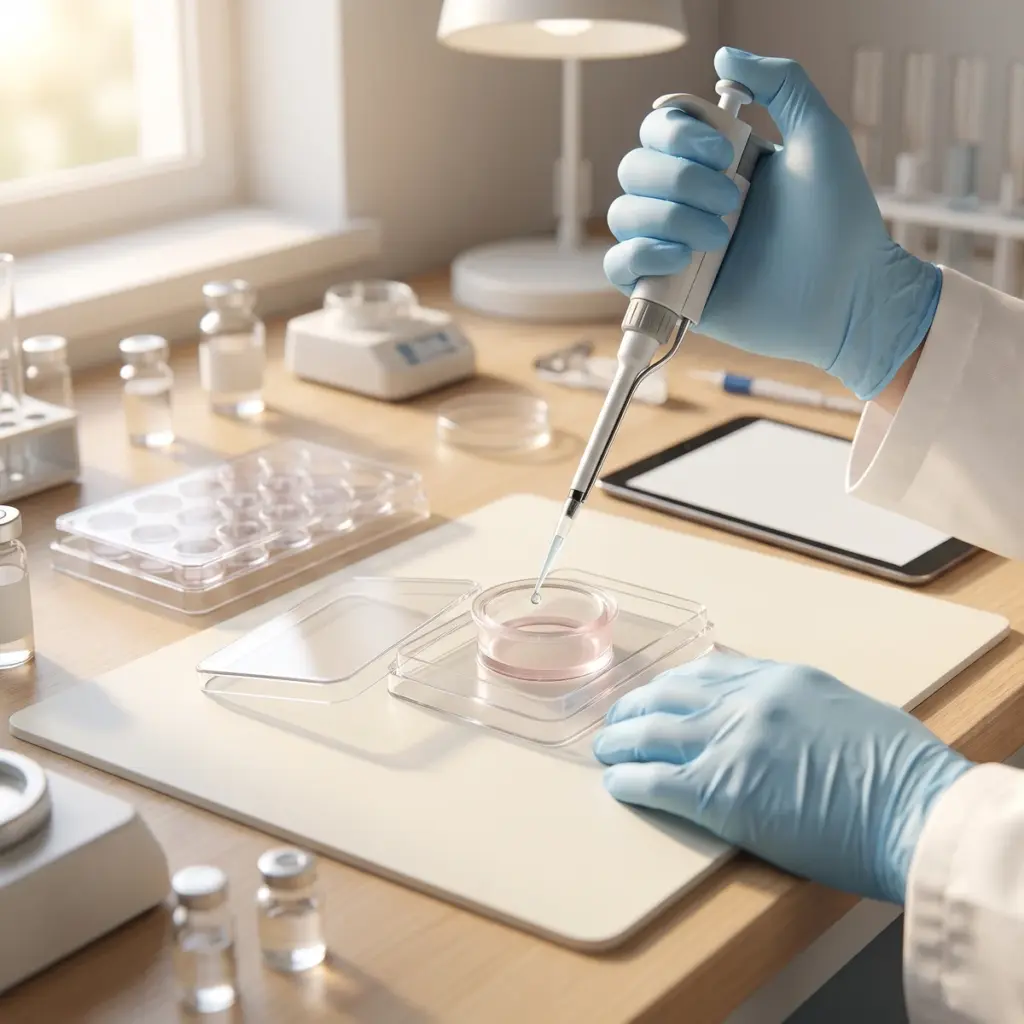
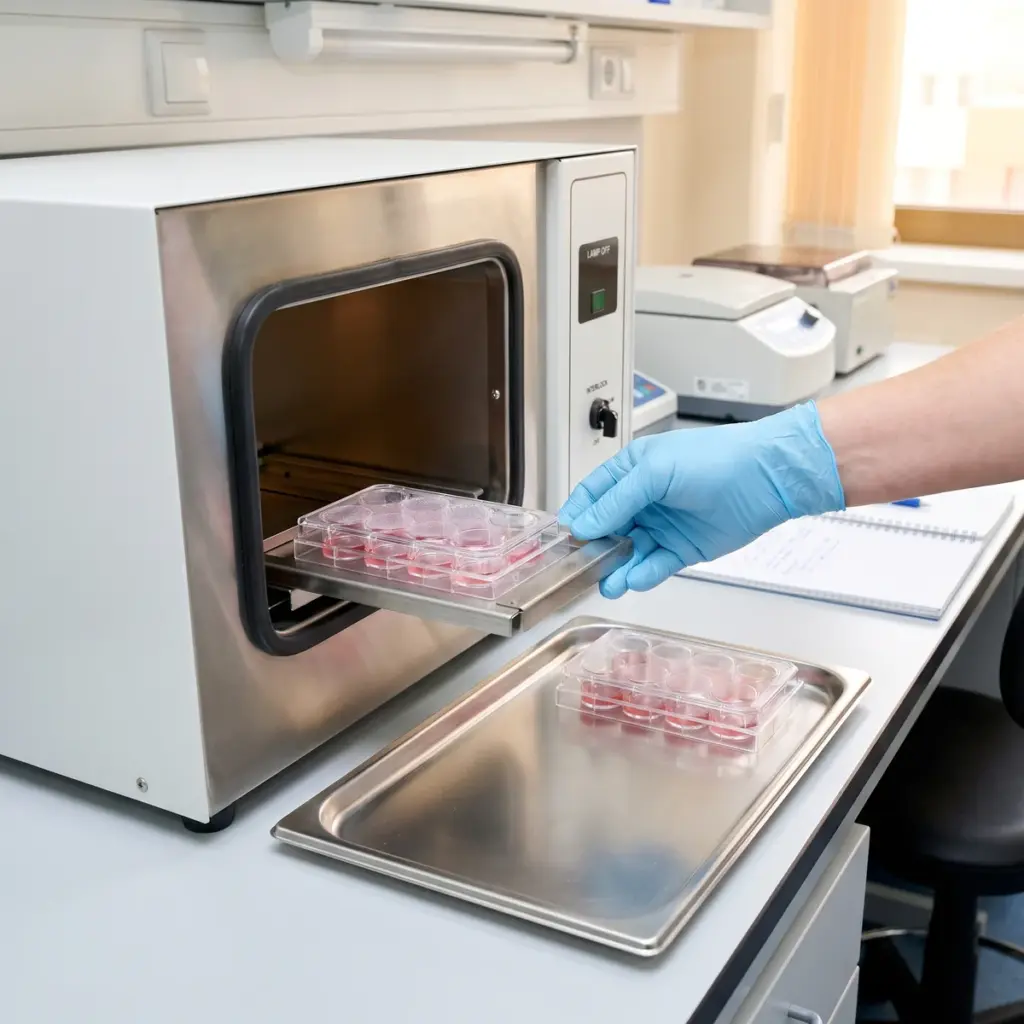
- Balb/c 3T3 fibroblasts are seeded in two 96-well plates and grown overnight.
- Both plates receive the same series of test concentrations.
- One plate is irradiated with a solar simulator filtered to remove short-wavelength UVB, at a defined UVA dose. The other is kept in the dark.
- After a further incubation, neutral red dye is added. Living cells take it up into their lysosomes, and the extracted dye is read in a spectrophotometer.
Calculating the result
Viability curves from the irradiated and dark plates are compared. The photo-irritation factor (PIF) is the ratio of the IC50 values without and with light. Where no IC50 can be reached, the mean photo effect (MPE) compares the full curves. Both have cut-offs in the guideline that classify the substance as not phototoxic, probably phototoxic or phototoxic. A positive control, usually chlorpromazine, confirms each run.
Viability curves, PIF and MPE reported
The report includes the absorption spectrum, irradiation conditions and dosimetry, both viability curves, the PIF or MPE, the control results and the prediction.
When to order 3T3 NRU Phototoxicity Testing
The test answers one question about one ingredient, so ordering it at the right point saves both money and time.
Ingredients worth testing
The question usually arises for light-absorbing natural materials. Citrus peel oils such as bergamot can contain furocoumarins, which are known phototoxic constituents, and their content depends on the extraction and any treatment applied. New botanical extracts, synthetic colourants and novel actives with conjugated ring structures are also typical candidates. An absorption spectrum in your existing data is often enough for the laboratory to say whether a test is needed.
Getting a usable result
The method works with substances that dissolve in the culture medium or an accepted solvent at the test concentrations. Give the laboratory the solubility, purity and absorption data in advance. For extracts and mixtures, ask how they will choose concentrations and whether the extract’s colour could interfere with the neutral red reading. A good provider will show you calibration records for the solar simulator and historical control data for chlorpromazine.
How the result is used
The prediction goes into the toxicological safety assessment, where the assessor sets the use level or restricts the ingredient to rinse-off products when the result is positive. Photoallergy is a separate, immune-mediated question, handled through skin sensitisation assessment approaches and expert review.
More in In Vitro & In Chemico Safety Testing
In vitro and in chemico safety testing uses cell cultures, tissue models and chemical assays to identify irritation, sensitisation and phototoxic hazards.