Franz cell diffusion testing overview
Do you provide Franz cell diffusion testing?
How Franz cell diffusion testing works
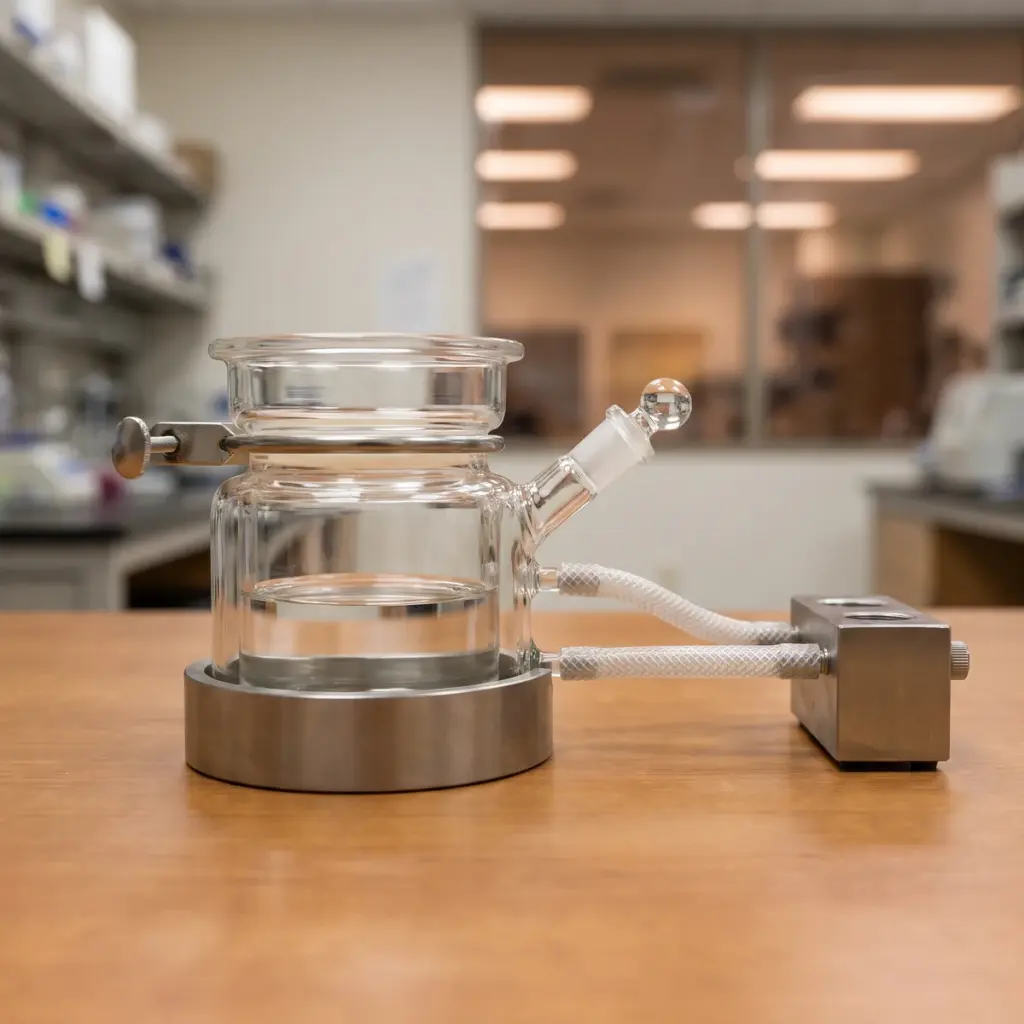
The Franz cell is the standard apparatus for in vitro permeation work. It has a donor compartment open to the formula, a clamped membrane and a jacketed receptor compartment with a sampling arm and a magnetic stirrer. Laboratories usually run banks of cells in parallel so that each formula is tested in replicate.
Choosing the membrane
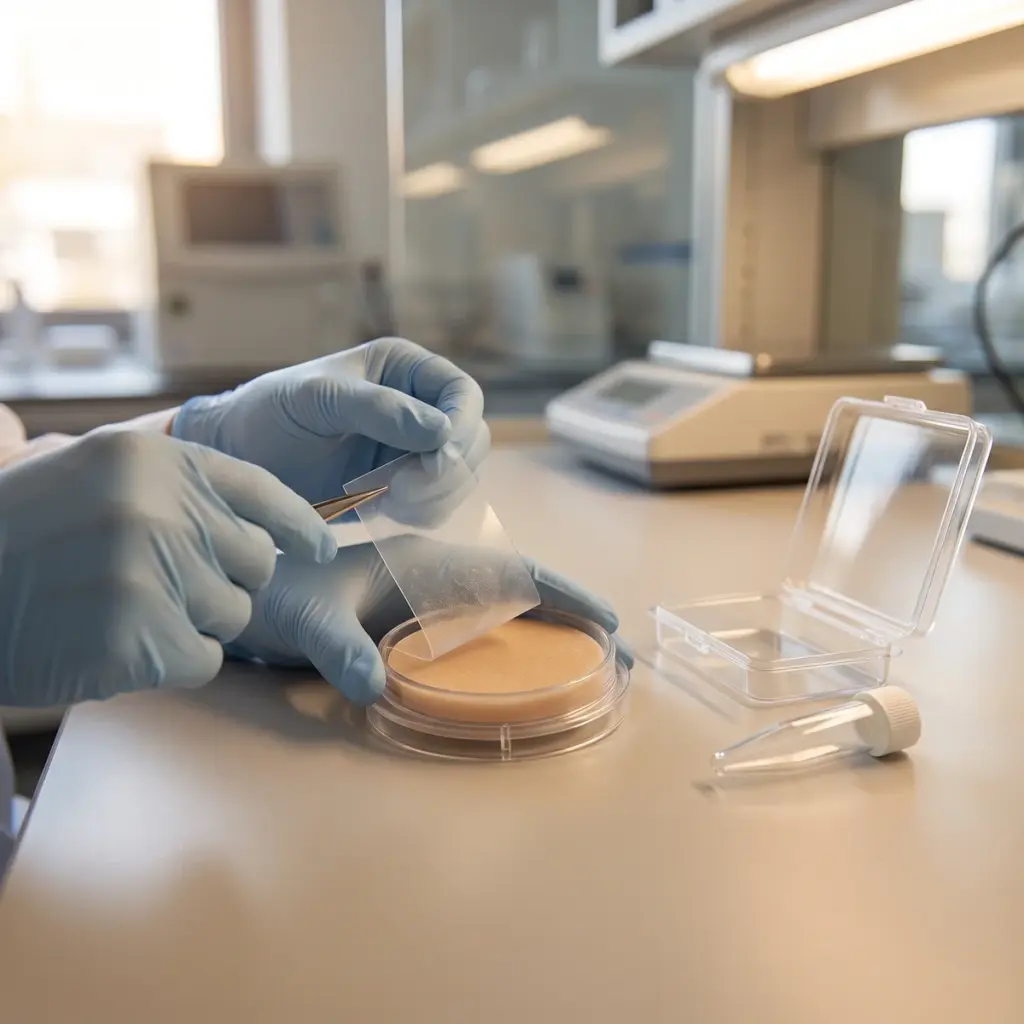
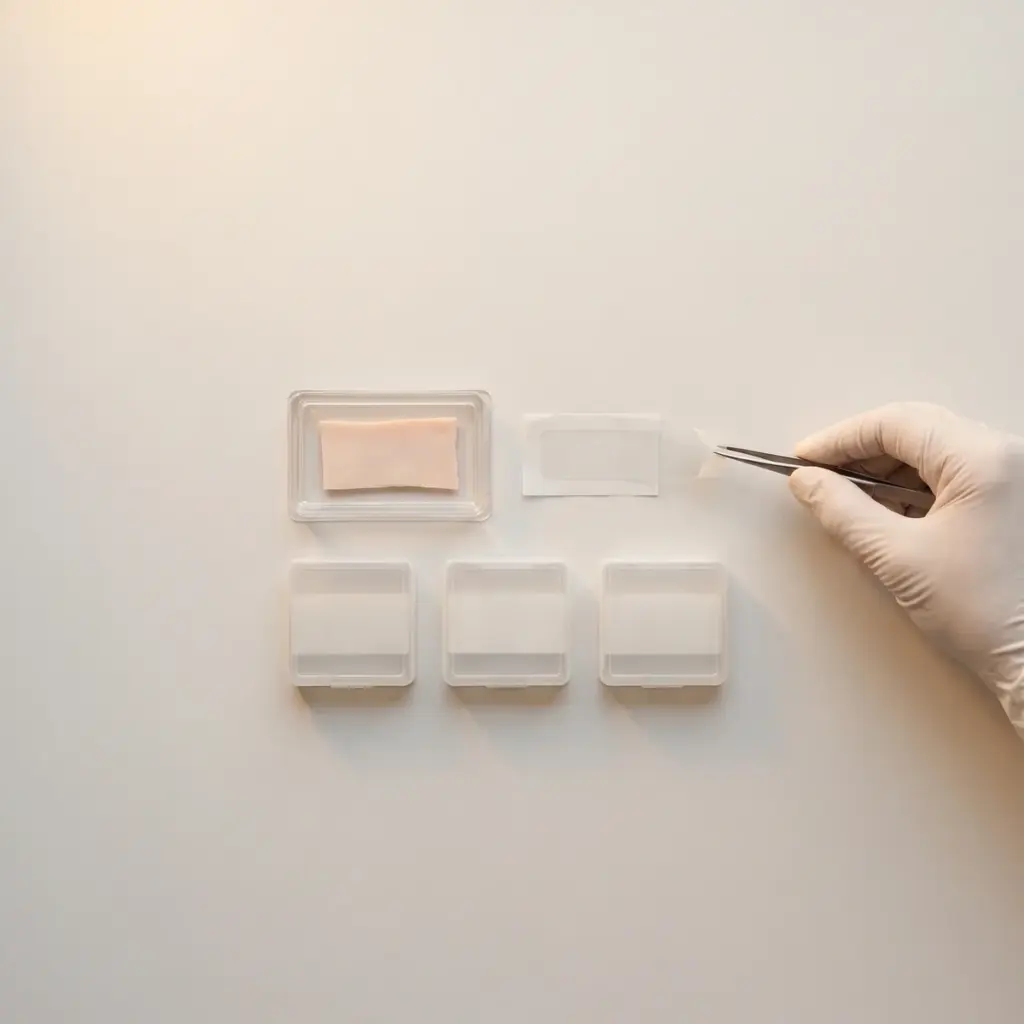
The membrane decides what the study measures. Excised human or animal skin, dermatomed to a set thickness and checked for barrier integrity, gives permeation through a real stratum corneum. A synthetic membrane gives the release rate from the formula alone. Some projects use both, so release and permeation can be read side by side.
Running the study
- Application of a defined dose to each donor compartment
- Receptor fluid held near skin surface temperature and stirred
- Receptor medium chosen to keep the active soluble
- Timed receptor sampling with volume replacement
- Quantification by HPLC or LC-MS with documented recovery
Flux, lag time and permeability coefficient results
The receptor data give the cumulative amount permeated per square centimetre at each time point. From the linear part of that curve the laboratory calculates steady-state flux and lag time, and where the dose is known, a permeability coefficient. Formula variants are compared on these values. On request, the skin is recovered at the end and the surface wash and tissue are extracted, which turns the study into a mass-balance experiment. The final report gives the protocol, membrane details, integrity results, raw and calculated data and the statistical comparison between test items.
Planning a Franz cell diffusion study for your formula
A well-briefed Franz cell study gives you comparable permeation figures for every formula in one run.
Questions it answers well
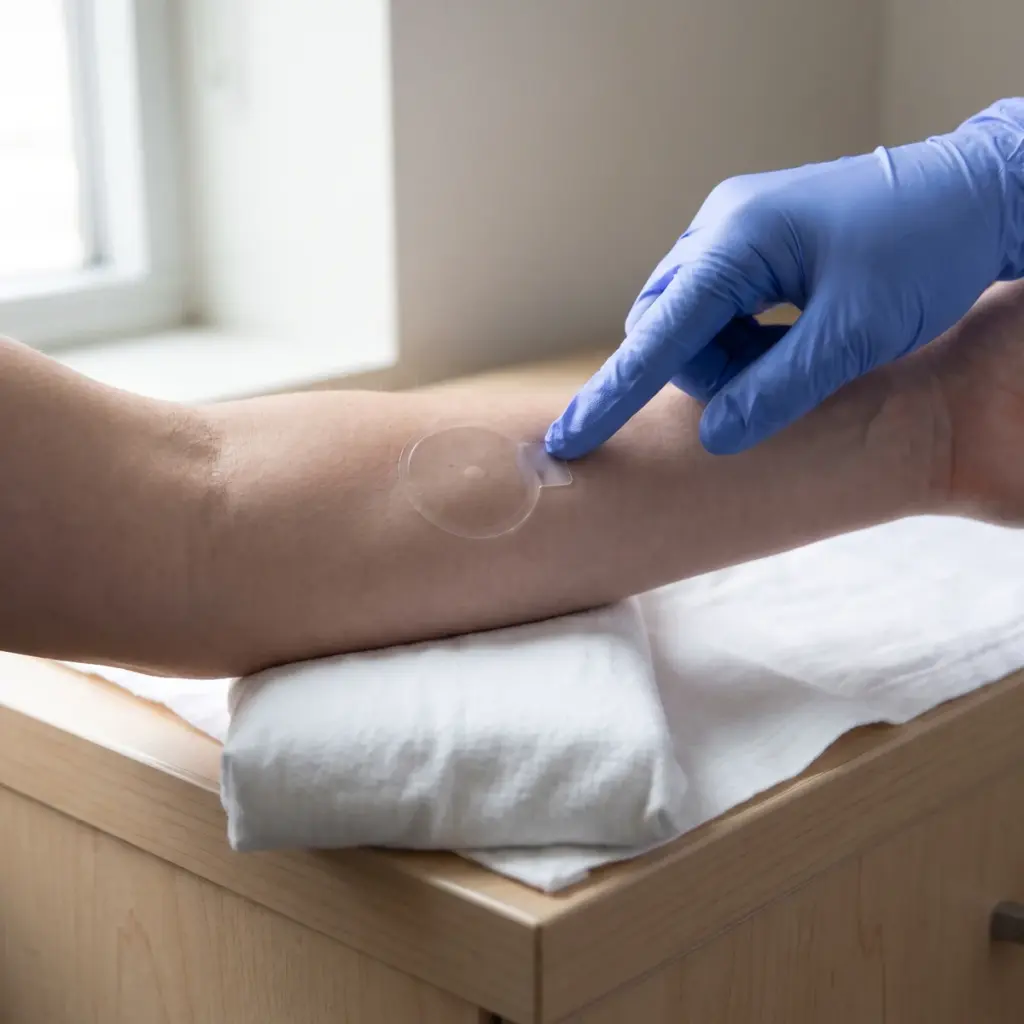
Franz cells are at their best for comparisons. Two emulsions carrying the same niacinamide level, a gel against a serum, or a free active against an encapsulated one can be ranked on flux under identical conditions. The data support formula selection and give a permeation figure you can put in a technical file. For a full breakdown of where the dose ends up, including surface and skin fractions, ask for skin absorption profiling.
Active, membrane and dose details to send
Give the laboratory the active you want to follow, its expected concentration in each formula and any existing analytical method. State the membrane you want (human skin, porcine skin or synthetic), the dose, the study duration and the number of replicates. Mention if the formula contains other ingredients that may co-elute with the active, since the method may need adjustment.
Skin sourcing and integrity testing to check
Ask how the laboratory sources and stores skin, which integrity test it uses (transepidermal water loss or electrical resistance are common) and how it validates the receptor-fluid assay. Laboratories that also run tape stripping or tissue separation can extend the same study into skin layer distribution without a second set of cells.
More in Skin Absorption Studies
Skin absorption studies measure how much of a cosmetic ingredient is released, enters the skin and reaches each layer after application.