Ingredient Release-Rate Studies overview
Do you provide Ingredient Release-Rate Studies?
How ingredient release-rate studies measure time-release from a formula
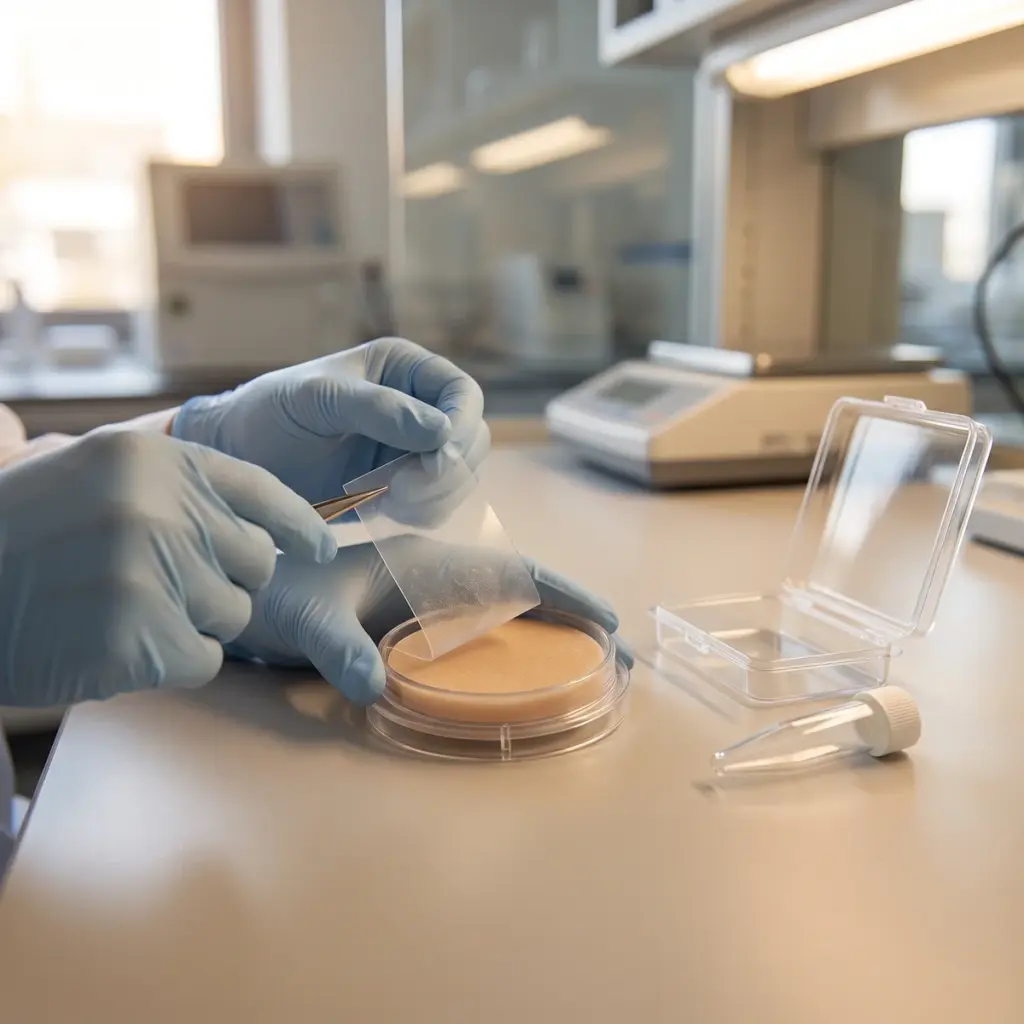
A release study isolates one question, which is how quickly the vehicle lets go of the active. Skin is left out on purpose. The formula is placed on an inert synthetic membrane, and the membrane and medium are chosen so that the formula itself sets the pace of release.
Test set-up and sampling
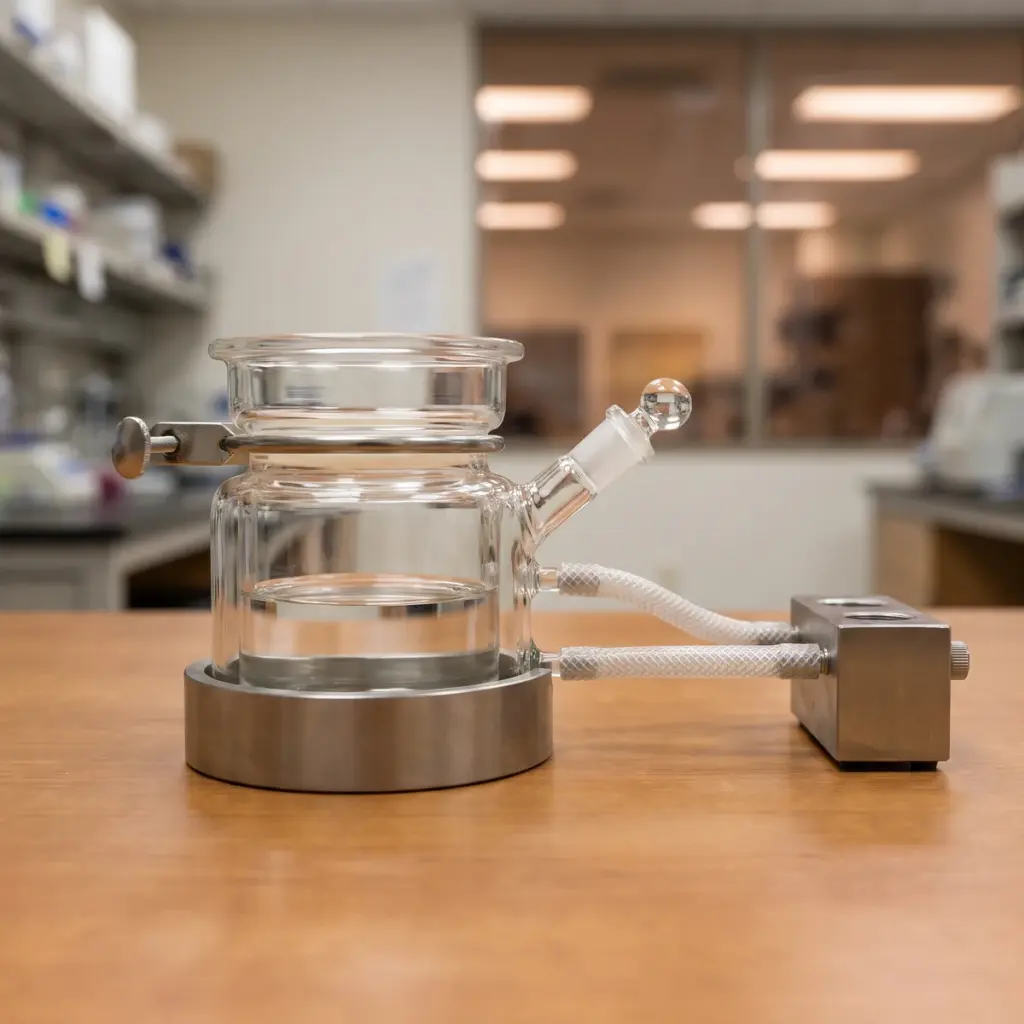
Most laboratories use vertical diffusion cells held at a controlled temperature, with a stirred receiving medium below the membrane. The medium is picked to keep sink conditions, so the released active stays dissolved and does not slow further release. Samples are drawn at set intervals and the volume removed is corrected in the calculation.
- Defined dose of formula per cell
- Membrane and receiving medium suited to the active
- Timed sampling at controlled temperature
- Selective assay with checks on recovery and analyte stability
- A reference formulation run in parallel
Release profile and kinetics
The assay, usually HPLC, gives the concentration of active at each time point. From these values the laboratory plots the cumulative amount released per unit area against time. The curve shows any initial burst, the steady release rate and the point where release levels off. Where the data allow it, the profile is fitted to a kinetic model so formulas can be compared on one figure.
Release curves and rate values per test item
The report sets out the protocol, membrane, medium and sampling times, the release curves for each test item with replicate data, rate values and a side-by-side comparison with the reference. Encapsulated retinol, peptides and other specified actives can each be followed, provided a selective method exists for them.
Using ingredient release-rate studies in carrier development
Release curves are a development and control tool for anyone working with encapsulated or slow-release actives.
Comparing encapsulation systems
Release testing is most useful early, when you are choosing between two or three carrier designs. Running microcapsules, liposomes and a free-active reference in the same cells shows which system gives the release pattern you set out to achieve. It also catches carriers that hold the active too tightly. A short study at this stage saves you scaling up a delivery system that behaves differently from your plan.
Batch consistency and supplier data
Once a carrier is fixed, the same protocol becomes a comparison tool. You can check a new raw-material lot, a change in polymer grade or a process change against the original profile. Ingredient suppliers use release curves in technical dossiers to show how their encapsulated grade behaves in a standard vehicle.
Moving from release to skin
Release data tell you what the formula makes available. To see what then enters the skin, the next step is Franz cell diffusion testing on a skin membrane, or a wider active delivery assessment if you need to compare carriers on deposition in the skin. Before asking for a quote, have the analytical method for your active ready, or ask the laboratory to develop one, and state how many formulas and time points you need.
More in Skin Absorption Studies
Skin absorption studies measure how much of a cosmetic ingredient is released, enters the skin and reaches each layer after application.