pH and viscosity profiling overview
Do you provide pH and viscosity profiling?
Inside a pH and viscosity profile
The two measurements answer different questions about the same sample. pH tracks the chemistry of the water phase, which governs preservative activity, the stability of many actives and how the product sits on skin. Viscosity and rheology describe structure: how thick the product is in the jar, how it leaves a pump and how it behaves once spread.
Measuring pH in creams, gels and cleansers
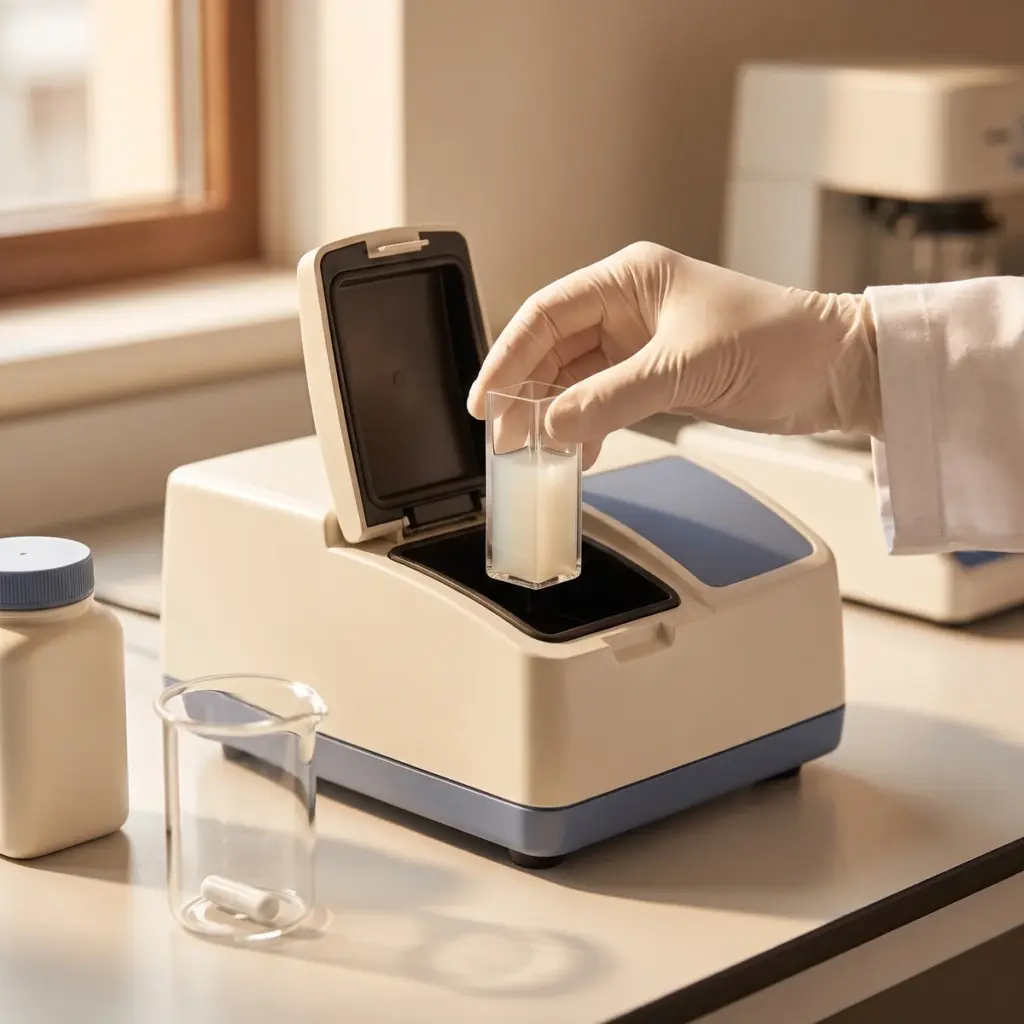
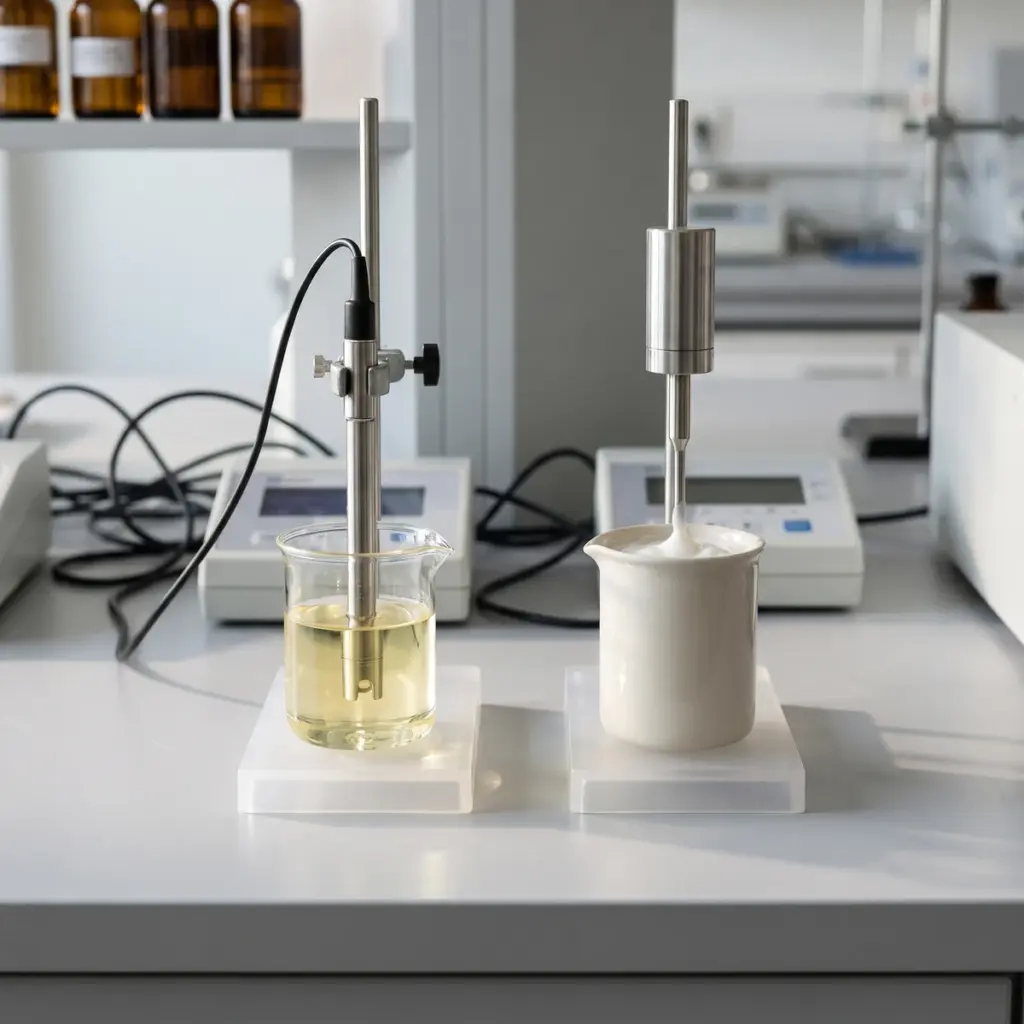
The laboratory calibrates the meter with buffers either side of the expected value and records the sample temperature. Emulsions and gels can often be measured directly with a suitable electrode, while thick or oily products are measured on a stated dilution in water. Anhydrous oils and balms have no meaningful undiluted pH, so a defined extraction or dispersion is agreed first. Using the same preparation at every time point keeps the numbers comparable.
Viscosity and rheology measurements
- Single-point viscosity at a set spindle, speed and temperature
- Flow curves across a range of shear rates
- Yield stress in structured gels and emulsions
- Thixotropy and structural recovery after shear
- Temperature sweeps covering storage and use conditions
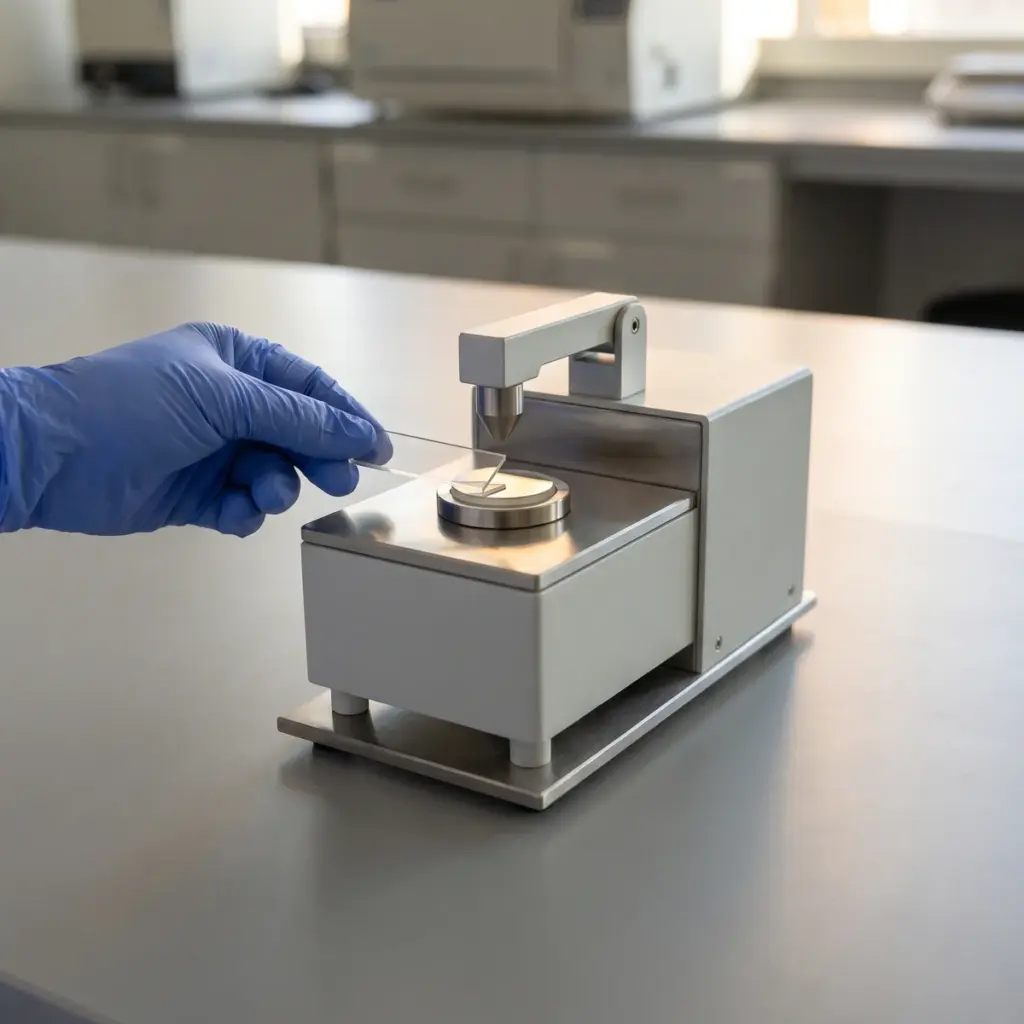
A rotational viscometer gives a quick release value. A rheometer with cone-and-plate or parallel-plate geometry gives the fuller picture needed to explain poor pumping, sagging or a texture that changes with handling.
Viscometer settings and flow curves in the report
Results come with the instrument, geometry, speed or shear rate, equilibration time and temperature, so the figures can be reproduced at the factory. Stability studies receive a table per time point and storage condition, with flow curves overlaid to show thickening or loss of structure.
Where viscosity and pH data guide formulation and production
Packaging engineers, quality managers and formulators each read the same profile for a different decision.
Choosing a pack and dispenser
Flow curves tell the packaging engineer whether a lotion will prime a pump, how a gel will drip from a dropper and whether a cream will leave a tube cleanly. Measure the candidate formula at the shear rates the dispenser applies before ordering components.
Writing a release specification
A manufacturer needs a target and a range for each value, plus the exact method. Profiling several pilot batches shows the natural spread on which to base the limits. Write the spindle, speed and temperature into the specification, since a viscosity read with another spindle gives a different number.
Spotting stability problems early
A slow fall in pH can signal ingredient degradation and can weaken some preservative systems. A drop in viscosity often comes before visible separation in an emulsion. Tracking both alongside droplet measurements from particle size distribution analysis tells the formulator whether to rework the emulsifier system or the thickener.
More in Physicochemical Testing
Physicochemical testing measures a cosmetic’s active content, pH, viscosity, particle size and structure to set specifications and explain changes.