Spectroscopic Characterisation overview
Do you provide Spectroscopic Characterisation?
Spectroscopic methods used on cosmetic materials
Spectroscopy is fast and often needs little sample preparation, which makes it a good first analytical step for identity and comparison work. The method is chosen according to the molecular information you need.
FTIR and Raman fingerprinting
Fourier-transform infrared spectroscopy measures vibrations of chemical bonds and shows functional groups such as esters, amides and hydroxyl groups. With an ATR accessory, a drop of oil, a smear of cream or a piece of plastic can be measured in minutes and matched against a reference spectrum or library. Raman spectroscopy gives complementary vibrational information, works well on pigments and inorganic materials, and in some set-ups can read a sample through a transparent pack.
UV-visible and fluorescence spectroscopy
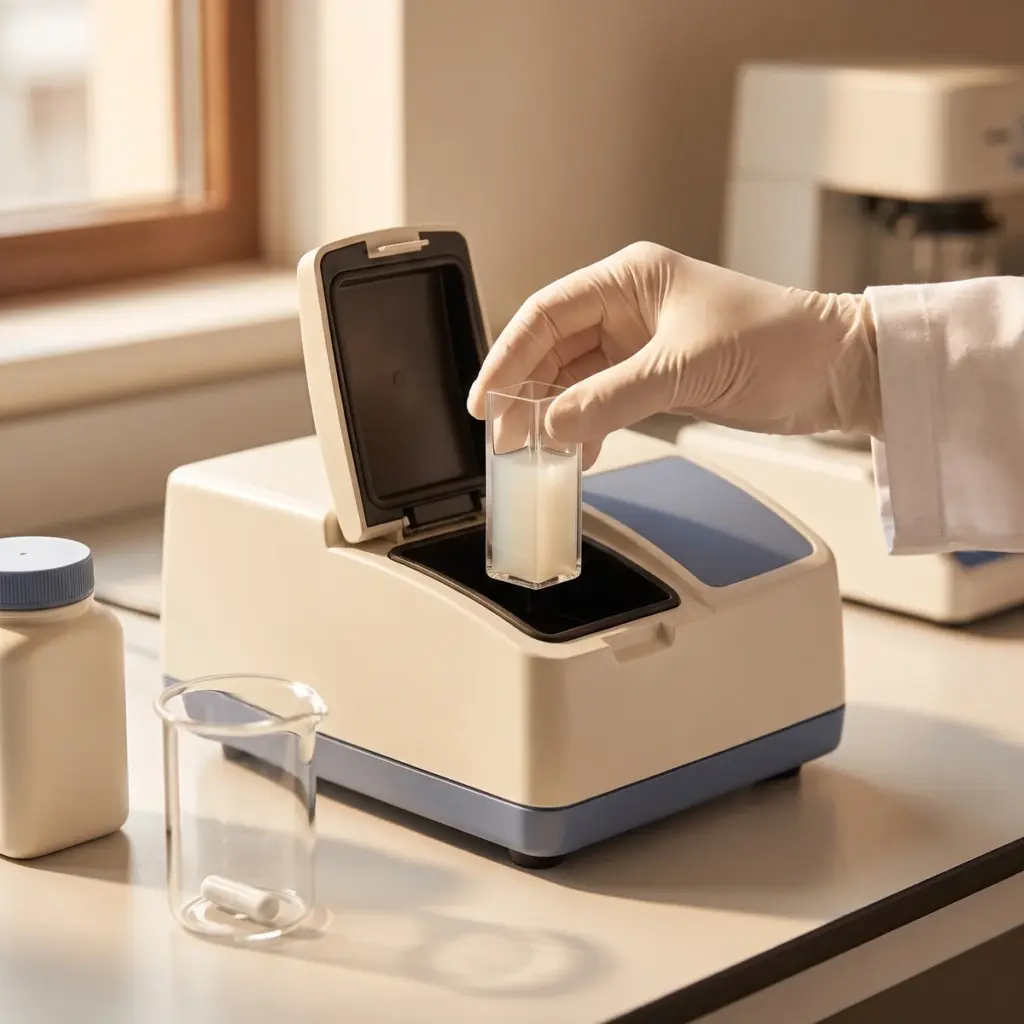
UV-visible spectroscopy measures absorbance across the ultraviolet and visible range. It gives the absorption profile of UV filters and can quantify a compound with a clear chromophore once the method is calibrated. Repeat scans after light exposure show whether a filter or colourant is degrading. Fluorescence spectroscopy detects naturally fluorescent or labelled species at low levels.
NMR for structure
Nuclear magnetic resonance gives detailed structural information, such as confirming the structure of a synthetic active or the composition of an oil blend. Mass spectrometry, often coupled with chromatography, is a complementary technique when trace components need identifying.
Spectra, peak assignments and library matches delivered
- Spectra of each sample with peak assignments
- Overlay against a reference material or library match
- Concentration results for calibrated quantitative methods
- A written interpretation of differences found
Where spectroscopic characterisation fits in quality and development
Spectra are quick to collect, so brands use them routinely at goods-in and reach for them first when something unexpected turns up.
Raw material identity checks on receipt
An FTIR spectrum of each incoming lot, compared with the approved reference, is one of the quickest ways to catch a wrong or substituted material before it enters production. Brands with a natural or botanical range use it to compare oils and extracts from different harvests or suppliers. Build a reference library from approved lots so later comparisons are fast.
Following light and storage effects
UV-visible scans of a product or an extracted filter before and after irradiation show how the absorption profile changes. Formulators use that information to choose filter combinations and photostabilisers, and to choose between clear and opaque packaging. Where a precise level of one active must be followed over time, a chromatographic method from active ingredient quantification separates it from the rest of the formula.
Identifying unknowns in complaints and investigations
A deposit on a pump, a spot in a cream or a discoloured pack component can often be identified by FTIR or Raman microscopy from a very small amount of material. Send the laboratory the unknown, an unaffected sample for comparison and the full ingredient list, which speeds up interpretation.
More in Physicochemical Testing
Physicochemical testing measures a cosmetic’s active content, pH, viscosity, particle size and structure to set specifications and explain changes.