Antioxidant defense activation overview
Do you provide Antioxidant defense activation?
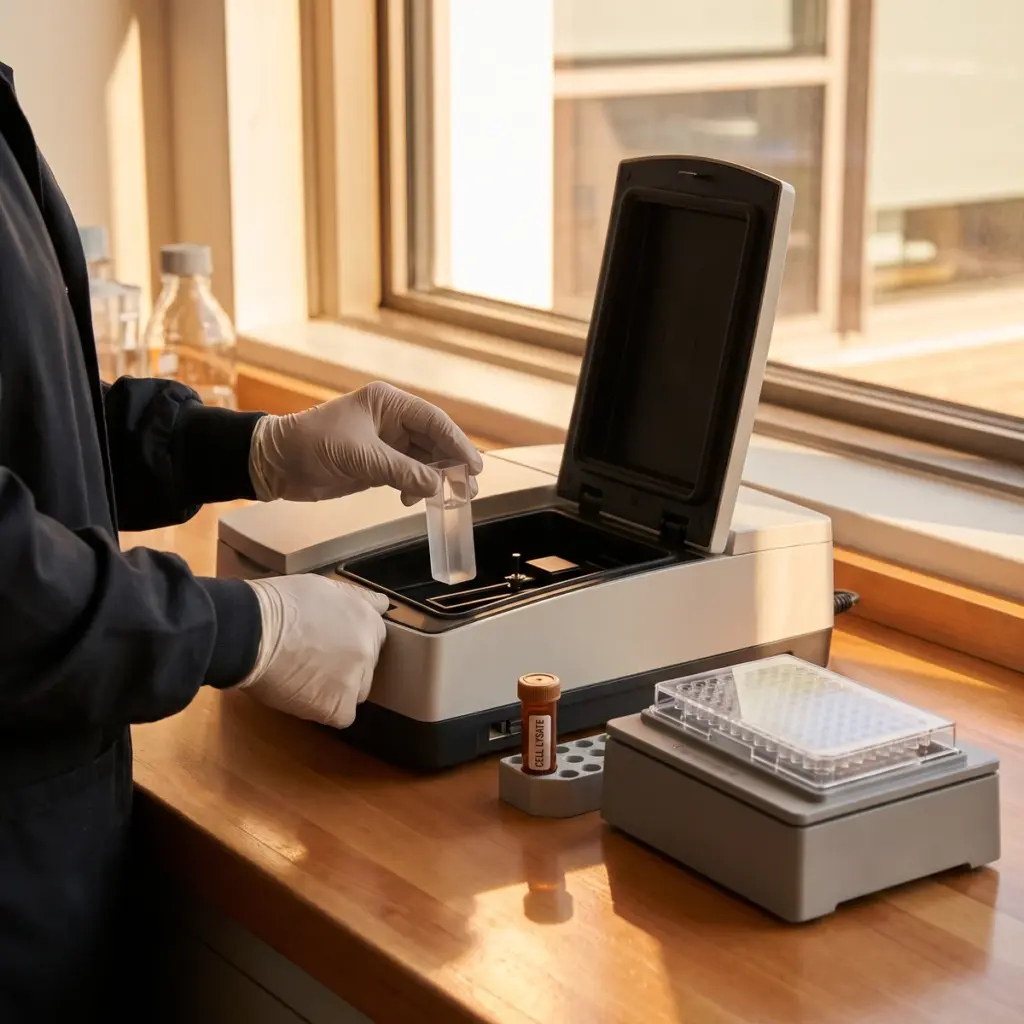
What antioxidant defense activation testing covers
Skin cells hold a set of antioxidant defences that can be turned up when needed: the Nrf2 transcription factor, glutathione, and enzymes such as superoxide dismutase, catalase and glutathione peroxidase. This study links activation of those defences to lower oxidative damage during a realistic environmental challenge.
Pollutant and oxidative challenges
The challenge is chosen to match the claim. Standardised urban particulate matter, diesel exhaust particles, ozone in an exposure chamber and cigarette smoke extract are the usual pollutant options, with UVA or hydrogen peroxide as alternatives. The protocol states whether the active is applied before, during or after exposure, since pre-treatment tests preparation of defences and post-treatment tests recovery.
Measurements in one study design
Running defence and damage endpoints on the same cells shows both sides of the response. Typical readouts are:
- Nrf2 target genes such as HO-1 and NQO1
- Reduced and oxidised glutathione
- SOD, catalase and glutathione peroxidase activity
- Intracellular reactive oxygen species
- Lipid peroxidation and protein carbonylation
- Inflammatory mediators such as IL-1 alpha and IL-8
- Cell viability
Reporting
The report presents defence markers and damage markers side by side for unchallenged, challenged and challenged-plus-active conditions, with a reference antioxidant where the client asks for one. Reconstructed skin models add histology images of the tissue after exposure, and pollutant particle deposition can be photographed on the tissue surface.
Supporting anti-pollution claims with antioxidant defense activation data
This study is the natural evidence base for a product that claims to help skin cope with city air.
Claims this study fits
Results showing raised defence markers together with lower damage under pollutant exposure support wording such as ‘helps skin defend itself against urban pollution’ or ‘reinforces the skin’s natural antioxidant shield’. The data reads more convincingly than chemical scavenging alone, because it shows a cellular response in a stressed model. For a single mechanism in depth, you can follow up with dedicated Nrf2 pathway activation work.
Matching the challenge to your market
Choose the stressor your consumers meet. Particulate matter suits city-positioned skincare, ozone suits summer and outdoor ranges, and cigarette smoke extract is relevant to claims about smoke exposure. If the formula also carries a blue-light or infrared claim, ask the laboratory whether it can run that exposure in the same programme so the data sets share a model.
Assessing a laboratory
Check how the laboratory generates and characterises its pollutant challenge. An ozone chamber with controlled concentration, or a certified reference particulate material, gives results you can describe precisely in a claim file. Ask too whether the team can apply finished formulas topically on reconstructed skin, which brings the test closer to real product use.
More in Antioxidant & Redox Studies
Antioxidant & Redox Studies measure radical scavenging, cellular oxidative stress and the skin’s own defence enzymes to profile cosmetic antioxidants.