Glucose uptake regulation overview
Do you provide Glucose uptake regulation?
Methods for glucose uptake regulation in adipocytes
Glucose enters fat cells mainly through GLUT1, which handles basal transport, and GLUT4, which moves from intracellular stores to the cell membrane when insulin signals. Once inside, glucose is either used for energy or turned into glycerol backbone and fatty acids for triglyceride. Measuring transport therefore shows how an active affects one of the inputs to fat storage.
Uptake assay formats
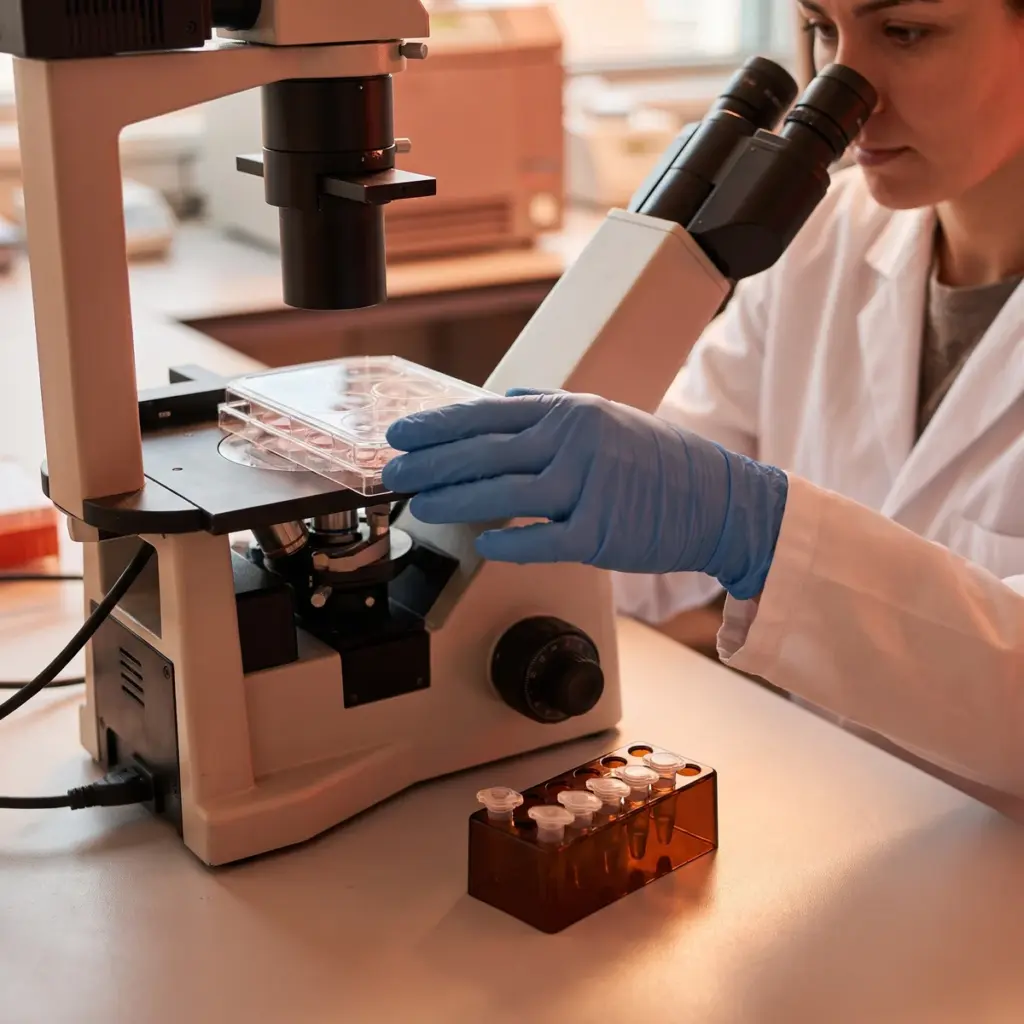
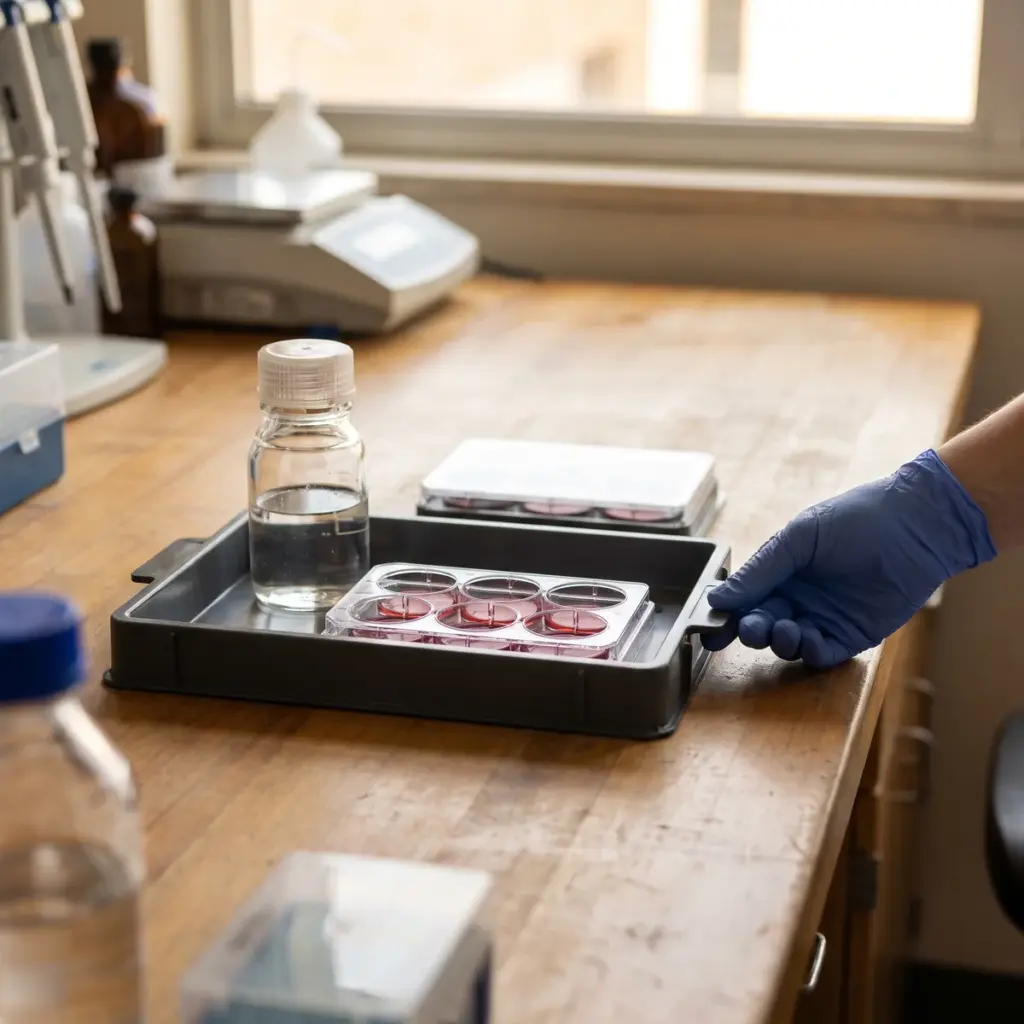
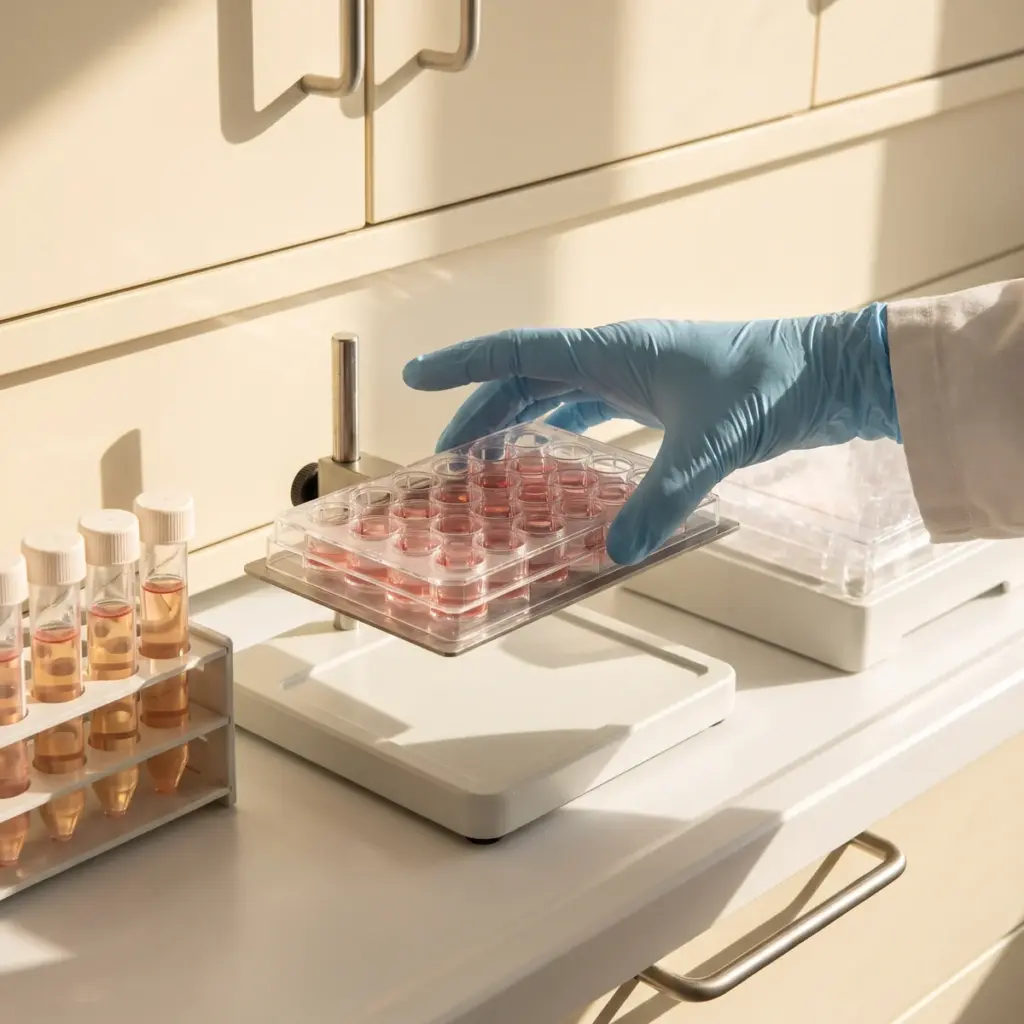
Mature adipocytes are serum-starved, treated with the test material and then given a labelled glucose analogue for a short, fixed window. The fluorescent analogue 2-NBDG is read on a plate reader or by imaging. Radiolabelled 2-deoxyglucose, which cells take up and trap, is the reference method and gives a highly sensitive count of transport. Each format runs with and without insulin, so you see the effect on basal and stimulated uptake separately.
Transporter and signalling readouts
- GLUT4 translocation to the plasma membrane by immunofluorescence or cell-surface labelling
- total GLUT4 and GLUT1 protein by western blot
- Akt phosphorylation in the insulin pathway
- AMPK activation for insulin-independent uptake
Normalised uptake curves and GLUT4 transporter data
The report gives uptake values normalised to protein or cell number, concentration-response curves, viability results and comparison with insulin as the reference stimulus. Where transporter work was included, images and blots show whether the active changed GLUT4 at the membrane or total transporter levels. The data place the active’s effect on glucose handling within its wider metabolic profile.
Where glucose uptake regulation fits in a slimming programme
Glucose uptake is rarely tested on its own. It usually supports another adipocyte result.
Explaining a change in lipid storage
Glucose is a substrate for new triglyceride, so lower uptake can explain why treated adipocytes accumulate less lipid. Developers usually run this assay alongside a fat storage reduction study on the same cells and concentrations. The pairing lets the ingredient dossier connect a transport effect with a storage outcome. If the active raises uptake, adding adipocyte lipid metabolism work shows whether the extra glucose is oxidised or stored.
Specifying the study
Decide before quoting whether you need insulin-stimulated uptake, transporter data or both. A basal uptake assay is the quickest format and suits screening several candidates. Adding GLUT4 translocation and pathway readouts suits a lead active that needs a full mechanism section. Tell the laboratory the active’s solvent and any known autofluorescence, as coloured plant extracts can interfere with fluorescent analogues.
Validated uptake method and radiotracer licence to check
Ask which uptake method the lab uses and whether it has validated it in differentiated adipocytes with insulin as a positive control. Radiotracer work needs a licensed facility, so confirm this if you want the reference method. Experience with membrane fractionation or surface-labelling for GLUT4 is a sign the lab can deliver transporter data that holds up in a technical file.
More in Adipocyte & Vascular Studies
Adipocyte & Vascular Studies test body-care actives on fat-cell metabolism, lipolysis and skin microcirculation, in culture and on volunteers.