Early Formulation Stability Screening


Early Formulation Stability Screening overview
Who provides Early Formulation Stability Screening
Companies providing Early Formulation Stability Screening

How early stability screening of prototypes works
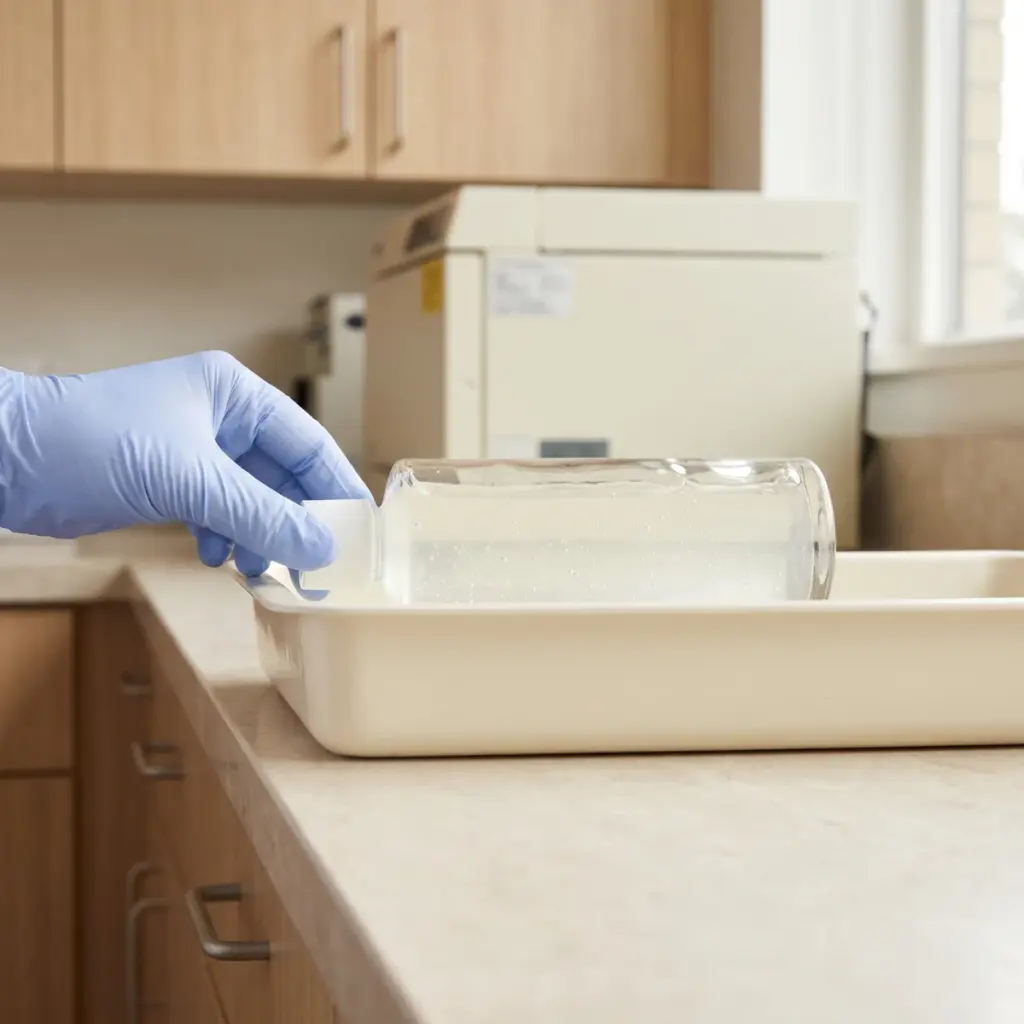
Screening is a short, comparative study. Each prototype is made at bench scale, filled into glass jars and, where it is already chosen, the intended pack, then split across storage conditions. One set stays at room temperature as the reference for every later check.
Stress conditions applied to prototypes
The usual set combines an elevated-temperature oven, a refrigerator, repeated freeze-thaw or hot-cold cycles and, for clear or translucent packs, exposure in a light cabinet. Emulsions are often centrifuged at the start to expose weak structures within minutes. The formulator picks conditions that match the risks of the format: a balm may need heat tolerance, a gel may need cold clarity.
Parameters recorded at each pull point
- Phase separation, creaming or sedimentation
- Colour and odour change
- pH drift
- Viscosity and texture change
- Crystallisation, graininess or syneresis after cycling
Observations are recorded against the room-temperature reference, with photographs at each pull point so you can see the change yourself.
pH, viscosity and photographs for each prototype
The report gives a side-by-side table for every prototype and condition, the measured pH and viscosity values, photographs and a recommendation on which candidates to drop, revise or advance. Many laboratories add a short preservative check on the lead formula. A full preservative challenge test follows once the composition is fixed. The chosen formula then moves into accelerated stability testing in its final packaging, which is the study that supports your shelf-life decision.
Using early stability screening to choose a formula
A screen is most useful when it is timed to a decision and the laboratory has the information it needs to set conditions.
When to run a screen
The best moment is once two or three prototypes meet the sensory and performance brief and before any money goes into pilot batches. Run a second, smaller screen whenever a raw material is substituted, for example a new emulsifier grade, a natural thickener or a reworked fragrance. These changes often show up as separation or viscosity loss under heat.
Screening results also tell the development team where a formula is fragile. A cream that thins in the oven but holds in the refrigerator points to the thickening system. Colour drift under light points to the fragrance or a botanical extract.
What to send with your samples
Give the laboratory the full composition of each prototype, the target pH and viscosity range, the intended pack and the markets where the product will be sold, since distribution climate affects which stresses matter most. Supply enough of each batch for every condition and time point, plus a retained reference.
Once a lead formula passes, the next step is writing up formula specifications and manufacturing instructions, so the stability behaviour you observed is tied to a defined composition and process.
More in Formula Production Readiness
Cosmetic formula production readiness prepares a chosen formula for manufacture with specifications, process instructions and early stability data.