Temperature Cycling & Freeze-Thaw Testing overview
Do you provide Temperature Cycling & Freeze-Thaw Testing?
What temperature cycling & freeze-thaw testing involves
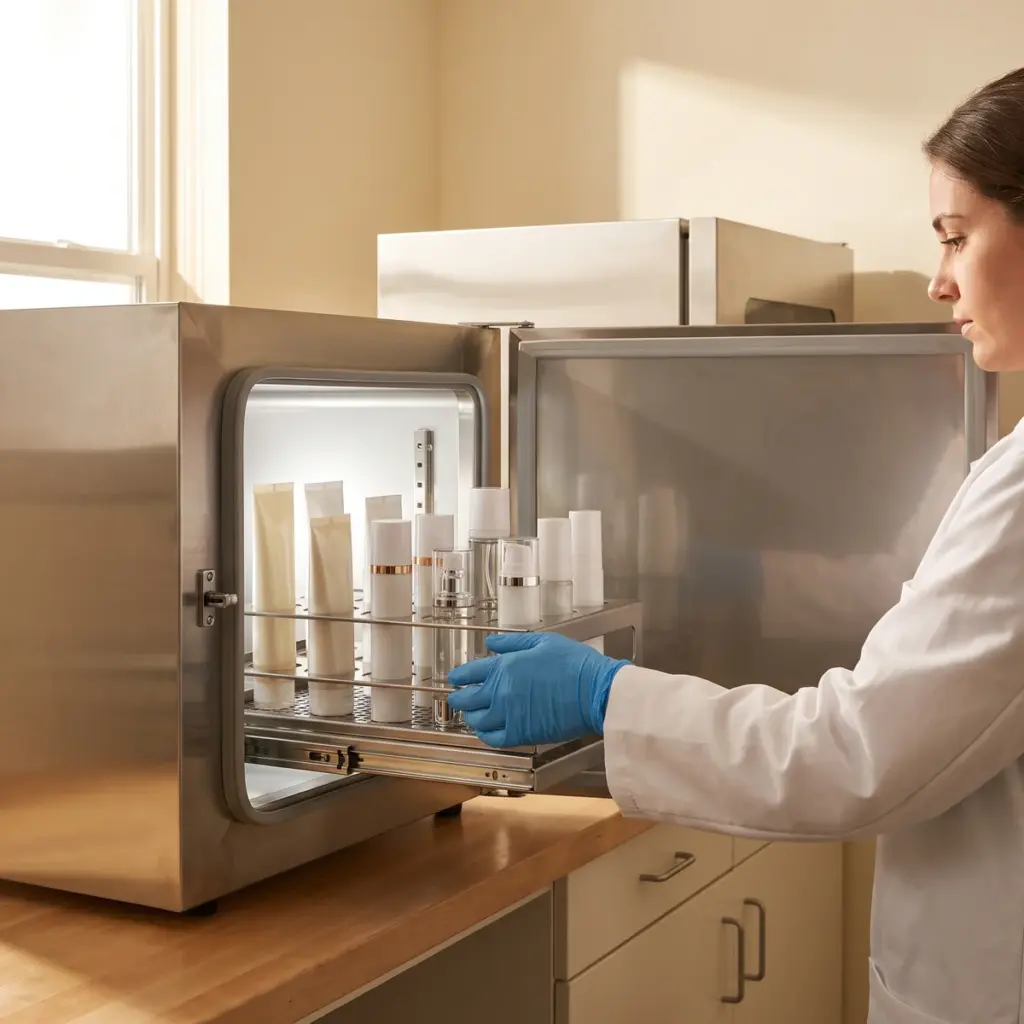
A steady warm chamber tests how a formula ages. A cycling chamber tests how it copes with change. Each transition makes oils, waxes and water expand and contract at different rates, can push dissolved ingredients out of solution as the product cools and, below freezing, turns part of the water phase to ice. Emulsions, wax-based sticks and products with suspended particles are the most exposed.
Designing the cycle
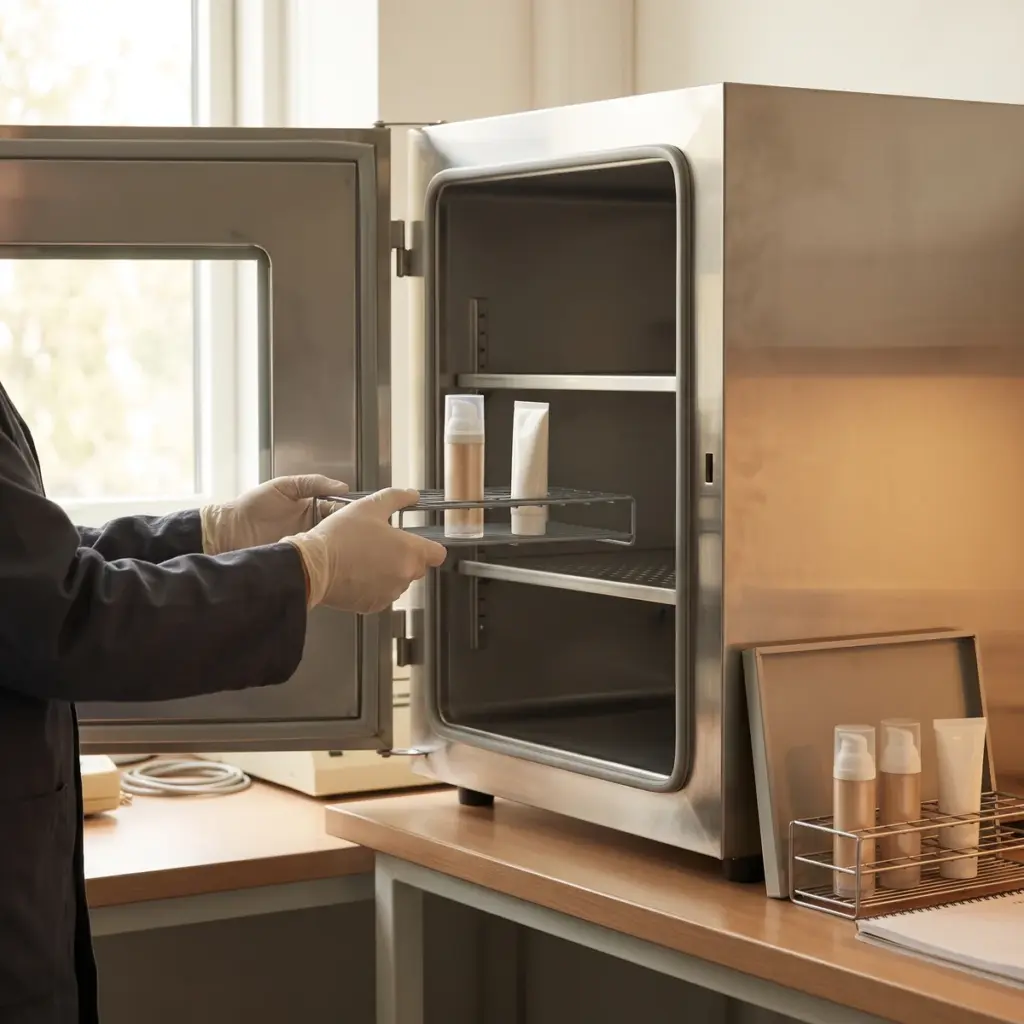
The protocol sets the high and low temperatures, how long the product dwells at each, how quickly the chamber ramps between them and how many cycles run. A freeze-thaw design takes the low step below the freezing point of the water phase. A cycling design that stays above zero mimics day and night swings in a warehouse or delivery vehicle. Samples rest at room temperature for a set recovery period before inspection, so every reading is taken under the same conditions.
Failure modes the study looks for
- Creaming, oil separation or coalescence in emulsions
- Crystal growth, graininess or blooming in sticks and balms
- Loss or gain of viscosity and a change in skin feel
- Colour shift or cloudiness in clear gels
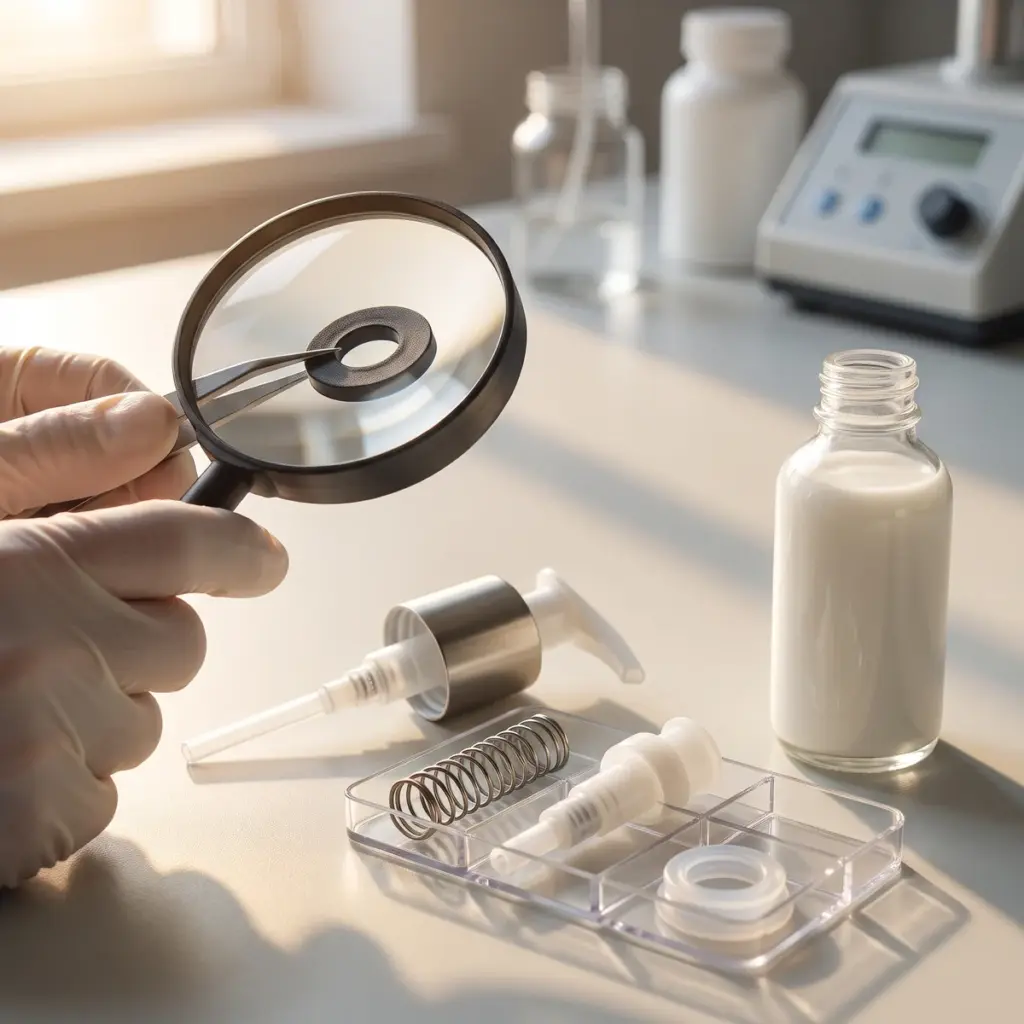
- Leaking seals, cracked containers and pumps that no longer prime
Viscosity, pH and failure point per cycle count
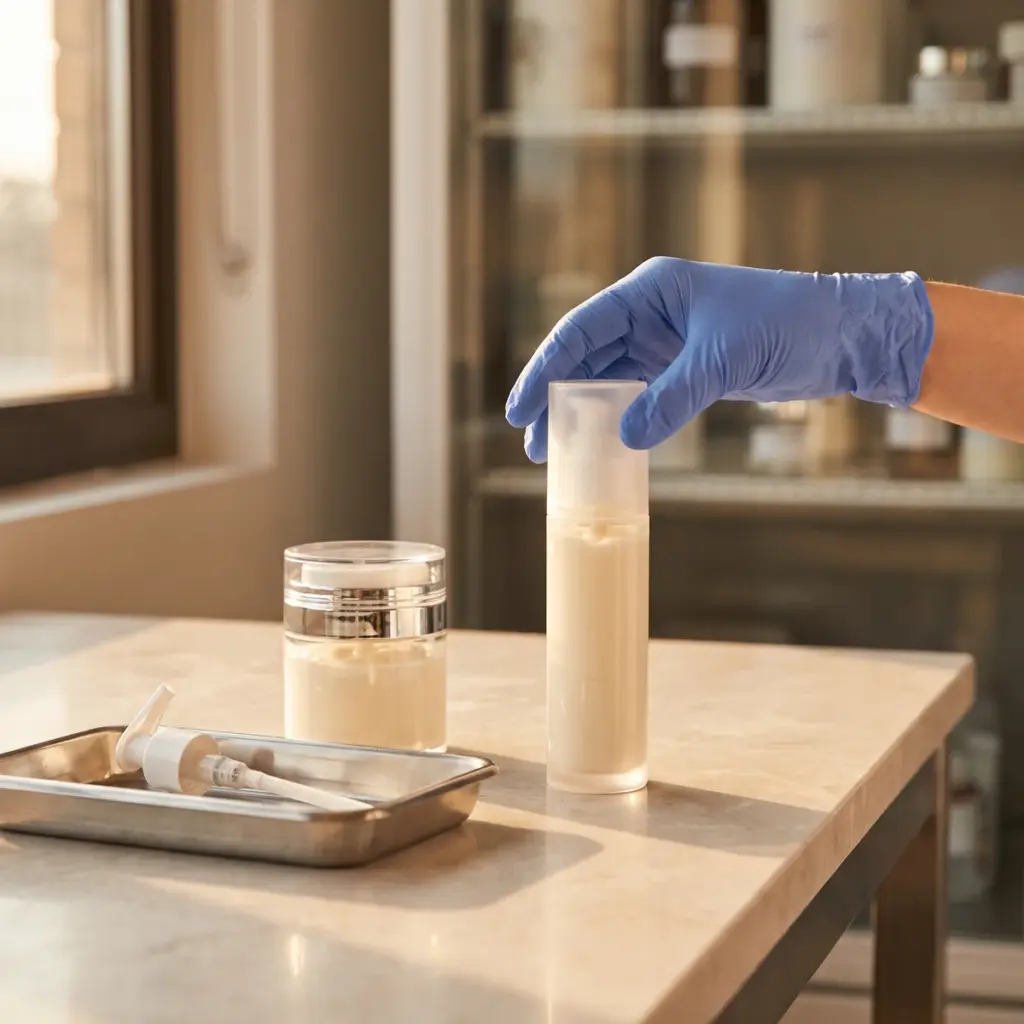
Samples are assessed after set cycle counts against an untreated control stored at room temperature. Viscosity and pH are measured, emulsions can be examined under the microscope for changes in droplet size, and filled packs are weighed and operated. The report lists the cycle profile, gives the results per inspection with photographs, and states which failure appeared and after how many cycles.
When to commission temperature cycling & freeze-thaw testing
Three situations account for most cycling studies: a new product about to ship, a pair of stability results that need explaining, and a batch of returned product.
Before a product travels
Distribution is where most temperature swings happen. Products shipped by road in winter, held in unheated depots or sent to hot climates by sea meet conditions that a fixed-temperature study never applies. A cycling study on the final filled pack before launch tells you whether the formula and container can take that handling. It is quick to set up and gives an early read on emulsion stability, so many formulators run it on every new emulsion prototype.
Reading cycling data with steady-temperature results
Cycling and accelerated stability testing answer different questions, and together they give a fuller picture. A cream that passes steady heat but splits after cycling points to a weak emulsifier system or a wax that recrystallises. A cream that fails both points to wider instability. When the failure is in the pack, such as a pump seal that leaks after cold exposure, packaging material compatibility testing examines the component itself.
Tracing customer complaints
Grainy lip balms and separated lotions returned by customers are often a cycling problem. Retained samples from the same batch can be cycled under a profile that matches the suspected route, and comparison with a fresh batch shows whether the issue lies in the formula or in a single production run.
More in Stability & Packaging Compatibility
Stability & packaging compatibility testing stores a cosmetic in its final pack under heat, cold and light to set shelf life and confirm pack fit.